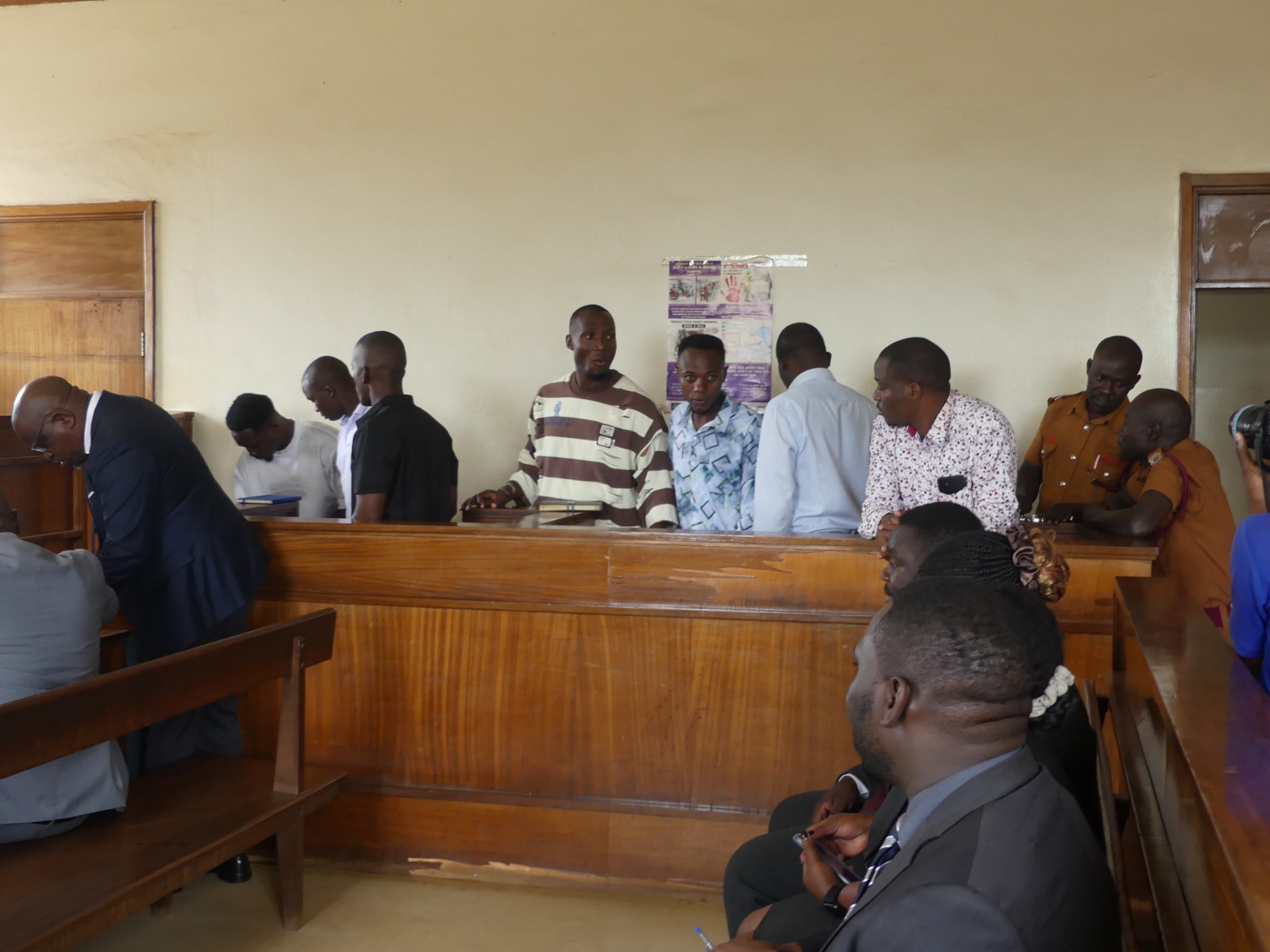
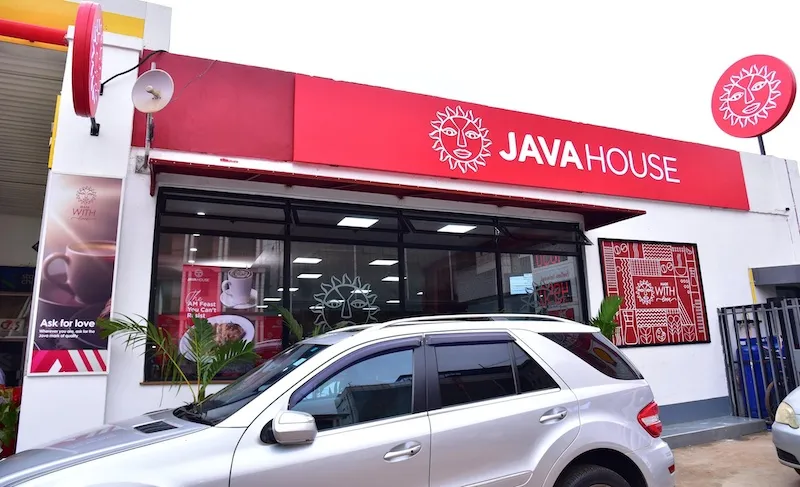
The Tax Appeals Tribunal (TAT) has ordered the Uganda Revenue Authority (URA) to refund Java House Shs 237.3 million in disputed VAT, while upholding a separate tax assessment of over Shs 935 million against the coffee chain.
The ruling settled a long-running dispute that began after URA audited Java House’s tax affairs covering July 2014 to June 2020.
Java House Coffee Shop Uganda is a subsidiary of Java House Mauritius and has operated Java House restaurants and coffee shops in Uganda since July 2014. It took over the business of a related company, Java Coffee and Tea, in 2015.
Both companies are part of the same corporate family, which also includes Nairobi Java House, the Kenyan arm that channelled funding into the Uganda operations.
Trouble began when URA conducted an audit and found two categories of problems.
The first was a claim for input VAT, a refund of tax Java House said it had paid on construction and renovation work done at several of its branches, including Grand Imperial, Shell Lugogo, Acacia Kisementi, Shell Jinja, Imperial Mall Entebbe and Gapco Shop Kamwokya.
The contractor for that work was Sarova International Builders. Java House said it paid those invoices and was entitled to claim back the VAT included in them, amounting to Shs. 237.3 million.
The second problem was bigger and more complicated. URA’s auditors found that Java House had recorded a total shareholder loan of Shs. 16.5 billion in its books, money that its parent company had lent it to keep the business running.
URA could verify only Shs. 13.3 billion of that loan using the documents Java House provided. The remaining Shs. 3.1 billion had no supporting paperwork.
The tax body concluded that money was not a loan at all, but it could have been undeclared sales revenue that Java House had hidden to avoid paying tax on it. So it taxed it accordingly.
After mediation, the contested amount was reduced to Shs 935 million. Still, Java House was unsatisfied and took the matter to TAT.
In the tribunal, Java House argued that it had done nothing wrong. On the VAT refund, it said it had genuinely paid the construction invoices from its accounts at Stanbic Bank and Barclays Bank, and that the law was clear.
Under section 28 of the VAT Act, a registered taxpayer that has paid VAT on supplies used in its business is entitled to claim that tax back.
Regarding the shareholder loan of Shs 16.5 billion, Java House Uganda said that the entire amount was a genuine loan from Java House Mauritius, disbursed through Nairobi Java House.
It pointed to a formal loan agreement signed in 2016, which it said had appeared in its audited financial statements, and to the fact that Java House had paid withholding tax on the interest that accrued.
The coffee chain said URA’s own verification had understated the cash transfers. According to Java House’s calculations, applying URA’s own exchange rate, the cash transfers alone amounted to Shs. 8.89 billion, not the Shs. 6.43 billion as the tax body had said.
If that difference was recognised, the so-called unsupported amount would shrink from Shs. 3.16 billion to just Shs. 698.9 million, Java House argued.
Java House said URA had misused its power to reclassify transactions.
Citing the tribunal’s earlier decision in Explorer Limited v URA, Java House’s lawyers submitted that “while URA’s powers to recharacterize transactions are statutory, they must be exercised judiciously and rationally.”
URA argued that Java House had failed to prove it was entitled to either the VAT refund or the loan treatment.
On the VAT refund, URA said the payments Java House made to its contractor could not be matched precisely to the invoices submitted, and because the payments carried no description of their purpose, there was no way to confirm they were for construction services and not something else.
Only one payment of Shs 433 million clearly matched an invoice, URA said.
On the shareholder loan, URA noted that Java House’s own witness admitted in cross-examination that there was no formal business transfer agreement between the predecessor company, Java Coffee and Tea Limited (JCTL), and Java House Coffee Shop Uganda.
It said JCTL never deregistered its tax identification number, never formally wound up, and Java House Uganda never applied to URA to transfer JCTL’s liabilities to itself.
Invoking the principle of separate corporate personality, URA argued that JCTL’s debts could not simply migrate to Java House without documentation.
The tribunal, chaired by Crystal Kabajwara, split the outcome between the two parties, but Java House bore the biggest burden.
On the VAT refund, the tribunal sided with Java House and noted that URA did not dispute that the renovations happened, did not dispute that SIBL was the contractor, and did not dispute that SIBL performed the work.
The contractor had even written directly to URA confirming the invoices, the tribunal said.
TAT found that “the only relationship between Java House and SIBL, a third party, was a commercial relationship for the provision of construction services.
Therefore, in the absence of any other evidence to the contrary, it said, it is highly unlikely that payments from Java House to SIBL could have been anything other than the services that SIBL was contracted to provide.
Java House, the tribunal concluded, had proved its case on the balance of probabilities.
On the shareholder loan, the tribunal was blunt in its criticism of Java House. The panel said it was astounding that a multinational company taking over an entire business operation had not produced a single document about that transfer.
“It beggars belief that an entity such as [Java House] engaged in a transaction involving the assumption of the entire business operations of its predecessor, JCTL, and not even a single document has been adduced before this tribunal regarding the transfer of the business from JCTL to it,” it noted.
The tribunal said taxpayers like Java House must understand that they have a primary duty to maintain transactional documents to support their tax positions.
Therefore, URA’s reclassification of the Shs. 3.16 billion as undeclared income by Java House was upheld. The tax assessment of the shareholder loan, the tribunal concluded, also stands.
The tribunal awarded 75% of the costs of the application to URA.