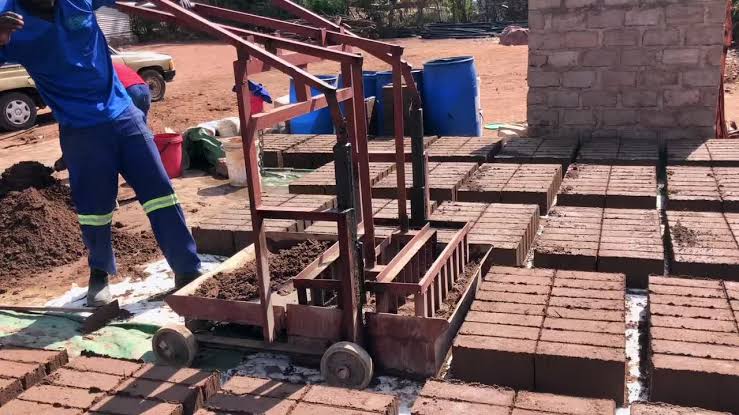
On November 3, 2020, Mona Stella Kijunju, a businesswoman, signed a Memorandum of Understanding with Hydra Homes Uganda to sell them a brick-making machine at Shs146 million.
The agreement required Kijunju to deliver the machine within five working days to a destination chosen by Hydra Homes, which was supposed to pay within 40 working days after delivery.
On November 6, 2026, Kijunju delivered the machine to the Special Forces Command (SFC) yard at Mpala in Entebbe, the location chosen by Hydra Homes.
She also sent an expert technician named Brian to install it, and the company accepted the machine without raising any complaint.
However, Kijunju said despite several reminders, Hydra Homes never paid the agreed price, which forced her to sue the company.
In court, Hydra Homes said it had already won a contract from the Ministry of Defence to supply construction equipment, including a brick-making machine, to the Special Forces Command.
Initially, the company said it planned to import the machine from China before Kijunju approached them and convinced them to buy hers instead.
However, Hydra Homes claimed that once the machine was delivered, it failed to work.
Harrison Busingye, one of the directors of Hydra Homes, said the machine was defective from the beginning and that although Kijunju’s technician and engineers from the UPDF Engineering Brigade tried to make it operational, all the attempts failed.
He said they informed Kijunju about the problem and eventually asked her to collect the machine.
Busingye further testified that because the machine remained unusable, Hydra Homes had no choice but to buy another brick-making machine elsewhere so that it could complete its contract with the Special Forces Command.
Kijunju’s lawyer, Issa Ogomba of Praxlexa Advocates, argued that the signed Memorandum of Understanding and the delivery of the machine were not disputed.
He submitted that Kijunju supplied the machine in good working condition and even provided a technician who assembled and made it operational.
He also argued that if Hydra Homes had any complaint, they were required under the agreement to notify his client through the official contact details provided in the contract.
Ogomba therefore asked the court to award his client the full purchase price, interest and costs.
Court says URA acted lawfully in prosecuting KK Electrical directors
Justice Bernard Namanya carefully examined the evidence from both sides and noted that there was no dispute that the parties signed the agreement or that the machine was delivered to the Special Forces Command yard.
The real question, he said, was whether the machine actually worked as promised.
Justice Namanya said although Kijunju initially claimed she was not responsible for assembling the machine, the contract clearly required her to provide an expert technician for installation.
During cross-examination, she admitted that she had indeed sent Brian, a technician, to install the machine.
He also noted that Kijunju first denied being informed that the machine had failed but later admitted that she had been notified about the problem.
“The evidence therefore shows that [Kijunju] was aware of [Hydra Homes’] complaint and that an attempt was made through her technician to address it,” Justice Namanya said.
He said Kijunju’s own evidence contradicted her claim that the machine had been delivered in perfect working condition and concluded that Hydra Homes’ version of events was more believable.
Justice Namanya added that there was no evidence showing the machine was ever successfully repaired after the complaints were raised, adding that merely delivering the machine was not enough.
He said Kijunju had promised to supply and install a functional machine and had failed to prove that she fulfilled that obligation.
“Having undertaken to supply and install a functional brick-making machine, [Kijunju] was required to prove that the machine was delivered, installed, and made operational in accordance with the agreement,” he ruled.
Justice Namanya concluded that Hydra Homes was legally entitled to reject the defective machine and rescind the contract.
Having reached that conclusion, he dismissed Kijunju’s entire claim, but in the interests of promoting reconciliation between the parties, he ordered that each party bear its own costs.