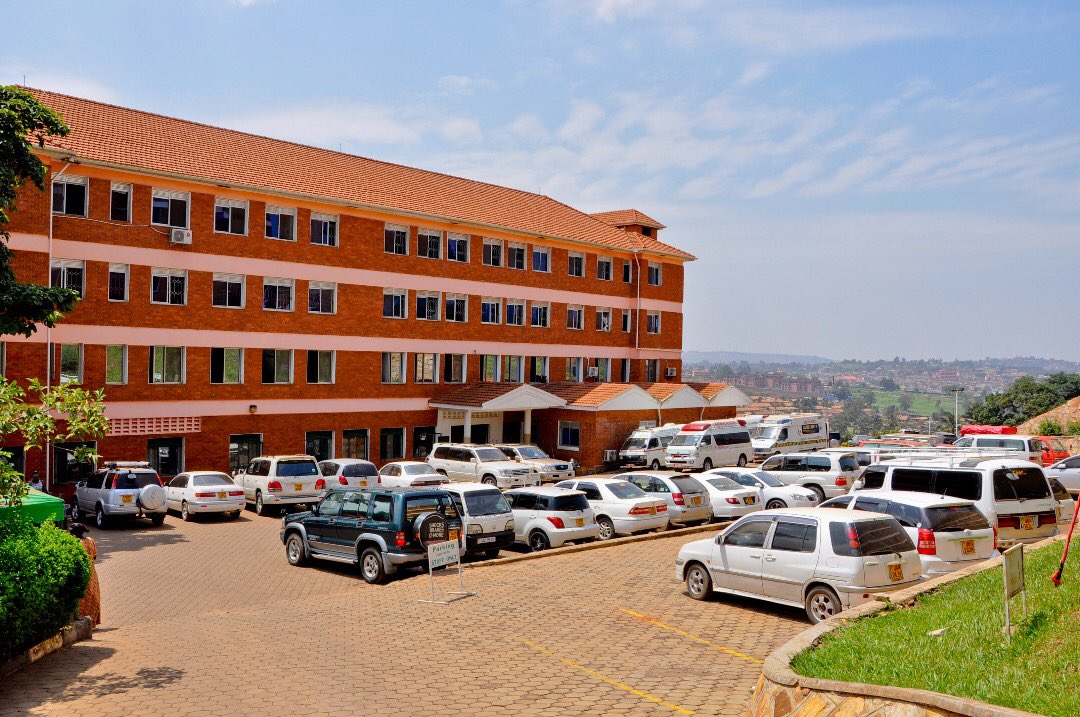
Kibuli Muslim Hospital has been ordered to compensate a mother with more than Shs 147 million after the negligence of one of its doctors led to the death of her newborn baby.
The dispute began in August 2018 when Jaridah Kyofuna started attending antenatal care at the hospital. She said that throughout her pregnancy, doctors recorded no abnormalities and planned an elective caesarean section.
On October 5, 2018, she successfully delivered a healthy baby boy through caesarean surgery, and both mother and child were returned to the ward in satisfactory condition, and the baby immediately started breastfeeding normally.
Trouble started the following night, on October 6, when the baby suddenly developed difficulty breathing.
Kyofuna said that she immediately sent an attendant to look for a doctor because she feared her baby’s condition was worsening. However, she said no doctor came to examine the child throughout the night despite repeated requests for help.
It was only the following morning that the baby was finally admitted to the neonatal nursery, where he was examined by Dr Dickens Aturwanaho.
Tests showed that the baby was anaemic and had a dangerously low platelet count, and the doctors suspected haemorrhagic disease of the newborn, a condition in which babies bleed excessively because their blood cannot clot properly.
The hospital tried to obtain compatible donor blood from its own blood bank and neighbouring hospitals, but none was immediately available.
Following advice from consultant neonatologist Dr Margaret Nakakeeto Kijjambu, the medical team decided to perform an emergency direct blood transfusion using the mother’s own blood.
The baby’s condition, however, continued to deteriorate, and he died on October 9, 2018.
Kyofuna maintained that the hospital’s mistakes, rather than her son’s illness alone, caused his death.
She accused the hospital of delaying treatment, failing to investigate the baby’s condition properly, and carrying out a dangerous blood transfusion that ignored Ministry of Health clinical guidelines.
She alleged that the transfusion was performed without informed consent, without documented blood compatibility testing, without proper transfusion equipment, and through rapid injection instead of a slow, monitored transfusion.
The hospital denied negligence and, through its lawyers from Nsibambi & Nsibambi Advocates, argued that the baby was already critically ill before the transfusion was carried out.
They insisted the emergency transfusion was a desperate attempt to save the child’s life after compatible donor blood could not be found.
They further argued that because no post-mortem examination was conducted, the mother could not prove that anything the hospital did actually caused the baby’s death.
Because the dispute involved complicated medical questions, the court ordered the Uganda Medical and Dental Practitioners’ Council (UMDPC) to independently investigate what happened before the trial continued.
The council interviewed witnesses, reviewed hospital records, and produced a detailed report that became one of the most important pieces of evidence in the case.
The council discovered several serious shortcomings in the baby’s treatment, such as the unexplained delay of about eight hours between the time the baby developed breathing difficulties and the time meaningful medical attention was given.
The investigators also found that although the consultant neonatologist was consulted by telephone, she never physically examined the critically ill baby.
The council established that essential investigations expected in a seriously ill newborn, including oxygen monitoring, blood chemistry, clotting studies, screening for infection and bleeding disorders, and brain imaging, were either omitted altogether or not documented.
It also identified major deficiencies in the emergency blood transfusion.
These included lack of documented blood group compatibility testing, absence of documented screening for transfusion-transmissible infections, failure to use proper transfusion equipment, uncertainty about informed consent, and allowing a nurse whose supervision and training were found inadequate to perform the procedure.
But the council concluded that the baby’s condition had already begun deteriorating before the transfusion was performed and found no evidence that the child suffered an immediate transfusion reaction.
Kyofuna, the mother, testified that she repeatedly sought medical attention after noticing her son’s breathing difficulties, but nobody responded promptly.
She also told the court she never signed a consent form and was never properly informed about the risks involved in the emergency blood transfusion. After the procedure, she said, the baby developed convulsions, stopped feeding, and continued deteriorating until his death.
Her expert witness, Dr James Forbes Ngobi, told the court that the transfusion departed significantly from accepted neonatal practice because it was carried out without screened donor blood, without proper compatibility testing and without a proper closed blood collection system.
During cross-examination, however, Dr Ngobi admitted he had never examined the baby while alive or after death and prepared his opinion months later using documents supplied by the plaintiff. He also acknowledged receiving a professional fee of Shs 10 million for preparing his report.
Dr Aturwanaho from Kibuli Hospital testified that he first saw the baby on the morning of October 7 after the child had already developed severe complications. He diagnosed haemorrhagic disease of the newborn and instructed nurses to search for compatible donor blood.
When no blood could be found, he said the consultant neonatologist advised that the mother’s blood be used in an emergency transfusion.
Dr Nakakeeto, also from the hospital, told the court that patients who suffer acute transfusion reactions usually deteriorate almost immediately and that nothing in the baby’s medical records suggested this had happened.
Court orders MTN Uganda to pay Richard Mwami Shs 2.31 billion for ‘malicious prosecution’
After reviewing all the evidence, Justice Isaac Bonny Teko rejected the hospital’s argument that the court should only examine the blood transfusion process, saying the entire management of the critically ill baby had to be assessed.
“The evidence establishes an unexplained delay of some eight hours between the onset of the baby’s respiratory distress and his first meaningful medical review. This delay was a serious departure from accepted practice,” he said.
He also faulted the hospital for failing to ensure that the consultant neonatologist physically examined the child.
“A critically ill neonate exhibiting progressive respiratory compromise required bedside assessment by the most experienced clinician reasonably available. Telephone consultation cannot ordinarily substitute for direct clinical review where a patient is rapidly deteriorating,” Justice Teko said.
Regarding the transfusion, he distinguished between the decision to transfuse and how it was carried out. He stressed that “blood transfusion is among the highest-risk procedures in clinical medicine.”
On whether these failures caused the baby’s death, Justice Teko accepted that the precise medical cause remained uncertain because no post-mortem had been conducted.
Even so, he concluded that the hospital’s cumulative failures denied the child an opportunity to receive timely diagnosis and treatment.
“The law does not require [Kyofuna] to prove that proper treatment would certainly have averted death,” Justice Teko wrote.
He said he was satisfied that the hospital’s cumulative failures materially contributed to the fatal deterioration of the deceased child.
Justice Teko ultimately declared that the hospital breached its duty of care through delayed medical review, failed to secure timely specialist assessment, and carried out inadequate investigations and deficiencies in the emergency blood transfusion.
He awarded Kyofuna Shs 17. 3 million in special damages, Shs 100 million in general damages, and Shs 30 million for loss of expectation of life, bringing the total compensation to Shs 147.3 million, excluding interest and costs.