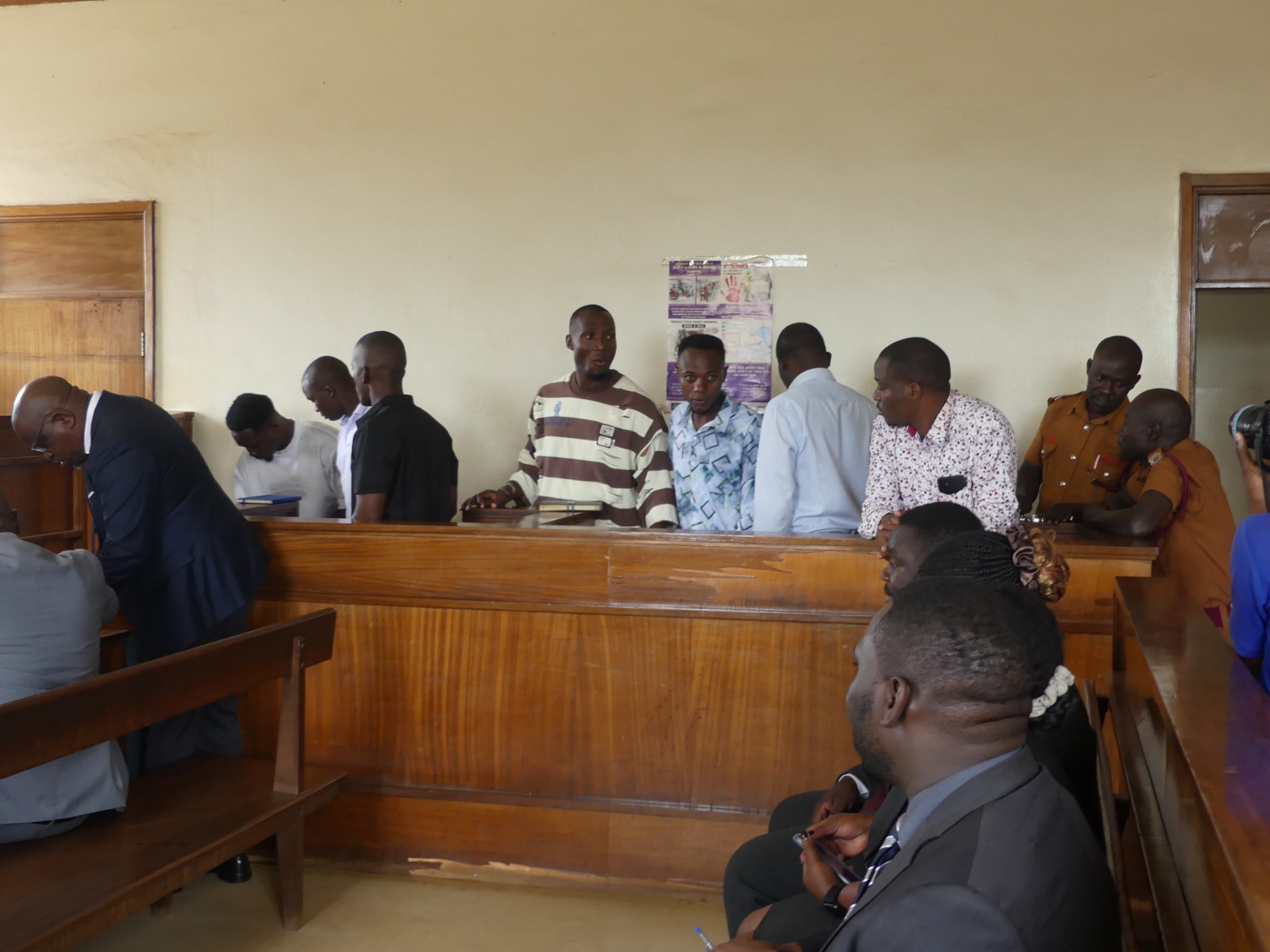

Richard Mwami, a former senior manager at MTN Uganda who was hounded out of the job in 2012 following allegations that he had orchestrated mobile money fraud, has finally got justice after the court ordered that his former employer pay him Shs 2.3 billion for “malicious prosecution.”
Justice Isaac Bonny Teko ruled that although the Directorate of Public Prosecutions formally prosecuted the criminal case, MTN was “the moving force” behind the prosecution and acted without reasonable cause and with malice.
Mwami, who initially served as senior manager for MTN Village Phone before becoming senior manager for Public Access, was one of the company’s senior executives responsible for expanding public access services and Mobile Money operations.
Ironically, according to the court, it was Mwami who discovered unusual transactions on MTN’s Fundamo Mobile Money platform in December 2011 and reported them to senior executives, including Themba Khumalo and Anthony Katamba.
His report triggered investigations into what MTN believed was a fraud involving about Shs16 billion.
MTN hired Grant Thornton to carry out a forensic audit, and in their report, they cleared Mwami of any involvement in the fraud.
Yet despite the fact that Mwami had been cleared, MTN Uganda brought criminal charges against him, relying on a confession obtained from another suspect, Patrick Ssentongo.
In court, Ssentongo said that while at the police, Anthony Katamba, MTN’s former company secretary, became annoyed when he asked to speak to a lawyer before recording his statement.
Justice Lawrence Gidudu, who later presided over the criminal trial, ruled that Ssentongo’s confession had been obtained involuntarily and illegally.
Justice Teko said the evidence remained largely unchallenged because MTN did not call Katamba to explain his presence during the recording of the statement.
He concluded that the company ignored its own forensic findings and instead relied entirely on a confession that had been obtained through coercion to prosecute Mwami.
He quoted Justice Gidudu’s earlier finding that Mwami had become “a sacrificial lamb” and that charging him one year after investigations had closed was “suspect.”
During the civil trial, Mwami argued through his lawyers from AF Mpanga Advocates that MTN Uganda had become the real architect of the criminal case by engineering Ssentongo’s confession and using it to persuade investigators to prosecute him.
MTN, represented by Kampala Associated Advocates (KAA), argued that it neither instituted nor controlled the prosecution and merely cooperated with police investigations.
Justice Teko established that MTN lacked any reasonable basis for believing Mwami had committed the offences because its own forensic investigators had cleared him.
“No ordinary prudent and cautious person, armed with an exculpatory forensic audit, could have honestly believed… that the Plaintiff was probably guilty,” he ruled.
He also concluded that MTN had acted maliciously, pointing to the fact that Mwami was the whistleblower who uncovered the fraud, yet was arrested more than a year after investigations had ended, using the Violent Crimes Crack Unit (VCCU), a police unit normally reserved for armed robbery and homicide.
By then, he said, Mwami had joined Mobile Money Africa Limited and had become associated with EzeeMoney, a competitor that had sued MTN over alleged anti-competitive practices.
Justice Teko said the malicious prosecution had devastating consequences for Mwami’s career.
After leaving MTN, he secured employment with Mobile Money Africa Limited on a lucrative package worth about Shs 55 million a month.
However, the Bank of Uganda later classified him as a reputational risk following the criminal charges, leading to the termination of his employment by his new employer.
Justice Teko accepted that the criminal prosecution by MTN Uganda directly caused the loss of that job and awarded Mwami lost salary, housing allowance, and medical benefits amounting to Shs 1.81 billion.
Justice Teko also awarded Shs400 million in general damages, saying Mwami’s reputation had been destroyed after being publicly portrayed as a corporate fraudster.
“He was deprived of his liberty for seven days at Luzira Prison, subjected to restrictive bail conditions for over two years. His career was destroyed when the Bank of Uganda classified him as a reputational risk,” Justice Teko ruled.
He further awarded him Shs 100 million in exemplary damages, saying MTN’s conduct was particularly serious because it had targeted “a loyal senior employee who had risked his professional reputation to report a massive fraud against it.”
The ruling is likely to attract significant attention beyond Mwami’s financial award because MTN is Uganda’s largest telecommunications company and one of the country’s biggest private employers. It has long promoted itself as a champion of good corporate governance.