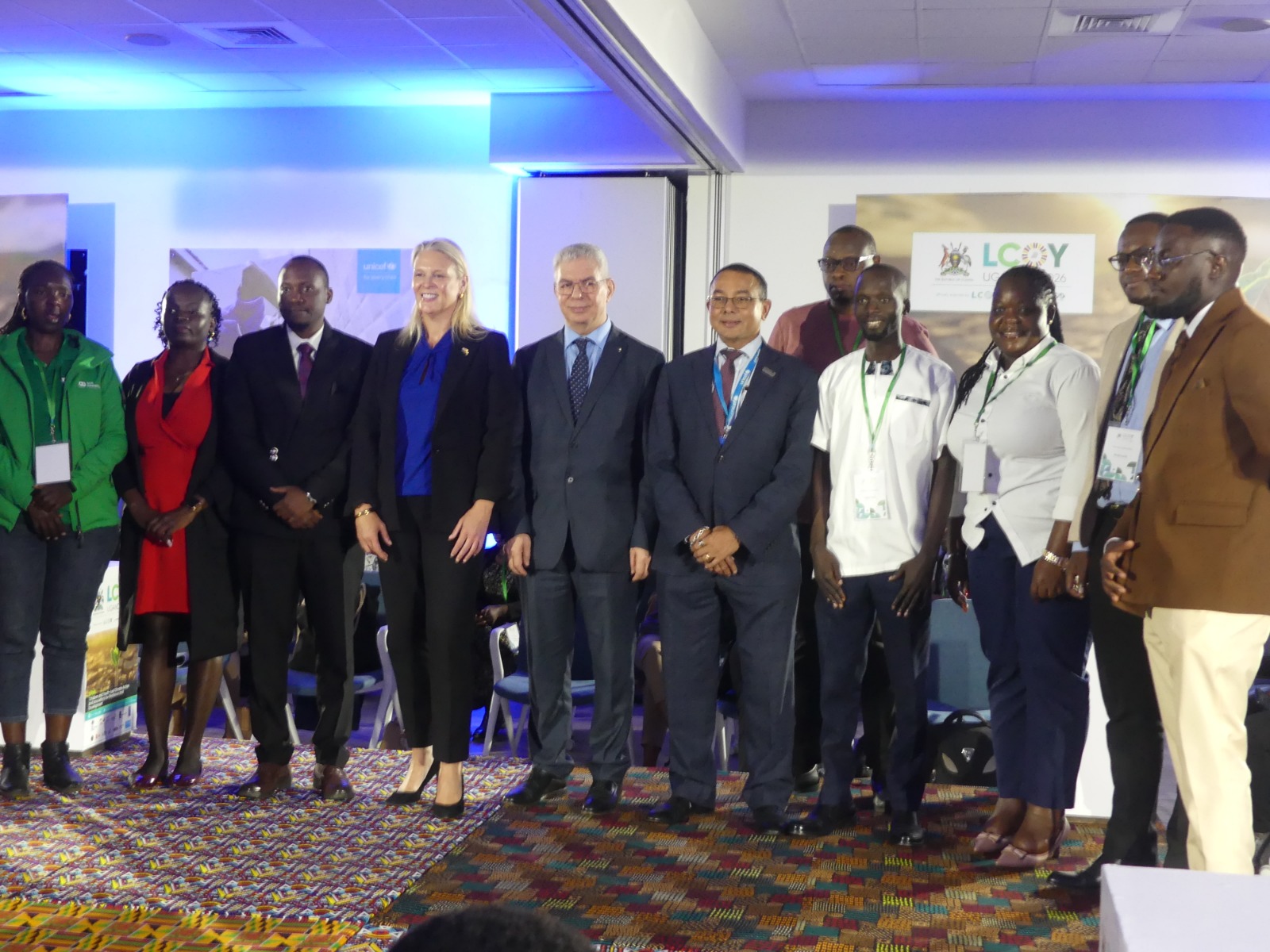
The UNICEF Representative to Uganda, Dr Robin Nandy, has called on Uganda’s young people to actively support government efforts to address climate change and build resilience against its growing effects.
Speaking at the opening of a three-day national conference for children and youth on climate change, Dr Nandy said Uganda’s youthful population presents a major opportunity to generate innovative solutions to one of the country’s biggest challenges.
The conference is being held under the theme, “Children and Youth Led Climate Action and Innovations for Resilience and Development.”
Dr Nandy said more than half of Uganda’s population is under the age of 35, making young people an important resource in shaping the country’s response to climate change.
“We want your ideas, your innovations and your recommendations. We want to make sure your views help shape decisions,” he said.
He encouraged children and young people to participate actively in climate action, saying they are among those who will be most affected by climate change in the years ahead.
“Uganda has a very young population. If young people are given the opportunity, they can become a great resource for the country’s development,” he said.
Dr Nandy noted that climate change is already causing serious problems around the world, including wildfires, floods and prolonged droughts.
In Uganda, he said, communities in the Karamoja sub-region continue to experience severe drought, with children among those most affected.
He said climate change is disrupting livelihoods, increasing food insecurity, affecting access to education, worsening health and nutrition, and exposing children and young people to greater risks of violence and other forms of vulnerability.
He called for increased investment in sectors that help communities adapt to climate change, including agriculture, water resource management, safe water and sanitation, education, health services and other essential social services.
“It takes significant resources to respond to climate change, but we must prioritise investments that improve the lives of the people of Uganda,” Dr Nandy said.
Algeria’s Ambassador to Uganda, Mourad Amokrane, said the climate crisis requires collective action and that young people have an important role to play through their ideas, innovation and energy.
He said the contributions of children and youth can help drive meaningful action against climate change and support sustainable development.
British High Commissioner to Uganda Lisa Chesney said climate finance remains essential in supporting young people and ensuring their voices are reflected in climate policies.
She said young people should be involved in climate decision making because they will live longest with the consequences of today’s policies.
“Governments alone are not going to solve climate change, but they have a responsibility to set policy, mobilise resources, protect communities and work together internationally,” Chesney said.
Speaking on behalf of the youth, Derrick Mugisha, Uganda’s youth focal point on climate issues, said young people from across the country have been consulted to collect their views, experiences and practical solutions for addressing climate change.
He said the consultations have focused on communities that are frequently affected by drought, floods and other climate-related disasters.
According to the organisers, the recommendations gathered during the conference will contribute to discussions at the 31st United Nations Climate Change Conference (COP31), which is scheduled to take place in Antalya, Türkiye, from November 9 to 20, 2026.