
Heifer International Uganda has warned that limited access to affordable financing is preventing farmers and agricultural cooperatives from fully embracing solar energy, despite its potential to reduce operating costs, improve productivity and create jobs in rural communities.
William Matovu, the country director of Heifer International Uganda, said many farmers understand the benefits of solar-powered equipment but struggle to raise the money needed to acquire and install the systems.
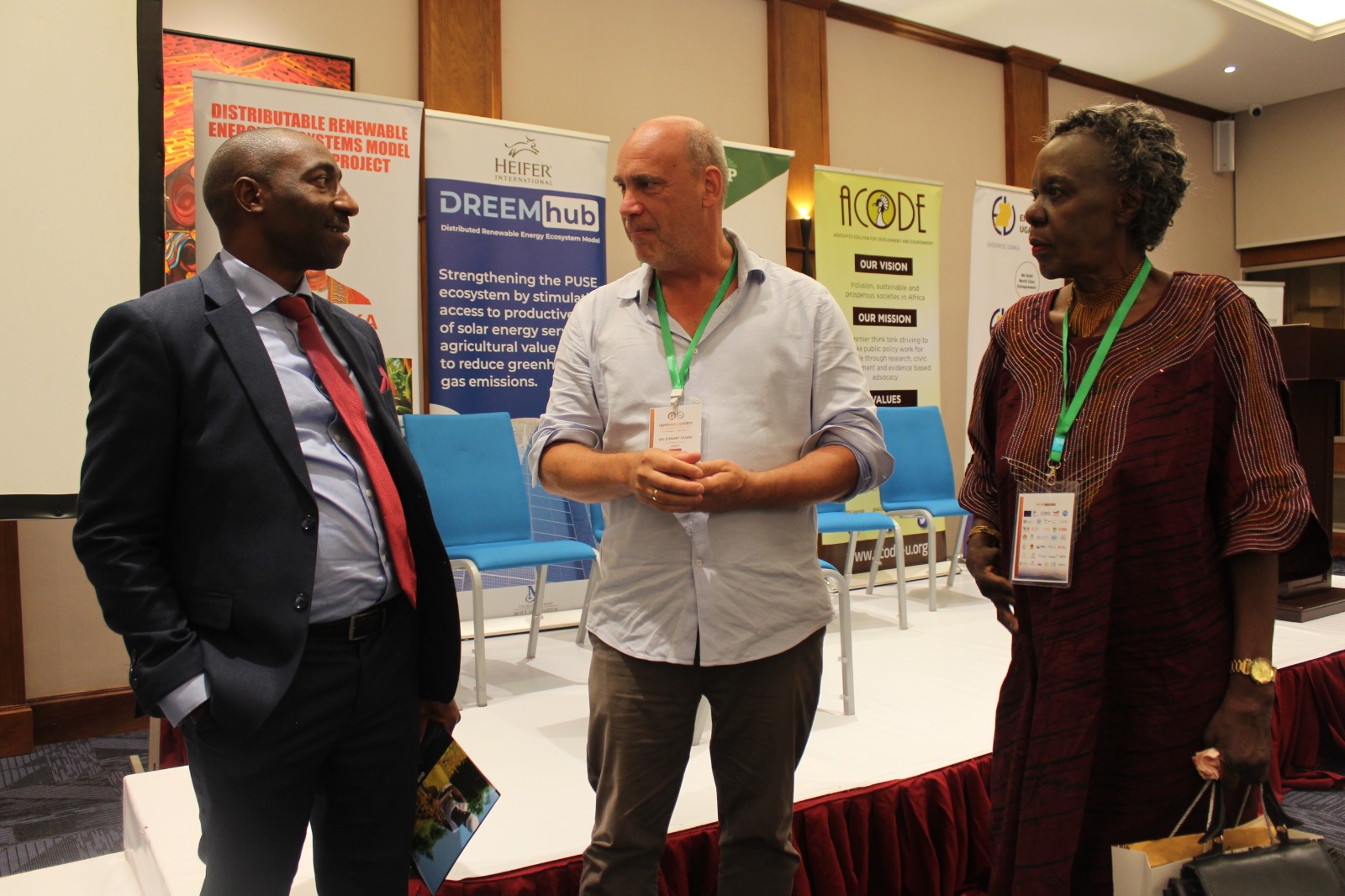
He was speaking to Bbeg Media at Serena Hotel in Kampala during a demonstration of the DREEM Hub project, which is funded by the Charles Stewart Mott Foundation.
The project seeks to strengthen the support systems needed to expand the productive use of solar energy in agricultural value chains.
Matovu said the challenge goes beyond providing farmers with solar equipment. It also involves helping them identify suitable technologies, assess the financial benefits, access affordable credit, and acquire the skills needed to operate and maintain the equipment.
“Who educates and helps the farmer identify the right technology? Who evaluates whether the investment makes technical and economic sense? Who provides affordable financing? Who trains the user to operate and maintain the equipment?” Matovu asked.
He also questioned who would ensure that appropriate standards are followed, government policies support adoption, and successful projects are expanded to reach thousands of farmers rather than remaining isolated initiatives.
Matovu said these challenges required cooperation among organisations with different areas of expertise because no single institution could provide all the support farmers need.
The DREEM Hub brings together Heifer International Uganda, Joint Energy and Environment Projects (JEEP), the Advocates Coalition for Development and Environment (ACODE), Enterprise Uganda, the Kabaka Foundation and Bethany Land Institute.
“The whole idea of DREEM is that if we want solar energy to transform agriculture, we must support the entire ecosystem around the technology,” Matovu said.
However, he noted that the high initial cost of solar equipment remained a major obstacle, even where farmers and cooperatives understood the long-term benefits.
Matovu said Heifer International Uganda had explored partnerships with commercial banks and other financial institutions to develop financing arrangements suited to farmers and cooperatives.
Ruth Kiwanuka, the executive director of JEEP, called on Ugandans to adopt cleaner energy alternatives to reduce pressure on the environment.
She pointed to deforestation and the reclamation of wetlands as among the environmental challenges facing the country, and called for stronger partnerships between government and civil society to promote sustainable energy use and environmental protection.