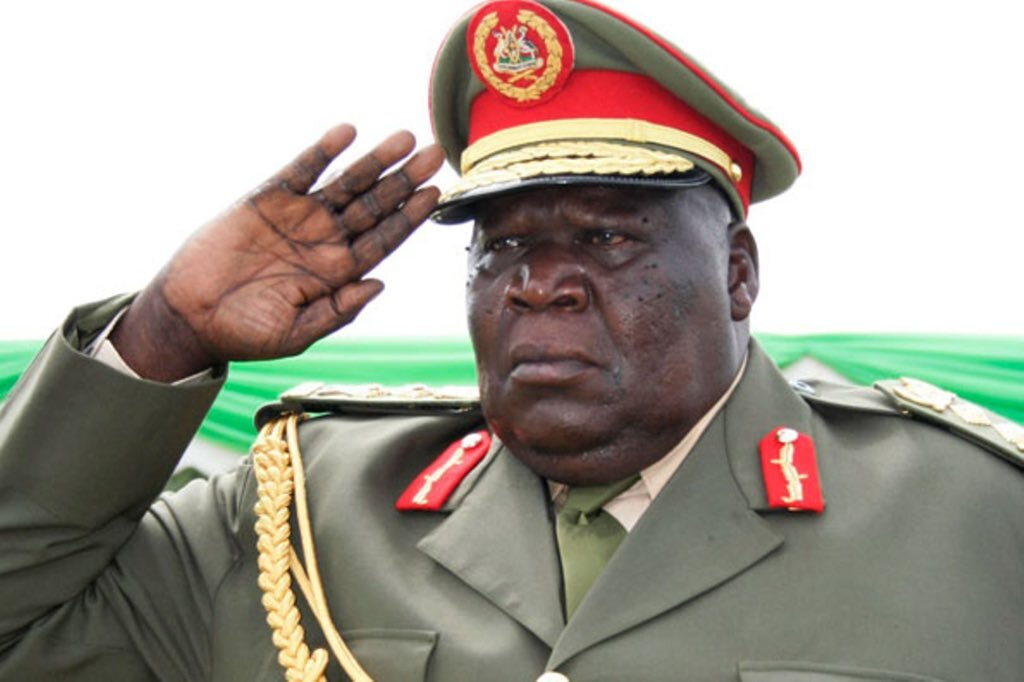
Former Second Deputy Prime Minister Gen. Moses Ali, a soldier, a former rebel commander, cabinet minister, and one of Uganda’s most enduring political figures, is dead. He was 87.
Writing on X, President Museveni eulogised Ali as someone who provided service to his country for a long time, as a soldier and a political leader.
“We shall miss his contribution greatly. May the Almighty God rest his soul in eternal peace,” Museveni said.
Capt Mike Mukula, the former NRM vice chairman for Eastern Uganda, who broke the news of Ali’s death, said he dedicated his life to serving Uganda.
“His contribution to the struggle for peace, national unity, stability, and reconstruction will forever remain engraved in the history of our nation. He was a courageous soldier, an astute leader and an elder statesman whose wisdom, humility and unwavering commitment to Uganda inspired generations of leaders and citizens alike,” Mukula said.
For more than five decades, Ali occupied a rare place in Uganda’s public life. He served under Idi Amin, fought against successive governments as a rebel leader, reconciled with President Museveni through a landmark peace agreement, rose to become one of the country’s highest-ranking military officers, and spent decades in Parliament and cabinet.
Born in 1939 in Atabo Parish, Pakele Division, in present-day Adjumani district, Ali began his working life as a teacher before joining the Uganda Army in 1968.
He quickly rose through the military after receiving training in Israel and the United Kingdom. By 1974, he had attained the rank of brigadier during Idi Amin’s government.
During the Amin years, Ali held several important cabinet positions, including Minister of Provincial Administration, Minister of Internal Affairs, and Minister of Finance.
He became one of Amin’s trusted associates at a time when Uganda was isolated internationally and marked by political violence.
The collapse of Amin’s government in 1979 dramatically altered Ali’s fortunes. Like many senior officials of the regime, he fled into exile in South Sudan.
In the early 1980s, Ali founded the Uganda National Rescue Front (UNRF), a rebel movement that operated largely in the West Nile region. From bases across the border in Sudan, the group fought against the government of President Milton Obote through guerrilla warfare.
Joining Museveni
Yet his greatest political achievement came in 1986 after Museveni and the National Resistance Army (NRA) took power.
Recognizing the need to stabilize the strategically important West Nile region, Museveni entered negotiations with Ali. The talks culminated in a historic peace agreement signed at Arua Airfield on Nov. 16, 1986.
Under the agreement, Ali’s fighters were integrated into the NRA and were appointed a major general, ending years of armed confrontation.
The agreement became one of the earliest and most significant reconciliation efforts of Museveni’s new government and helped pacify a region long associated with conflict.
It also established an alliance between Ali and Museveni that would last for four decades.
Over the years, he served in numerous cabinet positions, including Minister of Tourism, Minister of Youth, Culture and Sports, Minister of Relief, Disaster Preparedness and Refugees, First Deputy Prime Minister and later Second Deputy Prime Minister.
He also played another important peacemaking role in 2002 by helping negotiate an agreement with the rebel group UNRF II, contributing to the end of another insurgency in West Nile.
Although his career was largely defined by public service after 1986, it was not free of controversy.
Arrested
In 1990, Ali was arrested and charged with treason and terrorism after authorities accused him of supporting renewed rebel activity in West Nile through the West Nile Bank Front (WNBF) and UNRF II.
He denied the accusations, and the charges were eventually dropped. He was released in 1992, reportedly following diplomatic intervention by Libyan leader Muammar Gaddafi.
Ali later entered elective politics and was first elected MP for East Moyo, now Adjumani West, in 2001. Voters repeatedly returned him to Parliament, making him one of Uganda’s longest-serving legislators.
Earlier this year, despite visible signs of declining health, he was again elected to represent Adjumani West.
To many people in West Nile, Ali was more than a politician.
Known as “The Cock of West Nile,” he was widely regarded as the region’s most influential political leader and its only four-star general.
His standing among the Kakwa and Lugbara communities gave him unusual authority, while his relationship with Museveni made him an important bridge between West Nile and the central government.
His supporters viewed him as the man who helped restore peace to a region that had suffered years of war and instability.
Yet his final years also prompted difficult conversations about ageing leadership.
Over the last several years, Ali’s health visibly deteriorated. He increasingly appeared frail at public events and spent extended periods receiving medical treatment.
The issue drew nationwide attention during the NRM parliamentary nominations when Ali remained seated inside his official vehicle as party officials declared him duly nominated.
Video footage showing him gently rocking in his seat while nomination proceedings continued nearby quickly spread across social media. Many Ugandans questioned whether he fully understood the proceedings.
The images reignited debate about whether elderly leaders in poor health should continue seeking elective office.
Others defended him, arguing that his historical importance, experience, and symbolic role within the ruling party remained invaluable.
For Museveni, Ali represented more than an individual politician. He embodied one of the NRM’s defining narratives of reconciliation after years of conflict.
Even after he was dropped from the cabinet in this year’s reshuffle, Ali remained an influential elder within the ruling party.
Few Ugandan leaders experienced so many political transformations while remaining central to national affairs.
Gen. Moses Ali leaves behind a legacy that will continue to generate both admiration and debate. He devoted more than 50 years to public service and remained active in national politics almost until his final days.