
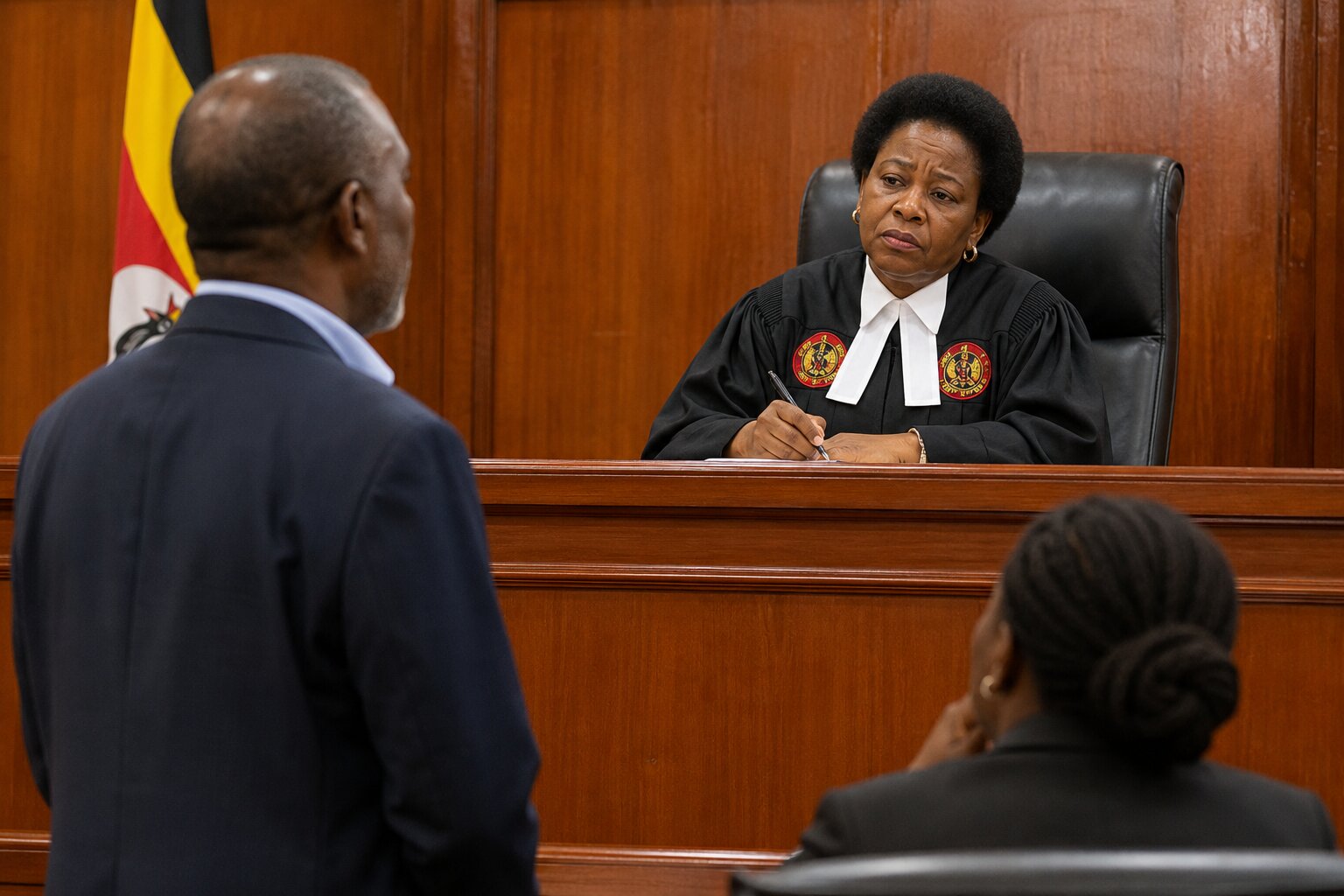
One admission after another undid Ronald Zibu’s defence as he tried to fend off a divorce petition filed by his wife, Agnes Nabanooba.
For instance, while insisting that he had done nothing wrong because he was a polygamous man, Zibu acknowledged under oath that he had fathered children with women he had never married under customary law.
It was that testimony that ultimately convinced the High Court that he had committed adultery, paving the way for the dissolution of his more than two-decade customary marriage to Nabanooba.
Nabanooba went to court seeking to dissolve the marriage, determine custody and maintenance issues relating to their youngest child, and share equally in property acquired during the 26-year marriage.
NThe couple held a customary marriage ceremony in Busujju, Mityana, in 2000 before settling at Kawaala in Kampala.
They raised three children together while building businesses and acquiring several properties over the years.
Nabanooba told the court that her marriage gradually fell apart because her husband maintained relationships with several other women.
She accused him of engaging in extramarital affairs and living with another woman in Nansana. She said those relationships caused her emotional pain and anxiety and eventually made the marriage impossible to continue.
Zibu admitted that he had more than one wife but rejected accusations of adultery.
He argued that customary marriage allows polygamy and told the court that he had lawfully married other women under customary law.
He further maintained that Nabanooba’s conversion from the Anglican faith to a Born Again Christian had created disagreements in their home.
Zibu accused Nabanooba of deserting the matrimonial home and insisted that he still loved her and wished to reconcile.
Muwema sues former landlord over “illegal” eviction, seeks Shs 15 billion
Justice Alice Komuhangi Khaukha, who heard the case, first settled an important preliminary question after Zibu appeared to challenge the validity of the marriage despite earlier acknowledging it.
She said that the marriage was valid because customary marriages become legally recognised once the necessary customary ceremonies are completed, even if they are never formally registered.
“In light of the above, and because both parties agreed to have been married customarily, it is the finding of this court that there exists a valid customary marriage between [Nabanooba] and [Zibu],” she ruled.
Justice Khauka explained that although Nabanooba’s lawyers referred to desertion, adultery and cruelty, only adultery and cruelty had actually been pleaded in the petition. She therefore confined herself to those two grounds.
Adultery became the decisive issue because Zibu believed that being in a customary polygamous marriage automatically protected him from such allegations.
Justice Khauka disagreed, referring to earlier court decisions which held that a man married under customary law can still commit adultery if he has sexual intercourse with a woman whom he has not married under customary law.
“The other woman does not need to be a married woman; what matters is that a customarily married man had sexual intercourse with another woman that he is not customarily married to,” she said.
This legal distinction proved fatal to Zibu’s defence because, although he insisted throughout the proceedings that he was simply polygamous, he admitted during his testimony that he had a daughter with Maureen Atukunda, whom he had never married.
He also admitted to having another child with a woman called Nangendo despite not being married to her.
Justice Khauka said that those admissions amounted to proof of adultery.
“The above testimony by [Zibu] is an admission that he has had a sexual relationship with two different women that he is not customarily married to and that he even has children with them. I, therefore, find that [Zibu], by his own admission, has committed adultery during the subsistence of his marriage to [Nabanooba],” she said.
Justice Khauka distributed the properties as follows:
She awarded five rental double rooms in Kasubi Zone II, Rubaga, to Zibu because they are occupied by his wife, Robinah Namusoke, and her children.
Justice Khauka said the couple’s former matrimonial home in Kawaala Central, Rubaga, should go to Nabanoona because she is already living there.
The two rental houses in Kawaala Zone II, Rubaga, went to Zibu, as did the four-bedroom house in Nansana where he lives with another woman, Faith Nantambi.
She awarded a commercial/residential property that the couple had acquired in Wakiso town to Nabanooba.