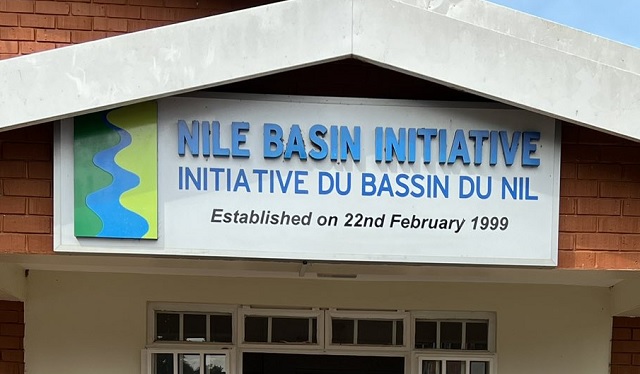
The Industrial Court has dismissed a labour dispute filed by Matthew Rumanyika against the Nile Basin Initiative (NBI), his former employer, saying the regional organisation enjoys diplomatic immunity and cannot be sued in Ugandan courts over such employment matters.
Justice Anthony Wabwire Musana said the case could not proceed because the court had no power to hear it once diplomatic immunity was established.
The dispute began after Rumanyika, who worked as an accountant with the Nile Basin Initiative, fell out with his employer following disciplinary action.
Nile Basin Initiative sacked Rumanyka on August 29, 2024, accusing him of insubordination and disobedience to authority.
Feeling aggrieved, Rumanyika filed a claim in April 2025, accusing the organisation of wrongful, unfair, and unlawful dismissal.
He also sought compensation and asked the court to compel the NBI to set up “a neutral, impartial and effective tribunal” to handle employment disputes.
However, before the court could even hear the substance of his complaint, the Nile Basin Initiative raised a preliminary objection.
Its lawyers, Tendo Lubwama and Benson Mayanja of K&K Advocates, argued that the organisation is protected by diplomatic immunity under Ugandan law.
They told the court that the Nile Basin Initiative is listed under the Diplomatic Privileges Act and related regulations as an organisation that cannot be subjected to civil or administrative proceedings in Uganda.
They backed their argument with several past court decisions where similar organisations were shielded from lawsuits by employees.
“The respondent [Nile Basin] enjoys diplomatic immunity under sections 1 and 2 of the Diplomatic Privileges Act and regulations which prescribe the court the respondent as an organisation entitled to diplomatic immunity for legal and administrative proceedings in Uganda,” the ruling notes.
Rumanyika, who was represented by Paul Seguya of ASB Advocates, acknowledged that while the Nile Basin Initiative has immunity, this should not block his constitutional right to a fair hearing.
He said he intended to challenge the constitutionality of that immunity, especially because the organisation does not provide an internal dispute resolution mechanism for employees.
Before giving his ruling, Justice Musana explained that there is a two-step test that can help prove whether Rumanyika’s grievances are worth the court’s time.
First, the court must confirm whether the organisation actually enjoys diplomatic immunity.
Second, it must check whether the actions in question were carried out in the course of official duties.
On the first test, the court found no difficulty. It noted that under the Nile Basin Initiative Act and the Diplomatic Privileges Act, the organisation and its staff enjoy the protections necessary for their functions.
These protections are reinforced by the Vienna Convention on Diplomatic Relations, which Uganda has adopted into law.
“We find that, by virtue of the [law] read together with the Diplomatic Privileges Act, Nile Basin Initiative enjoys diplomatic immunity in Uganda,” Justice Musana ruled.
He also pointed out that Rumanyika himself had conceded this point in his claim.
On the second test, the court examined whether the dispute arose from official functions of the organisation. It concluded that disciplining an employee is part of an employer’s official duties.
Because both conditions were satisfied, the court found that the immunity fully applied. That meant the court had no jurisdiction to hear the case at all.
Justice Musana stressed that once a court lacks jurisdiction, it cannot take any further steps in the matter.
“It is trite that where a court finds that it lacks jurisdiction, its hands are tied and it must lay down its tools,” he said.
In the end, the court upheld the objection raised by the Nile Basin Initiative and dismissed the case in its entirety.
However, Justice Musana declined to order Rumanyika to pay legal costs, noting that he should not be further burdened.