
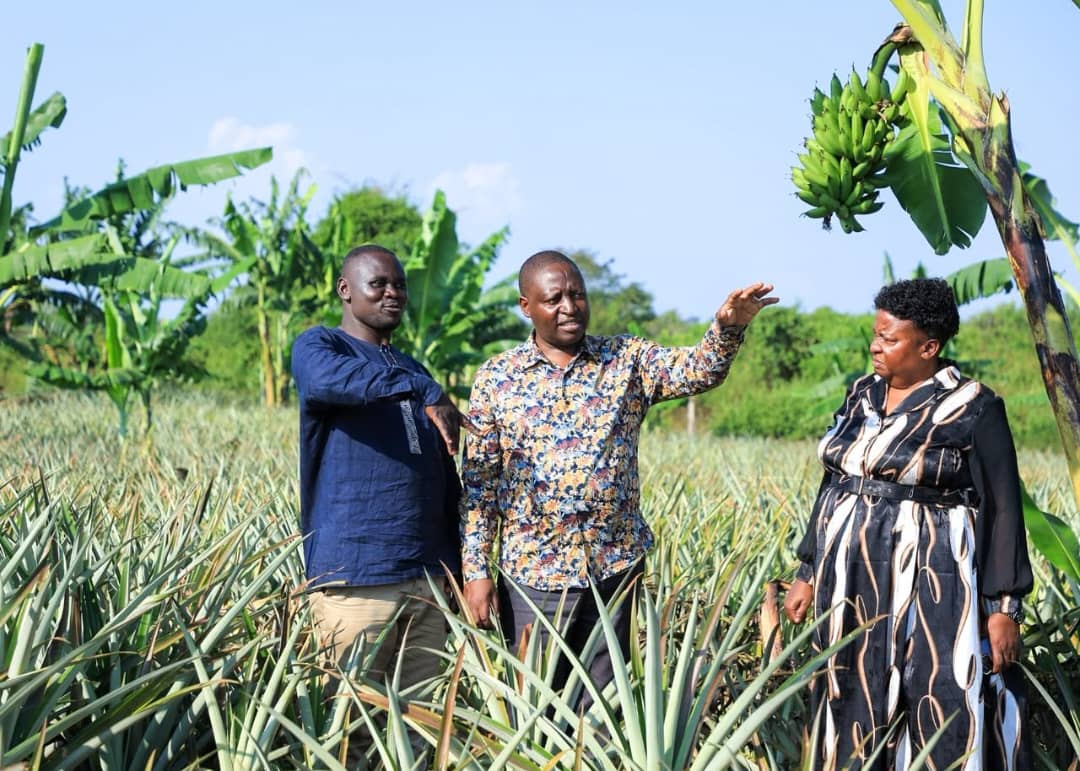
The State Minister for Finance (General Duties) Cissy Mulondo and the minister of State for Industry David Bahati have visited pineapple farmers in Kawundwe Village, Nakasongola, and pledged government support to help them move from growing pineapples to processing and exporting them.
The ministers visited members of Kikyusa Pineapple Farmers Cooperative Society, a farmer-owned cooperative formed by pineapple growers who came together to increase production, improve their bargaining power and benefit more from the pineapple business.
The cooperative has grown to more than 640 acres of pineapple plantations and provides employment and other economic opportunities to about 2,000 Ugandans.
The farmers, however, say they want to go beyond selling fresh pineapples and invest in value addition. They want to process their pineapples into products that can be sold locally and on international markets, including markets in Dubai and China.
Pineapples take about 18 months to mature, meaning farmers have to wait for a considerable period before harvesting and earning income from each crop.
The farmers believe that processing their produce could help them earn more from each harvest while reducing losses when there is an oversupply of fresh pineapples.
During their visit, Mulondo and Bahati encouraged the farmers to take advantage of affordable government financing available through institutions such as the Agricultural Credit Facility (ACF) and Uganda Development Bank (UDB) to invest in production and value addition.
The ministers also said the government would work with the relevant ministries and agencies to find practical solutions to some of the challenges facing the cooperative.
These include establishing a pineapple processing plant, acquiring value addition machinery, developing cold storage facilities, improving transportation and finding reliable markets for the farmers’ products.
The development of value addition facilities would also allow the cooperative to retain more of the value generated from pineapples within the local economy instead of relying mainly on the sale of fresh fruit.