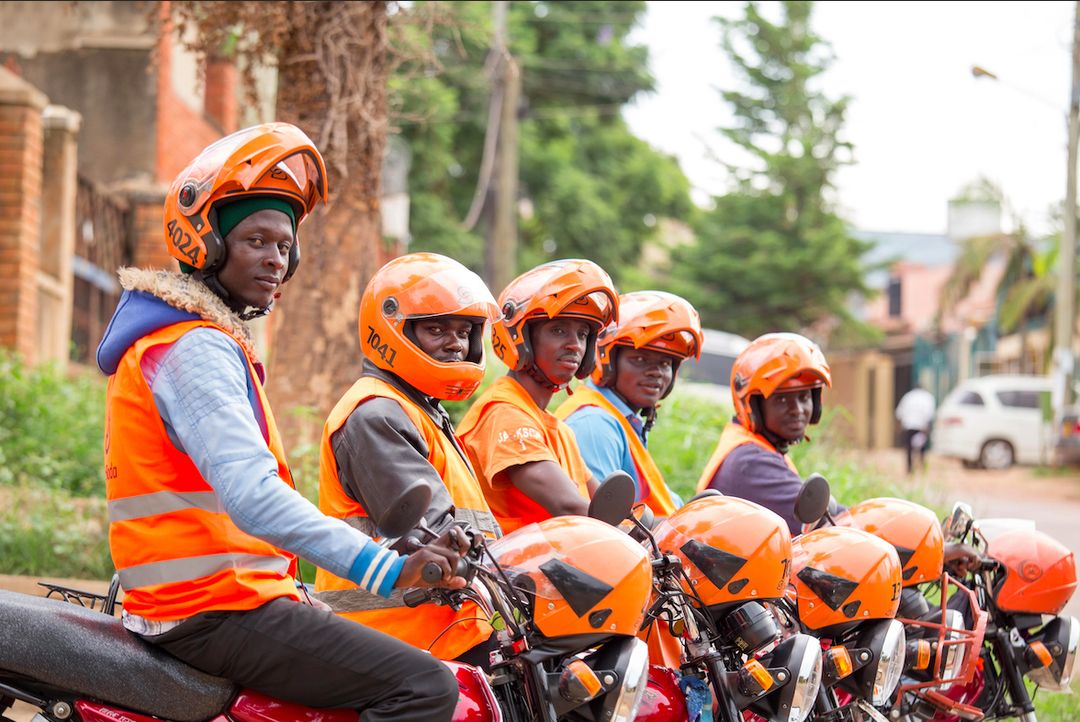
In what could turn out to be a watershed moment for thousands of boda boda riders who are contracted by ride-hailing apps, the Industrial Court has refused to throw out a case by a former SafeBoda rider who says he was a contracted employee, not a mere service contractor.
Justice Anthony Wabwire Musana said Enock Truinawe’s job status cannot be settled by what his contract calls him, “an independent contractor.”
Turinawe, who describes himself as a senior motorcycle rider with more than five years’ experience, signed an exclusive ‘contract for SafeBoda Package’ with Guinness Transporters Limited, which in Uganda trades as SafeBoda, on August 13, 2018.
SafeBoda is a ride-hailing and package delivery company. Under the deal, Turinawe joined the SafeBoda Community and could use its platform for one year. He agreed to use the app to connect with passengers and ‘actively accept ride requests through the platform’.
He also had to buy the SafeBoda Package, obey the company’s code of conduct and disciplinary process, serve a probation, and return its equipment. He was responsible for maintaining and insuring his own motorcycle.
Two years later, when things soured between the parties, SafeBoda discontinued Turinawe’s use of the app.
Turinawe went to the High Court’s Commercial Division and accused the company of unlawfully ending his contract of service. SafeBoda denied this and argued the matter belonged in the labour court.
On 1 June 2021, Justice Stephen Mubiru agreed that the dispute was predominantly a labour dispute and sent the file to the Industrial Court.
SafeBoda then raised a fresh objection. Its lawyer, Badru Tamale of KTA Advocates, argued that no contract of service existed, so the court had no jurisdiction.
Tamale said SafeBoda’s terms of use called Turinawe an independent contractor, not a full-time employee.
He added that Turinawe paid the company a commission instead of earning a salary. He said the rider also kept freedom over his hours, motorcycle, fuel, insurance, and maintenance.
Turinawe, who represented himself, argued that the court can decide whether his deal was employment or a services contract.
He said his claims for severance allowance, a certificate of service and damages stem from an employment relationship.
Court orders Prof Kanyeihamba’s estate to pay Shs45m to author he left out of his book
Before deciding the case, Justice Musana and the panel first tried to answer the question: Did Turinawe have a contract of service with SafeBoda or was he merely an independent contractor?
The judge said this was a unique case that needed to be handled delicately.
“Evaluating the existence of an employment relationship in platform work is quite novel in our jurisdiction. Our industrial jurisprudence has not yet set an independent legal standard,” he said.
For guidance, the court looked abroad.
In June 2026, the International Labour Organisation (ILO) adopted Convention No. 193 on decent work in the platform economy. Some say the convention recognises that some platform workers are genuinely self-employed and leaves each country to apply its own laws.
Justice Musana also turned to the United Kingdom. On 19 February 2021, the UK Supreme Court unanimously held that Uber drivers were “workers”, entitled to the minimum wage and paid holidays, though not full employees.
Uber later said it would treat British drivers as workers.
In September 2020, Spain’s Supreme Court ruled that Glovo delivery riders were employees, not freelancers. The government then passed a law making delivery firms treat riders as staff.
In the case of sports presenter Yusuf Baliruno contesting his expulsion from CBS, the Industrial Court examined control, pay and integration and found he was a freelancer.
Back to Turinawe’s case, Justice Musana said there was no doubt there was an employment relationship. But he added that what was crucial was the “substance of the working arrangements”, not “contractual labels.”
He said no single factor is decisive and platform work, like SafeBoda, requires no separate legal standard merely because “instructions arrive through an app.”
Justice Musana said SafeBoda’s control of its technology must be weighed against whether Turinawe owns a motorcycle, equipment or smartphone.
On the contract itself, he said: “neither the description assigned to the relationship in the contractual documents nor the assertions in the parties’ pleadings conclusively resolve that question.”
He concluded that SafeBoda’s objection came too early.
“We must allow the parties to present their respective cases so that the court may determine the true nature of their relationship,” Justice Wabwire said before overruling SafeBoda’s preliminary objection.
Is this a precedent?
Not yet, because the ruling does not say riders are employees. The case will now go to a full hearing.