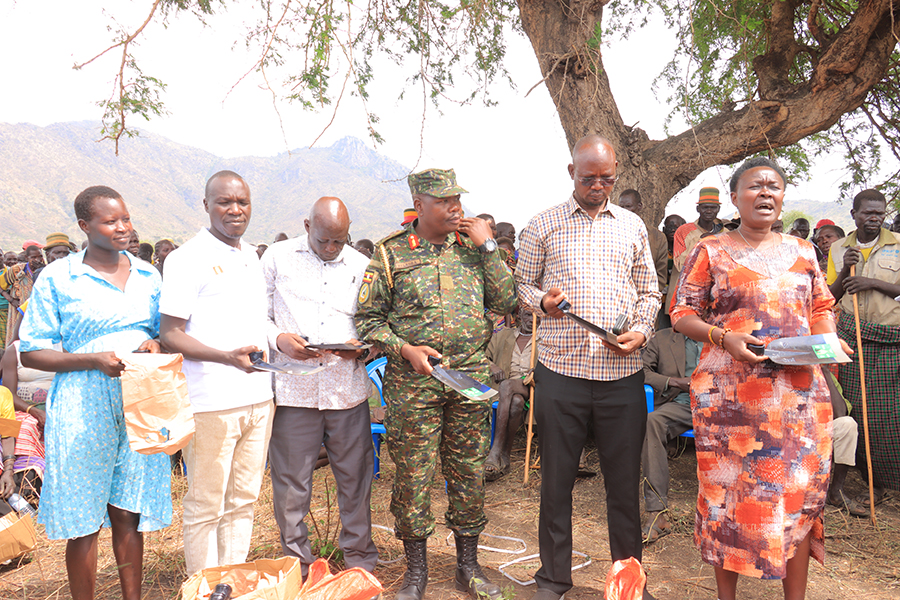
The government has distributed 19,833 hand hoes to households in Karenga district in a move aimed at increasing agricultural production, improving household incomes and addressing food shortages in the Karamoja sub-region.
The hand hoes, valued at approximately Shs297.5 million, were supplied through the Ministry of Agriculture, Animal Industry and Fisheries (MAAIF). Each household is expected to receive one hoe to support cultivation and encourage families to engage in farming.
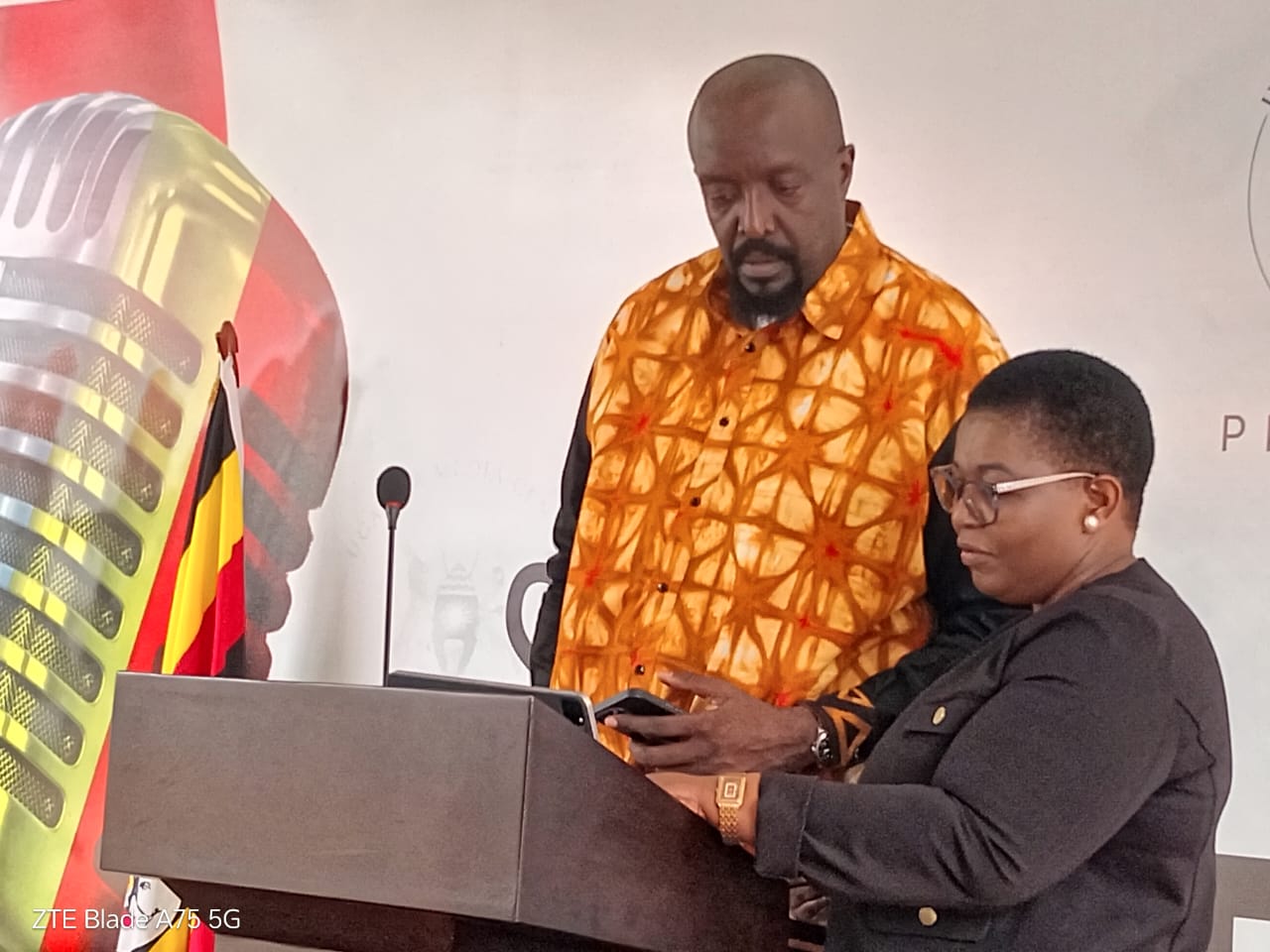
The distribution exercise was launched in Kapedo Sub-county by the Minister of State for Ethics and Integrity and Karenga District Woman MP, Rose Lilly Akello.
The initial distribution covered Kapedo Parish, with the exercise expected to extend to Kakwanga, Kawalakol, Labalangit, Sangara, Karenga and Lakori sub-counties.
It will also cover Kapedo, Karenga and Kidepo town councils, bringing the total number of administrative areas targeted to seven sub-counties and three town councils.
Speaking at the launch, Akello said the initiative was intended to help households increase food production, improve their livelihoods and reduce dependence on food assistance.
She urged beneficiaries to put the hoes to productive use instead of selling them, saying agriculture remains an important way for families to overcome poverty and hunger.
“Please use the hoes to increase productivity and fight poverty,” Akello said.
Akello also used the occasion to raise concern about children missing school because their parents keep them at home to look after cattle.
She appealed to parents to prioritise education, warning that denying children an opportunity to attend school would undermine their future.
She directed the Karenga RDC, Taban Peter Data and police to take action against parents who keep children out of school to graze animals.
“I appeal to the community to take their children to school. Parents who keep their children out of school to graze animals must stop,” she said.
Akello also called on LC III chairpersons, LC I leaders and kraal leaders to work with local authorities to ensure the programme benefits the intended households.
She said educating children was essential for the future development of Karenga and the country.
Taban Peter Data urged local government officials responsible for distributing the hoes to ensure the exercise was transparent and fair.
He said sub-county chiefs across Karamoja had received guidance on how to manage the distribution and identify the rightful beneficiaries.
Taban warned the officials against favouring their relatives and friends at the expense of eligible households.
He said the hoes should only be given to people from the communities covered by the programme, with each household receiving one.
“Avoid giving these hoes to your friends and relatives who are not from the parishes. Only consider people within your community and ensure that each household receives a hoe,” Taban said.
He also cautioned beneficiaries against selling the hoes and using the money to buy alcohol.
Instead, he urged them to use the tools to prepare their gardens and take advantage of the planting season to increase food production.
Dodoth West MP Baatom Ben Koryang said the government intervention would help families produce more food, earn better incomes and improve their living conditions.
He urged residents to use the support responsibly, saying increased agricultural production could help reduce poverty and hunger in the district.
Brig Gen Michael Walaka Hyeroba, the commander of the UPDF Third Infantry Division, said the distribution was part of wider government efforts to improve the economic well-being of communities while maintaining peace and security in Karamoja.
He said food security was closely linked to national security, arguing that lasting peace would be difficult to achieve if households continued to struggle to find food.
“Food security is national security. Let us all embrace agriculture as a pathway to peace and prosperity,” Hyeroba said.
He urged residents to use the hoes, educate their children and abandon cattle rustling in favour of productive economic activities.
“We cannot keep the peace with guns alone. True peace comes when every household has food on the table,” he said.