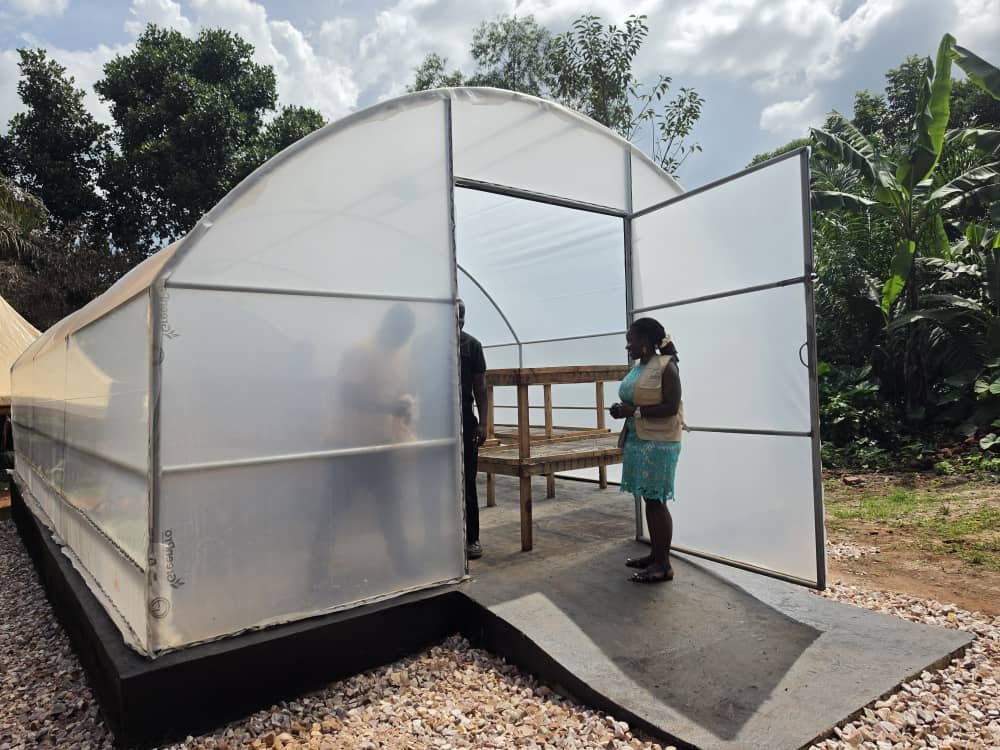
Coffee farmers in Mbaale village, Buyengo sub-county, Jinja district, now have a solar dryer to protect their harvest from unpredictable weather and earn better prices.
The Joint Energy and Environment Projects (JEEP) built the dryer with the Charles Stewart Mott Foundation and Heifer International. It was handed over to the farmers this week.
Richard Kimbowa, JEEP’s advocacy strategist, told journalists at the handover that the project began with a request from the farmers themselves.
“Upon demand from the Buyengo Bamala Kulabako farmers group, we coordinated with our partners in the DREEM Hub project to set up this solar dryer,” he said.
Kimbowa said climate change was disrupting farming, and many growers were ending up with losses. Rain during harvest, for example, can spoil produce left to dry in the open.
The dryer lets farmers dry coffee, maize, cassava and other produce under cover, where it stays clean and dries evenly. Kimbowa said that should help them add value and fetch fairer prices.
He said the facility can hold close to a tonne of coffee or other produce at a time. That means neighbouring farmers can use it too.
He warned, however, that the dryer must be guarded. If it is damaged, he said, it cannot hold the heat it needs to work properly.
Jinja district’s agricultural officer, Musa Ibanda, welcomed the partnership. He said the aim of the DREEM Hub project is to take solar equipment to rural farmers.
Emmanuel Lwanga, who leads the farmers in the area, said poor harvests in the past came from a lack of value addition and storage. He thanked the partners for the facility.
The farmers promised to look after the dryer and keep it secure.
JEEP is a Ugandan not-for-profit organisation founded in 1983 by Ruth Kiwanuka, after deforestation and soil erosion were seen as serious threats to people’s welfare. It sells solar dryers at a fair price and trains people to build them locally.
Buyengo still faces other problems, residents said, and chief among them is the lack of clean water.