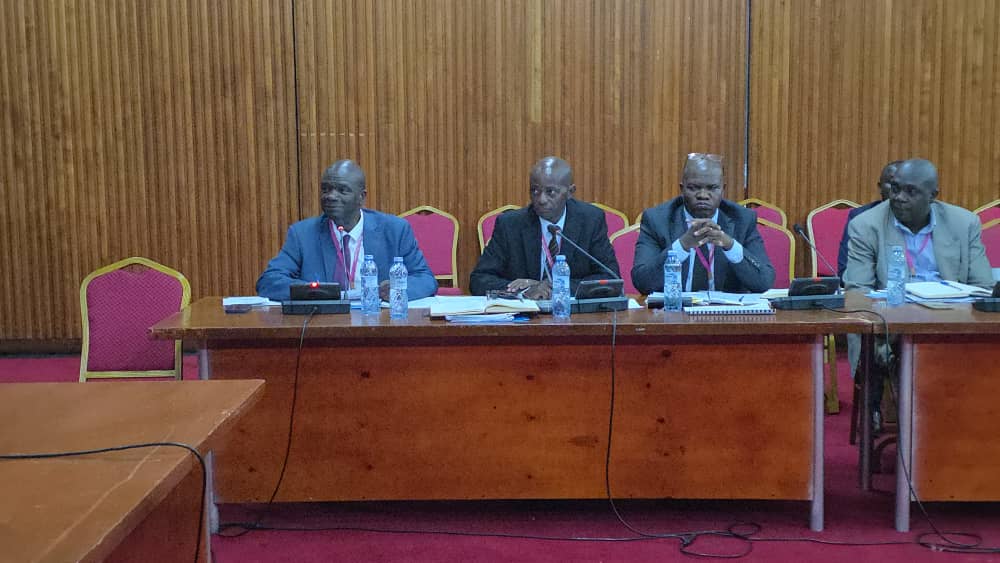

The Office of the Chief Government Valuer has raised concerns over inadequate staffing and transport, saying the shortage has affected its ability to carry out property valuations across the country, particularly in local governments.
Gilbert Kermundu, the Chief Government Valuer, told Parliament’s Public Accounts Committee (PAC) that the office has fewer employees than required, making it difficult to respond to the growing demand for valuation services from government institutions and district authorities.
Kermundu said the office is also constrained by a shortage of vehicles, further limiting its ability to reach local governments that need its services.
The committee, chaired by Mukono Municipality MP Betty Nambooze Bakireke, questioned how the office operates and why several local governments continue to experience delays whenever they seek valuation services.
Kermundu said the office was supposed to have 45 staff members but currently has only 25 permanent employees, alongside 35 workers on contract.
He added that the office has only five vehicles against an estimated requirement of 22, leaving it struggling to conduct field assessments across the country.
“We are understaffed, and these local governments do not have money. We are supposed to have 45 workers, but we are currently at 25, and 35 workers are on contract. We are supposed to have 22 vehicles, but we have five,” Kermundu told the committee.
The MPs questioned why the Office of the Chief Government Valuer does not take the initiative to carry out valuations at government institutions instead of waiting for individual entities to request its services.
Nambooze wondered why the office could not independently identify government properties that require valuation, arguing that other government oversight institutions routinely carry out their supervisory responsibilities without waiting to be invited.
“Can’t you just go and do valuations, especially in government entities, instead of waiting to be invited, as is the case with other supervisory bodies that do not first seek permission?” Nambooze asked.
However, Kermundu defended the office’s approach, explaining that valuation work is undertaken upon receiving formal instructions from the relevant government institutions or individuals.
He said the office does not independently visit properties to conduct valuations without first receiving a request from the interested party.
“Valuations are instructional. We just do not go to a place. They must solicit our services first,” Kermundu said.
The committee also raised concerns about what MPs described as inconsistencies in government property valuations, particularly when government entities are purchasing property compared with when they are selling it.
The legislators questioned why government property sometimes appears to attract higher valuations during acquisition but lower valuations when the same property is being disposed of.
They wondered whether such differences could point to collusion between officials involved in the valuation and disposal of public assets, particularly at the local government level.
“At buying time, you put the valuations higher, and yet at the sell-off point you undervalue. Isn’t this part of the connivance, especially in local governments?” the MPs asked.
In response, Kermundu said valuations should be based on the same principles, whether government is buying or selling property.
He explained that the market value at the time of valuation determines the price, meaning that the figures may change depending on prevailing market conditions.
Kermundu also explained that when government acquires private property for public use, the law provides for an additional 30 per cent payment as disturbance allowance.
He said this additional payment is intended to compensate property owners for the inconvenience and disruption associated with losing their property to government projects.
The committee further heard that some district local governments have struggled to dispose of government properties because they have been unable to obtain the necessary valuations from the Office of the Chief Government Valuer.
The MPs said some districts had repeatedly sought valuation services without receiving timely assistance, leaving the properties awaiting disposal for extended periods.
They questioned how local governments could effectively manage and dispose of public assets when the office responsible for providing professional valuation services was unable to respond to their requests.
Kermundu told the committee that his office had carried out valuations for several government institutions but acknowledged that it was still working to extend its services to all districts.
He maintained that staffing and logistical challenges had affected the office’s capacity to meet the demand for valuations across the country.
The MPs urged the Office of the Chief Government Valuer to improve its visibility and strengthen its engagement with local governments and the public.
They said regular interaction and clear communication would help government institutions understand the office’s mandate, how to access its services and the procedures involved in obtaining valuations.
The committee also stressed the need for the office to address complaints about delays and ensure that local governments can obtain timely valuations to support the proper management and disposal of public assets.