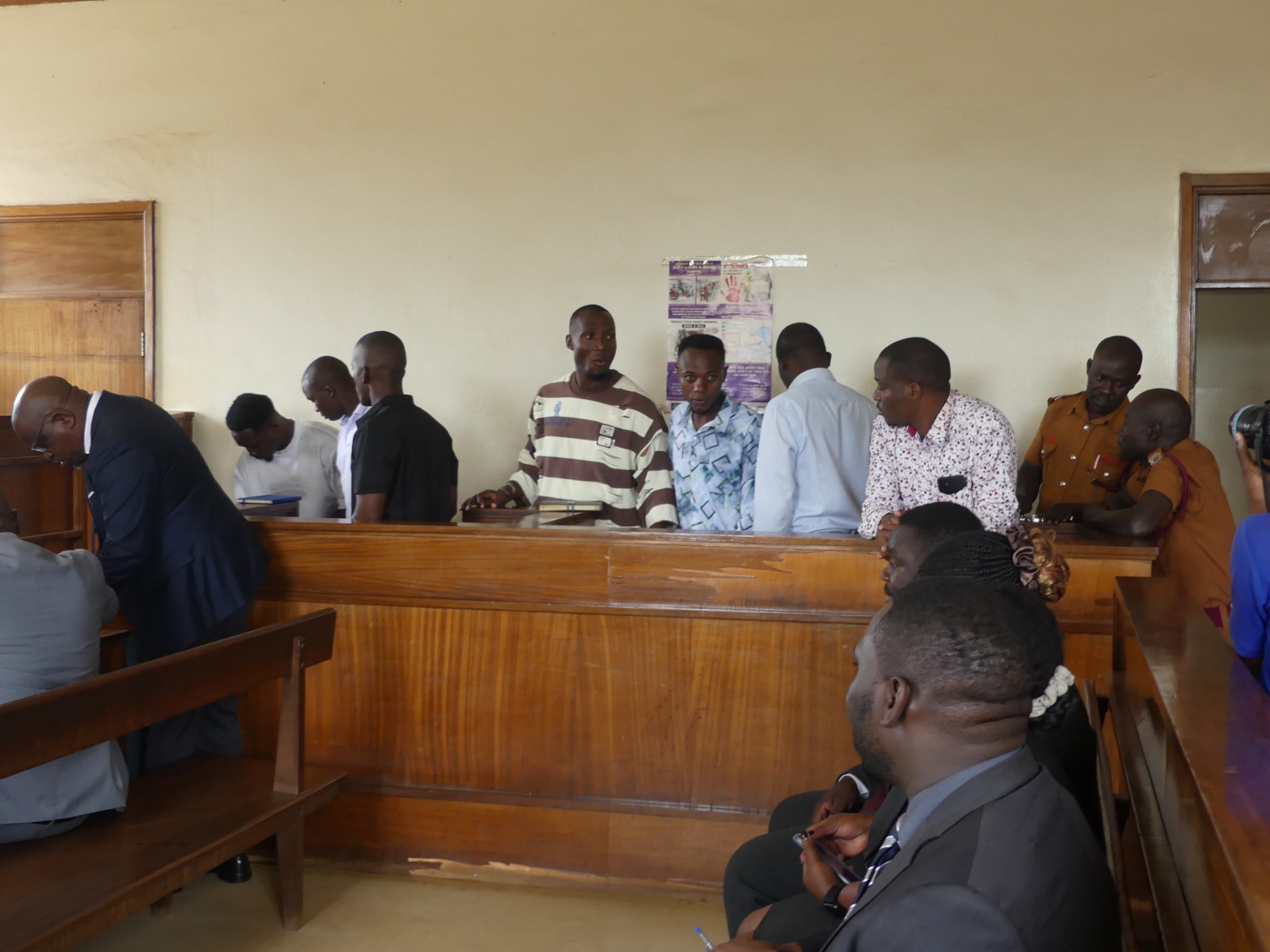

A woman who sued Kampala Hospital after receiving conflicting Hepatitis B test results during pregnancy has lost her case after the High Court ruled that the hospital and its laboratory technician acted according to accepted medical practice and were not negligent.
Justice Simon Peter Kinobe dismissed the case filed by Proscovia Namwanje against Kampala Hospital and its laboratory technician Solomon Ojilong, saying she had failed to prove that the defendants breached the standard of care expected of medical professionals.
The dispute began on November 16, 2019, when Namwanje visited Kampala Hospital for a routine antenatal check-up during her pregnancy.
As part of the antenatal examination, doctors advised her to undergo several blood tests, including malaria, TPHA and Hepatitis B screening.
According to court records, her blood sample was collected and tested by laboratory technician Ojilong. The results indicated that she was positive for Hepatitis B.
The diagnosis came as a shock to Namwanje who told court that she had previously participated in the national Hepatitis B vaccination campaign in 2016 and had received all three vaccine doses.
Because of this, she doubted the results and feared for both her own health and that of her unborn baby.
She said she became deeply disturbed and sought a second medical opinion.
She went to an AAR Health clinic at Makerere, where another laboratory carried out a high qualitative Hepatitis B test. That test came back negative.
Faced with two completely different results, Namwanje returned to Kampala Hospital on February 29, 2020 seeking confirmation.
The hospital repeated the rapid Hepatitis B tests and both tests again returned positive results.
Hospital staff then advised her to undergo a more advanced Polymerase Chain Reaction (PCR) viral load test, which was scheduled for March 3, 2020.
However, before carrying out the test, Namwanje sought another independent opinion from Lancet Laboratories Uon March 1, 2020. Both returned negative results.
She nevertheless went back to Kampala Hospital for the scheduled PCR viral load test and ironically, the hospital’s own confirmatory PCR test also came back negative.
Namwanje later sued both Ojilong and Kampala Hospital, accusing them of negligence.
She argued that the conflicting results caused severe mental anguish, psychological stress, trauma and unnecessary expenses as she searched for the truth.
She also complained that when she questioned the laboratory technician about the conflicting results, his reaction was completely petulant.
Through her lawyers from Ssemwanga, Muwazi & Co. Advocates, Namwanje asked court to declare Kampala Hospital vicariously liable for its employee’s actions.
She also sought declarations that the hospital’s actions caused preventable psychological suffering.
In addition, she asked for general damages, special damages, exemplary damages, interest and costs.
Kampala Hospital and Ojilong, who were represented by MMAKS Advocates denied negligence.
The lawyers argued that the laboratory technician used a National Drug Authority (NDA)-approved rapid chromatographic immunoassay Hepatitis B test kit.
They explained that such rapid tests are designed only as screening tools and that any positive result must always be confirmed by more advanced testing before treatment begins.
According to the hospital, its staff followed exactly that procedure.
The hospital further argued that doctors carefully explained to Namwanje that acute Hepatitis B infections often clear naturally within three to six months.
Because she showed no symptoms and her pregnancy was progressing normally, they advised that no treatment would begin unless confirmatory testing established chronic infection.
The hospital also maintained that after the second rapid positive test, Namwanje was correctly referred for a PCR confirmatory test. That PCR test later returned a negative result.
They argued that this demonstrated the hospital followed accepted medical practice rather than acting negligently.
During the hearing, Namwanje testified on her own behalf.
Kampala Hospital initially intended to call two witnesses but eventually produced only one witness after informing court that laboratory technician Ojilong had left the hospital and could not be traced.
The witness was Dr Peter Kibuuka, an obstetrician and gynaecologist with 21 years’ medical experience.
Dr Kibuuka told court that the rapid test kit used on Namwanje had been approved by the NDA and explained that Kampala Hospital merely used the approved diagnostic kits and could not be blamed for defects, if any, in products manufactured by others.
He further testified that hospital staff properly explained the meaning of the initial positive result and informed Namwanje that further confirmatory testing would be necessary before making a final diagnosis.
Dr Kibuuka also said the hospital advised Namwanje to continue antenatal care while awaiting confirmation because she had no symptoms and her unborn baby was healthy.
According to his evidence, once the second rapid test again returned positive, the hospital immediately arranged the PCR confirmatory test, exactly as required by medical guidelines.
Court orders Shumuk to pay Bank of Baroda Shs16.4 billion in unpaid loan
Justice Kinobe agreed with the hospital’s position noting that under Ugandan law, someone alleging medical negligence must prove that a health worker failed to meet the standard expected of a reasonable medical professional.
“A doctor can be held guilty of medical negligence only when he falls short of the standard of reasonable medical care,” Justice Kinobe said.
After reviewing all the evidence, he found no such breach.
“From Dr. Kibuuka’s explanation, the hospital exercised reasonable care expected of a medical personnel in the conduct of the Hepatitis B virus test,” he ruled.
He added that Kampala Hospital could not be faulted for using diagnostic kits that had been approved by the National Drug Authority.
Justice Kinobe also noted that Namwanje continued receiving antenatal care at Kampala Hospital until she safely delivered her baby.
He also rejected Namwanje’s claim that she suffered psychological injury saying she failed to produce medical evidence proving mental distress or high blood pressure allegedly caused by the test results.
“During cross examination still, she attempted to allege that her blood pressure rose as a result of the test results but she did not adduce any medical documentation to prove the same,” he ruled.
Justice Kinobe concluded that Namwanje’s claim for Shs200 million as general damages could not succeed and dismissed the entire suit.
Although Kampala Hospital won the case completely, Justice Kinobe declined to award legal costs against Namwanje saying her suit raised issues of public interest.