Public procuring entities have been urged to make local content a central part of Uganda’s economic growth strategy so that government spending creates more opportunities for local businesses, workers and communities.
The executive director of the Public Procurement and Disposal of Public Assets Authority (PPDA), Benson Turamye, said public procurement should go beyond compliance with tendering rules and become a tool for creating jobs, developing local businesses and supporting sustainable economic growth.
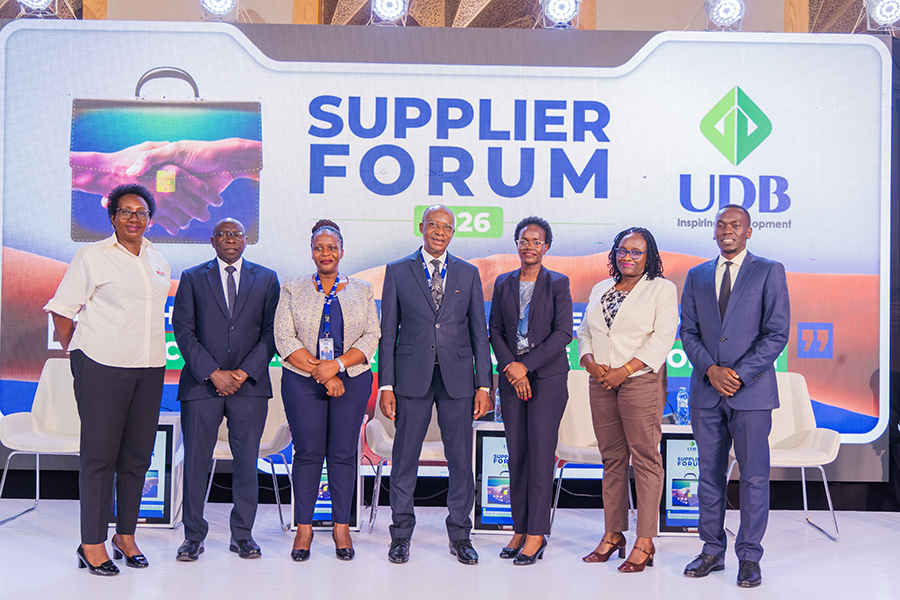
Turamye was speaking on Friday at a suppliers’ forum organised by Uganda Development Bank (UDB) at Four Points by Sheraton in Kampala.
The forum was held under the theme, “Enhancing Supplier Engagement in Public Procurement for Sustainable Development”.
He said Uganda’s ambition to achieve ten-fold economic growth would depend not only on the amount of money invested in public projects, but also on how much of that money creates opportunities for Ugandan businesses and communities.
“Public procurement is not a compliance exercise buried in tender notices and bid documents,” Turamye said.
He described procurement as one of the main vehicles through which Uganda can achieve its development goals.
“Sustainable development is the destination, supplier engagement is the bridge, and procurement is the vehicle that gets you there,” he said.
“A good procurement gives you a good supplier, and a good supplier delivers sustainable development. We are therefore all beneficiaries.”
Turamye said poorly planned public projects can have negative effects on communities even when the projects themselves are completed.
He cited examples such as roads constructed without sufficient consideration for people living along them, drainage systems that cause flooding and borrow pits that are abandoned after construction and can become breeding grounds for mosquitoes.
He said such problems show why procurement decisions should consider their wider social and economic impact rather than focusing only on whether a contractor has completed the work.
The forum was organised to give UDB an opportunity to engage suppliers and improve their understanding of the bank’s procurement processes.
It also sought to improve bidder responsiveness, promote inclusion and encourage more sustainable approaches to procurement.
UDB managing director Dr Patricia Ojangole said suppliers should be viewed as strategic partners rather than simply contractors or vendors.
“At UDB, we recognise and regard our suppliers not merely as contractors or vendors but as strategic partners,” Ojangole said.
She said suppliers play an important role in enabling the bank to deliver its services and support Uganda’s productive sectors.
“Every project delivered, every system implemented, every facility maintained, every service rendered contributes to the bank’s ability to finance enterprise growth, strengthen the productive sectors that we support and improve livelihoods across Uganda,” she said.
Ojangole said effective procurement can help strengthen value chains, support local enterprises and encourage responsible participation by the private sector in Uganda’s economic transformation.
She said this would require suppliers who are competitive, capable and committed to high standards of integrity and performance.
“This ambition can only be realised through a supplier community that is capable, competitive and aligned to the highest standards of integrity and performance,” she said.
The forum also brought together procurement experts from several public institutions for a panel discussion on how suppliers can better participate in public procurement.
The panellists included Doreen Tiberonda, deputy director of procurement and disposal at Kampala Capital City Authority; Gloria Tuhaise Wakooba, director of procurement and disposal at the Bank of Uganda; John Saturday, manager of the procurement and disposal unit at the Electricity Regulatory Authority; Ronald Tumuhairwe, manager of local content at PPDA; and Catherine Natukunda, manager of procurement and disposal capacity building at PPDA.
According to PPDA, about 65% of Uganda’s national budget is spent through public procurement. The authority said public procurement contributes about 15% to 20% of Uganda’s gross domestic product.
The forum also comes at a time when procurement practices across Africa are changing, with greater emphasis on transparency, professionalisation, local content and environmentally sustainable procurement.
Among the issues discussed were open contracting principles, which are intended to improve transparency; professional training and certification for procurement practitioners; deliberate promotion of local suppliers; and green procurement.
Suppliers attending the forum were also taken through Uganda’s public procurement regulatory framework and how they can improve their participation in bidding processes.
They were encouraged to assess their own capacity honestly, comply with procurement requirements, submit bids correctly and on time, and understand both their rights and obligations and those of procuring entities.
Turamye said stronger engagement between procuring entities and suppliers would help ensure that public money delivers wider benefits to the economy.