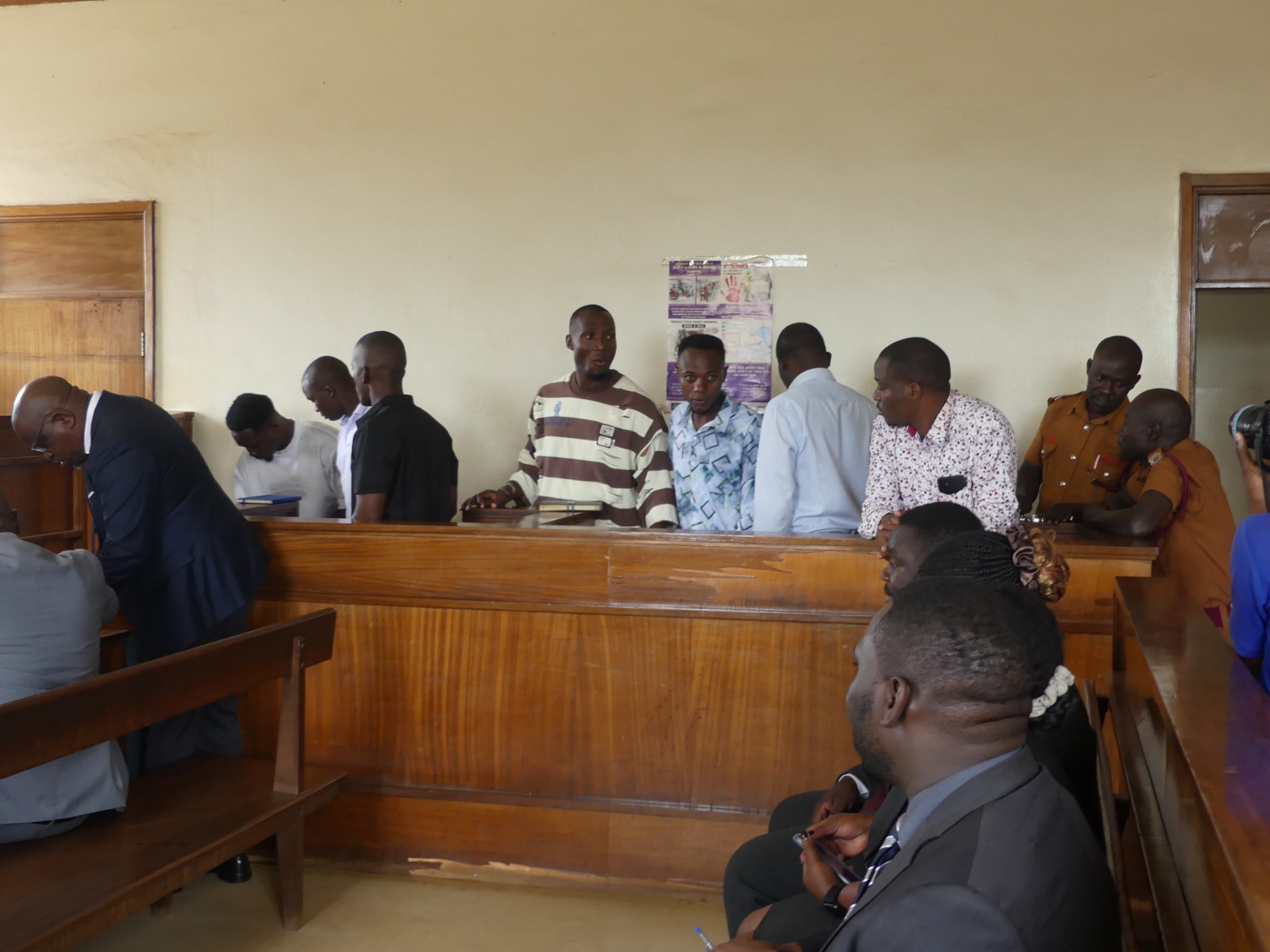
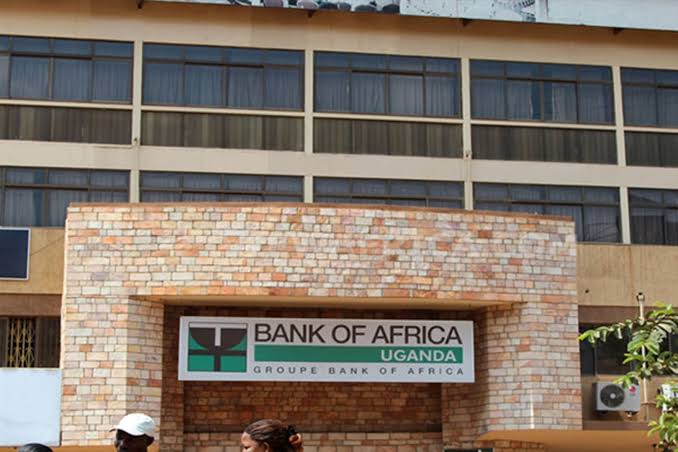
The High Court has allowed Michael Mwesigwa, a former Bank of Africa employee, to defend himself in a Shs291.6 million debt recovery case brought against him by the bank.
However, Justice Susan Odongo ordered him to first deposit Shs30 million in court within 30 days.
The dispute goes back to Mwesigwa’s time as an employee of Bank of Africa, where he worked as Head of Sales Coordination. During his employment, he obtained a mortgage loan from the bank under a Credit Facility Letter.
The mortgage was secured by his property at Mawoto in Mukono, together with developments on the land.
The mortgage was initially a staff facility carrying a preferential interest rate of 9% per year.
But the loan had a condition that stipulated that if Mwesigwa’s employment ended through resignation, retirement or termination, the outstanding loan would become immediately payable.
Another clause provided that once employment ended, the preferential staff interest rate would be replaced with the bank’s commercial lending rate, together with a 5% penalty interest on unpaid sums.
Mwesigwa resigned on December 30, 2021, and after his departure, the bank accelerated the loan recovery process and moved it from staff terms to commercial terms.
Mwesigwa claimed the bank went further and combined three separate loan facilities into one commercial overdraft without his written consent or a formal restructuring agreement.
The three facilities were a mortgage loan with an outstanding balance of Shs256 million, a personal premium loan of Shs29 million and a classic loan of Shs8.4 million.
He also accused the bank of taking his retirement savings worth 46 million without proper authority. He said the money later earned the bank Shs1.4 million in interest.
Mwesigwa said the bank subsequently withdrew the money without his written consent, a signed direct debit instruction or contractual authority.
He argued that he only agreed to the use of his Provident Fund money after pressure from the bank’s Risk Prevention Department, which he said delayed his staff exit clearance and placed him under financial pressure.
When the remaining debt was not cleared, the bank moved to recover its money by selling the mortgaged property.
Bank of Africa told the court that it recovered net proceeds of Shs162.7 million from the sale of the property, but Mwesigwa produced a March 27, 2024 letter from the bank’s lawyers, Orima & Co. Advocates, which stated that the property had been auctioned for Shs180.5 million.
Justice Odongo described the difference of Shs17.7 million as a “profound computational conflict” appearing in the bank’s own records, but the bank explained that the Shs162.7 million was the net amount after recovery fees and liquidation expenses had been deducted from the gross Shs180.5 million.
The judge noted that this explanation had not been included in the affidavit filed by the bank’s Senior Litigation Officer, Robert Murangira.
“The bank has failed to produce any auction account, receipts, invoices, or itemised bills of costs to justify the retention of Shs 17.7 million,” Justice Odongo said.
She added that because of this failure, the bank’s claimed outstanding debt of Shs291.5 million was “legally suspect and computationally untrustworthy.”
The bank had sued Mwesigwa under summary procedure, seeking Shs291.5 million as the outstanding balance as at June 30, 2025. It also sought continuing interest at 24% a year and a further 5% penalty interest.
Mwesigwa responded by asking the court for unconditional permission to defend the case.
His lawyer, Ronald Olobo, argued that Mwesigwa did not have to prove at this stage that he would ultimately win the case. He only had to show that there were genuine issues which deserved a full hearing.
He argued that the Shs17.7 million discrepancy in the property sale, the alleged unauthorised withdrawal of his savings, and the alleged consolidation of his different loans were serious matters that could not properly be decided through summary proceedings.
The bank, through its Senior Litigation Officer, Robert Murangira, described the application as “wholly incompetent, vexatious, malicious, and entirely devoid of legal or factual basis”.
The bank argued that Mwesigwa had received and benefited from the loans and had failed to repay them.
It maintained that his resignation automatically triggered the contractual provisions making the debt immediately payable and converting the staff interest rate to the commercial rate.
The bank also argued that the Shs17.7 million difference was simply the result of recovery fees and other expenses following the sale of the property.
On the loan consolidation issue, the bank argued that the main case concerned only the mortgage facility and that Mwesigwa’s complaints about the personal premium and classic loans did not affect the debt being claimed.
In any case, the bank said Mwesigwa had signed the loan agreement after receiving independent legal advice and was therefore bound by what he had agreed to.
Hash Security ordered to compensate man shot over Shs116,000 bar bill
Justice Odongo agreed with the bank on this particular point, saying that employment-linked loan acceleration was “standard industrial practice” and that the clause, by itself, did not raise a constitutional question.
She said Mwesigwa entered into the contractual arrangement with his eyes wide open and is bound by the terms to which he freely agreed.
But she found that Mwesigwa had raised genuine questions about the calculation of the debt, the alleged consolidation of the loans and the withdrawal of money from his separate savings account.
Justice Odongo stressed that at this stage she was not deciding whether Mwesigwa’s defence would eventually succeed.
“The role of the court is strictly restricted to that of a gatekeeper and a finder of triable issues, rather than a trier of the substantive merits of the defence,” she said.
She therefore concluded that Mwesigwa had disclosed “bona fide triable issues of fact or law”.
“There is no contestation as to the indebtedness. The contestation relates principally to the reconciliation of the claims,” Justice Odongo said.
However, Mwesigwa must now deposit Shs30 million in court within 30 days, and after making the deposit, he must formally file and serve his written statement of defence and counterclaim within 14 days.
Bank of Africa will then have 15 days to respond.