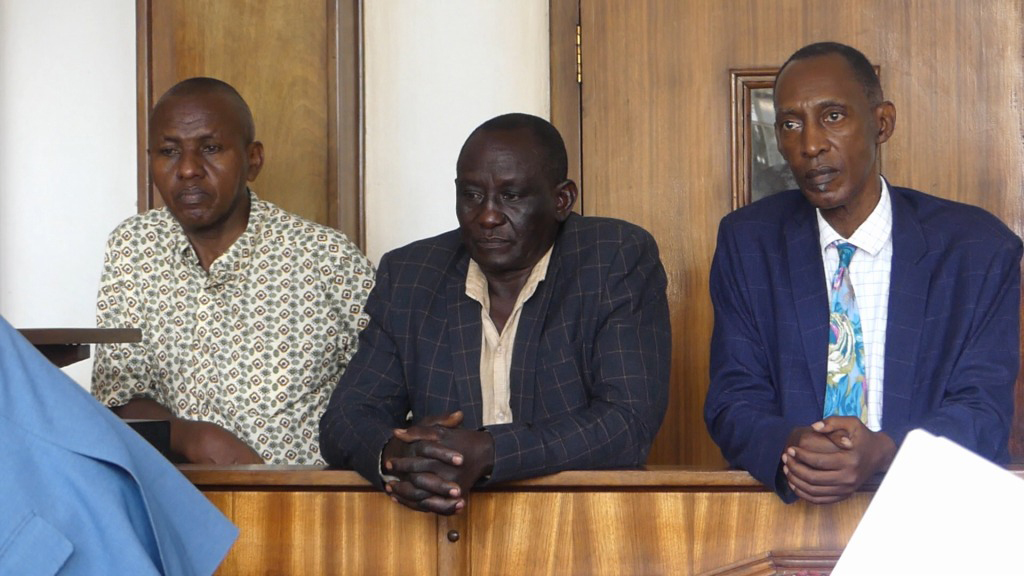
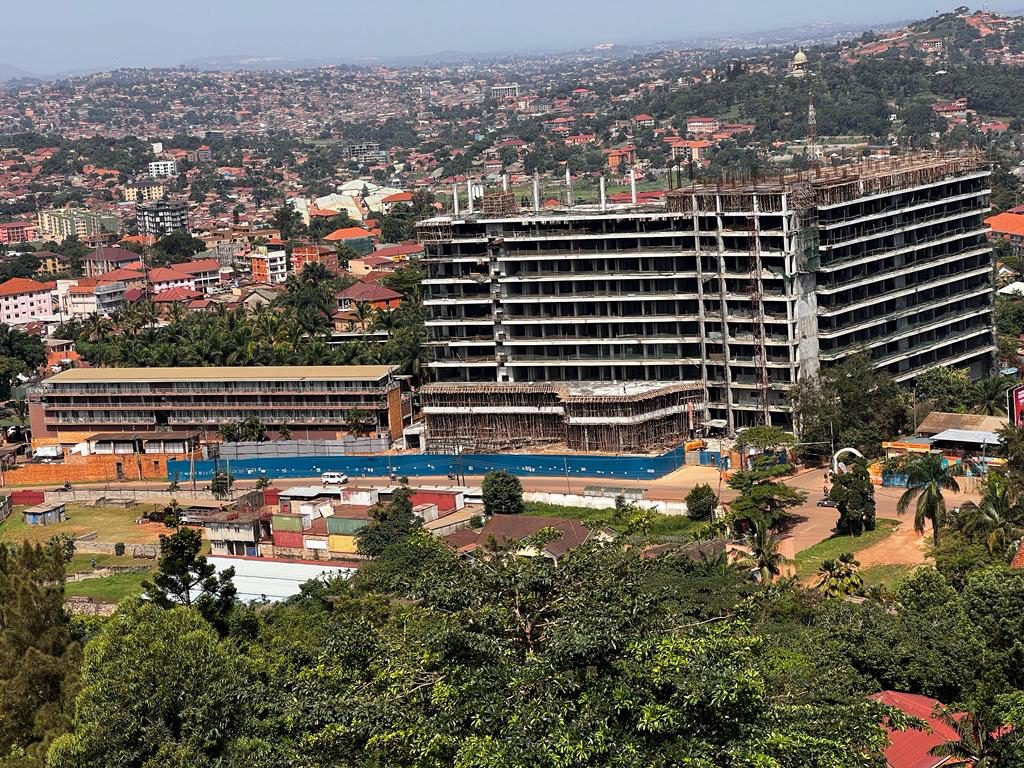
FBW (Uganda), an architectural firm that was contracted by Meera Investments for design work on the expansion of Kabira Country Club in Bukoto, has been ordered to deposit Shs495 million in court within 45 days before its appeal against an earlier ruling can be heard.
Justice Susan Odongo ruled that FBW and the other applicants must either deposit the money in court or provide an unconditional, irrevocable and on-demand bank guarantee for the same amount from a reputable commercial bank.
She warned that if FBW fails to provide the security within 45 days, the stay of execution will automatically lapse and Meera will be free to enforce an earlier judgment which awarded it Shs 2.76 billion.
The original judgment ordered FBW and its directors Paul Moores and Nigel J. Tilling to pay Meera a total of Shs2.76 billion in a dispute that dates back to February 2012, when the two entered into a professional consultancy agreement to complete construction drawings for the extension of Kabira Country Club.
The agreed professional fee was about Shs1.4 billion, payable in instalments linked to different stages of the project.
The relationship initially appeared to be working. Meera, which is owned by business tycoon Sudhir Ruparelia, paid the first three instalments, amounting to 60% of the agreed fee, but in 2013, the project was mutually suspended.
The relationship was revived in October 2018 when FBW agreed to continue with the work and prepare planning submission drawings for approval by Kampala Capital City Authority (KCCA).
The trouble centred on the fourth and fifth instalments when Meera insisted that the two payments were supposed to be made during the construction stage, after physical construction had progressed to the relevant milestones.
But FBW argued that the parties had orally changed the arrangement in 2018 so that the two instalments became payable when the revised design packages were submitted.
Meera eventually paid about Shs494.7 million between October 2018 and August 2019 to secure release of the drawings and prevent further delays.
The dispute then shifted from when the money was payable to the form in which FBW supplied the drawings.
Meera complained that the architects had supplied static PDF drawings instead of editable Computer-Aided Design (CAD) files.
The distinction was important because the project involved surveyors, contractors and other professionals who needed to measure, adjust and work with the drawings.
Meera argued that the PDFs could not properly be used for construction and accused the architects of effectively holding the project to ransom.
But FBW rejected the accusation, saying they had supplied drawings approved by KCCA and that standard architectural practice did not require them to hand over original CAD files.
They said withholding the original files was necessary to protect their designs from unauthorised alterations and to avoid professional risks.
This disagreement eventually destroyed the professional relationship, and in late 2019, Meera lodged a police complaint and Moores, a director of FBW, was briefly detained.
Meera then hired another consultancy firm, Design 256 Limited, to redraw the entire project, delaying the construction by about eight months.
In 2020, FBW took Meera to court, and on April 3, 2026, the court ruled in favour of Sudhir’s firm, finding that the architects were in breach of their contractual and professional obligations.
It ordered them to refund Shs494.7 million and awarded Meera Shs404.3 million in special damages and Shs1.86 billion in general damages, bringing the total award to Shs2.76 billion.
FBW and its directors were not pleased with this outcome and filed a notice of appeal seeking a stay of execution until their intended appeal could be heard.
They were represented by Isaac Walukagga of MMAKS Advocates, and Meera was represented by Joseph Kyazze and Jackline Natukunda of Magna Advocates, together with Rashid Semambo of Semambo & Semambo Advocates.
In the application, one of FBW’s main arguments was that it had not been properly notified when the judgment was delivered.
Moores told the court that the judgment had initially been expected on February 28 but was delivered on April 3 without an electronic alert to their lawyers.
He said their lawyers only learnt about the judgment on May 15 through a lawyers’ social media platform called “Litigators”.
Meera’s director, Sudhir, told the court that MMAKS Advocates had been linked to the case on the Electronic Court Case Management Information System (ECCMIS), and that the judgment had been uploaded to the system on April 3.
Sudhir argued that the lawyers’ failure to access the judgment could not be blamed on Meera or the court.
Muwema ordered to deposit Shs 370 million before appeal over eviction can proceed
Justice Odongo agreed with Meera on this particular issue, saying FBW’s lawyers were registered users who were linked to the case and that the uploading of the judgment to ECCMIS amounted to effective legal notice.
“Litigants and their counsel have an ongoing professional duty to actively monitor the electronic court registry,” she said.
She added that lawyers could not rely on their own administrative failure to check the electronic court system to escape statutory deadlines.
However, Justice Odongo still found that FBW had established enough of a right to appeal to justify considering its application for a stay.
FBW challenged the earlier finding that Meera had sued the correct company, arguing that the case involved a dissolved entity and that the wrong corporate party had been sued.
But Justice Odongo noted that the directors had used the names “FBW”, “FBW Uganda Limited” and “FBW (U) Limited” interchangeably on invoices, drawings and correspondence and had received payments through accounts bearing the FBW (U) Ltd name.
The architects also challenged the finding that they had breached their contractual obligations by failing to deliver usable and editable drawings.
Again, Justice Odongo stood by her earlier judgment, saying the project involved a 15-storey development with 350 rooms and that providing static PDF files which surveyors and contractors could not properly zoom, dimension or edit amounted to a serious failure of professional service.
She said the architects’ decision to demand the fourth and fifth payments before physical construction had started, while withholding essential CAD data, frustrated the contract.
Although Justice Odongo said FBW’s substantive appeal had “zero likelihood of success on its merits”, she added that their notice of appeal and efforts to regularise it were enough to establish a prima facie right to appeal.
The biggest question became what would happen to FBW if Meera immediately enforced the judgment and sought the Shs 2.76 billion awarded to it by the court.
Moores, the director of FBW, argued that payment of the entire amount could wipe out their business, describing the award as “colossal”.
Justice Odongo accepted this argument, saying an immediate enforcement of the award could lead to insolvency, liquidation and the permanent closure of FBW.
But Sudhir argued that he had already waited six years for the money and that another delay would cause financial hardship because property development requires large amounts of capital.
Justice Odongo rejected this argument, saying Meera was a highly capitalised real estate company and would not face bankruptcy because of a temporary delay in recovering the money.
FBW, on the other hand, she said, faced the possibility of collapse.
She therefore granted the stay of execution, but with strict conditions. She ordered FBW to deposit Shs 495 million in court, which represented the money that Meera had actually paid for the fourth and fifth milestones.
“There is no equitable justification for staying its execution without requiring strict security,” Justice Odongo said.
She declined Meera Investment’s request to have FBW deposit the entire Shs2.76 billion immediately.
But the ruling means that FBW has 45 days from August 21, 2026, to deposit the money, and if they fail, the stay of execution will automatically be cancelled.