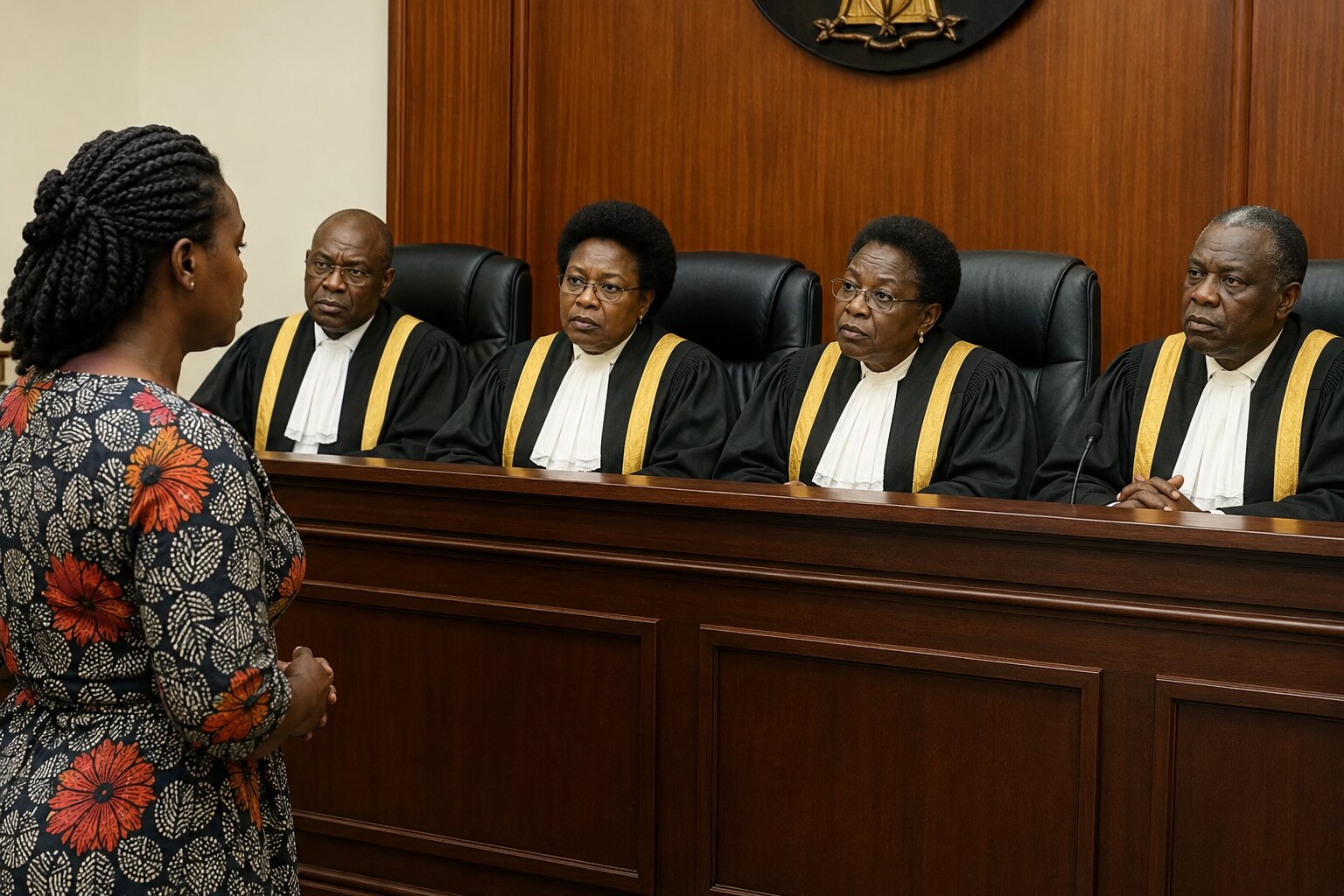

The High Court has dismissed a case lodged by G4S, a private security firm, against the Uganda Revenue Authority (URA), protesting payment of tax on the meals it provides to its security guards at CNOOC and TotalEnergies facilities.
However, the court also agreed that URA had wrongly used a blanket 30% tax rate in calculating the tax due and ordered the tax authority to recompute the assessment using the actual income of individual employees.
The dispute began after URA carried out a comprehensive tax audit of G4S covering the period between January 2018 and December 2022. The audit resulted in additional tax assessments amounting to Shs 7.52 billion for Income Tax, Value Added Tax, Withholding Tax, and PAYE.
G4S objected to the assessments, and the matter ended up before the Tax Appeals Tribunal (TAT).
During the proceedings, the parties settled disputes relating to VAT, Withholding Tax, and Income Tax through a consent agreement.
The only unresolved issue concerned a revised PAYE assessment of Shs 2.14 billion on meals provided to G4S guards.
G4S accepted liability for Shs 346.6 million but challenged the remaining Shs 1.796 billion, arguing that meals provided to guards at certain client sites should not be treated as taxable employment income.
According to the judgment delivered by Acting Justice Susan Odongo, the dispute centred on meals provided to guards deployed at clients’ premises, such as CNOOC and TotalEnergies, where clients required security officers to remain at their work stations throughout long shifts.
G4S’s witness, Fred Mugenyi, told the tribunal that the meals were not part of the guards’ salaries or employment contracts.
He testified that the food was provided because clients wanted guards to remain alert and on duty throughout 24-hour operations.
Mugenyi explained that clients requested the arrangement, the cost of meals was incorporated into service contracts, and G4S merely invoiced clients before paying the caterers.
He argued that the guards had no choice but to receive the meals and that the benefit existed purely to help G4S fulfil its contractual obligations.
G4S also argued that taxing the meals produced absurd results because some guards earned monthly salaries of between Shs 150,000 and Shs 250,000, yet URA valued the meals at a salary of more than Shs 1.5 million per month.
The company maintained that the primary beneficiary of the meals was the employer because they enabled uninterrupted security services.
On the other hand, URA’s witness Angus Arinaitwe testified that the meals were clearly employment benefits because only selected guards received them.
He told the tribunal that administrative staff and guards deployed to ordinary stations never enjoyed the same benefit.
“The meals were provided to only guards operating at specific locations. All administrative staff and guards not operating at the premium locations were not provided with the said meals,” Arinatwe said.
During cross-examination, Mugenyi, the witness of the security firm, made admissions that later proved costly for G4S.
Asked whether all administrative staff received meals, he answered, “No.”
That admissions became central to both the tribunal’s and, later, the High Court’s decisions.
Representing G4S, lawyer Ronald Kalema of AF Mpanga Advocates argued that the tribunal had wrongly interpreted the Income Tax Act by treating operational meals as employment income.
Kalema also argued that because clients requested and financed the meals, they could not be regarded as benefits provided by G4S.
URA’s lawyers maintained that the guards personally consumed and benefited from the meals regardless of who ultimately paid for them.
The lawyers further argued that the meals failed to qualify for exemption because they were not available equally to all full-time employees.
Court orders for DNA tests as widow, 26 children fight over late businessman’s property
Justice Susan Odongo agreed with URA and rejected G4S’s argument that the meals mainly benefited the employer.
“The meals provided to [G4S] guards, regardless of whether they were requested by clients, constitute an advantage derived in respect of employment,” she ruled.
She also rejected G4S’s argument that the meals qualified for exemption because guards rotated between assignments.
Justice Odongo said that the law required equal entitlement for all full-time employees, not merely an opportunity to receive meals depending on deployment.
“Rotational deployment does not constitute equality of entitlement as contemplated under Section 19(2)(e). The statute requires equality of entitlement, not chance,” she said.
She also found that the meal arrangement between G4S and some of its clients fell squarely within the law governing third-party employment benefits because the security firm coordinated the provision of meals and invoiced clients before paying service providers.
Although Justice Odongo dismissed G4S’s challenge on tax liability, she agreed that URA had erred by assuming all guards fell within the highest PAYE bracket.
She noted that the tax authority had adopted “an indiscriminate approach” by applying a blanket 30% tax rate without examining individual salaries.
Justice Odongo therefore upheld the tribunal’s order directing URA to recompute the PAYE assessment after G4S supplies detailed employee income records within 30 days.
She dismissed the appeal on tax liability but upheld the tribunal’s order to recompute the PAYE assessment.
The ruling means G4S remains liable to account for PAYE on the meals, but the disputed assessment of Shs 1.796 billion must first be recalculated using each employee’s actual earnings instead of a blanket tax rate.