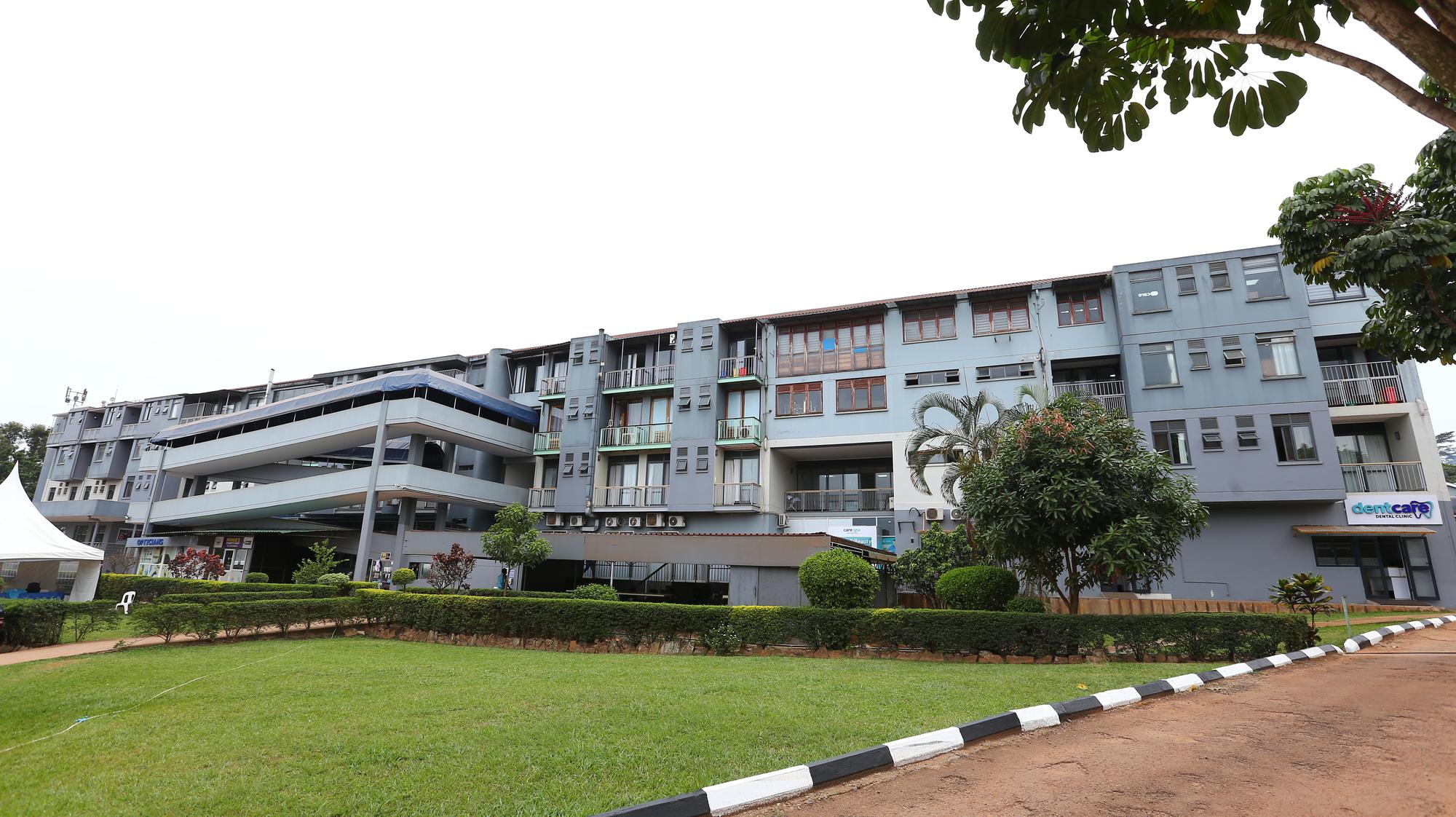
The International Hospital Kampala (IHK) in Namuwongo has lost a court case in which it wanted to recover Shs82.6 million in unpaid medical bills after it treated, for five months, an employee of an American-based firm who had gotten involved in an accident.
The case started after Robert Mugabe, who worked for Torres Advanced Enterprise Solutions LLC, the American firm, was seriously injured in a road accident on August 9, 2021. Mugabe was taken to the IHK that night for emergency treatment.
At 11:41 pm, Torres’ Human Resource Officer, John B. Lomeja, sent an email authorising the hospital to admit and treat him. IHK accepted the request and immediately began treating the patient.
Mugabe remained in hospital until January 18, 2022.
By the time he was discharged, his medical bill had reached Shs 82.6 million.
In court, the hospital claimed that Torres had initially agreed to pay the bill but later changed its mind.
The hospital said the company’s country manager, Randy Baham, later sent another email saying Torres would not pay any of Mugabe’s hospital bills.
IHK complained that despite sending many reminders to the company, the money was never paid.
The hospital argued that it could not stop treating a seriously injured patient simply because payment had become uncertain.
It therefore went to court seeking Shs 82.6 million in general damages, interest, and legal costs.
IHK was represented by Acquitas Advocates, while Torres was represented by Kashillingi, Rugaba & Associates.
Although Torres filed a defence, it did not attend the hearing.
IHK’s lawyers argued that the first email from Torres created an agreement between the two parties because the American firm had asked the hospital to treat its employee and the hospital accepted that request by providing treatment.
They argued that once IHK had acted on that promise, Torres could not later withdraw it. The hospital also argued that Ugandan law recognises agreements made through emails.
Torres, in its defence, denied owing the money.
It argued that less than 24 hours after Mugabe had been admitted, it clearly informed IHK that it would not pay any treatment costs.
In the email, Randy Baham wrote: “We are not responsible for any form of payment whatsoever… we are not making any form of payment towards these bills as it is not our responsibility.”
Torres argued that after receiving that message, IHK decided on its own to continue treating the patient and therefore had to bear the costs itself.
Matembe called Beti Kamya a “political prostitute.” Court said she was right
Justice Bonny Isaac Teko, who heard the case, agreed that Torres’ first email allowed IHK to admit and treat the patient in the emergency.
“It was therefore reasonable for [IHK] to initially admit and stabilize the patient on the strength of that communication.”
However, he said that did not mean the company had agreed to pay for the treatment of Mugabe without any limit.
Justice Teko noted that the following day, Torres clearly informed IHK that it would not pay any more bills.
“That email was clear, unequivocal, and incapable of misunderstanding. From that moment onward, [IHK] was fully aware that [Torres] had expressly declined liability for any continued treatment expenses,” he said.
He said IHK still kept the patient in the hospital for more than five months after receiving that message.
He ruled that once the hospital knew the company would not pay, it should have looked for other ways, like contacting Mugabe’s relatives to secure payment.
“Instead, [IHK] consciously elected to continue treatment notwithstanding full knowledge that [Torres] denied liability.”
Justice Teko accepted that doctors have a duty to save lives, but said that duty did not automatically force another party to pay.
He also rejected IHK’s argument that Torres was still bound by the first email ruling that once the company clearly withdrew its promise, the hospital could no longer expect it to keep paying.
He said IHK had failed to prove that Torres was responsible for paying the Shs 82.6 million hospital bill, and the hospital’s claims for the medical bills, compensation, and interest were all dismissed.
Instead, he ordered IHK to pay the legal costs of the case.
Justice Teko said Torres’ first approval only covered the emergency and did not make the company responsible for every hospital bill that followed.
“[Torres’] initial authorization of emergency treatment did not create indefinite or unlimited liability for all subsequent medical expenses,” Justice Teko said.
He added that IHK continued treating the patient for several months even though it already knew the company had refused to pay.
This means, he said, that the hospital voluntarily assumed the financial risk associated with the continued treatment of Mugabe.