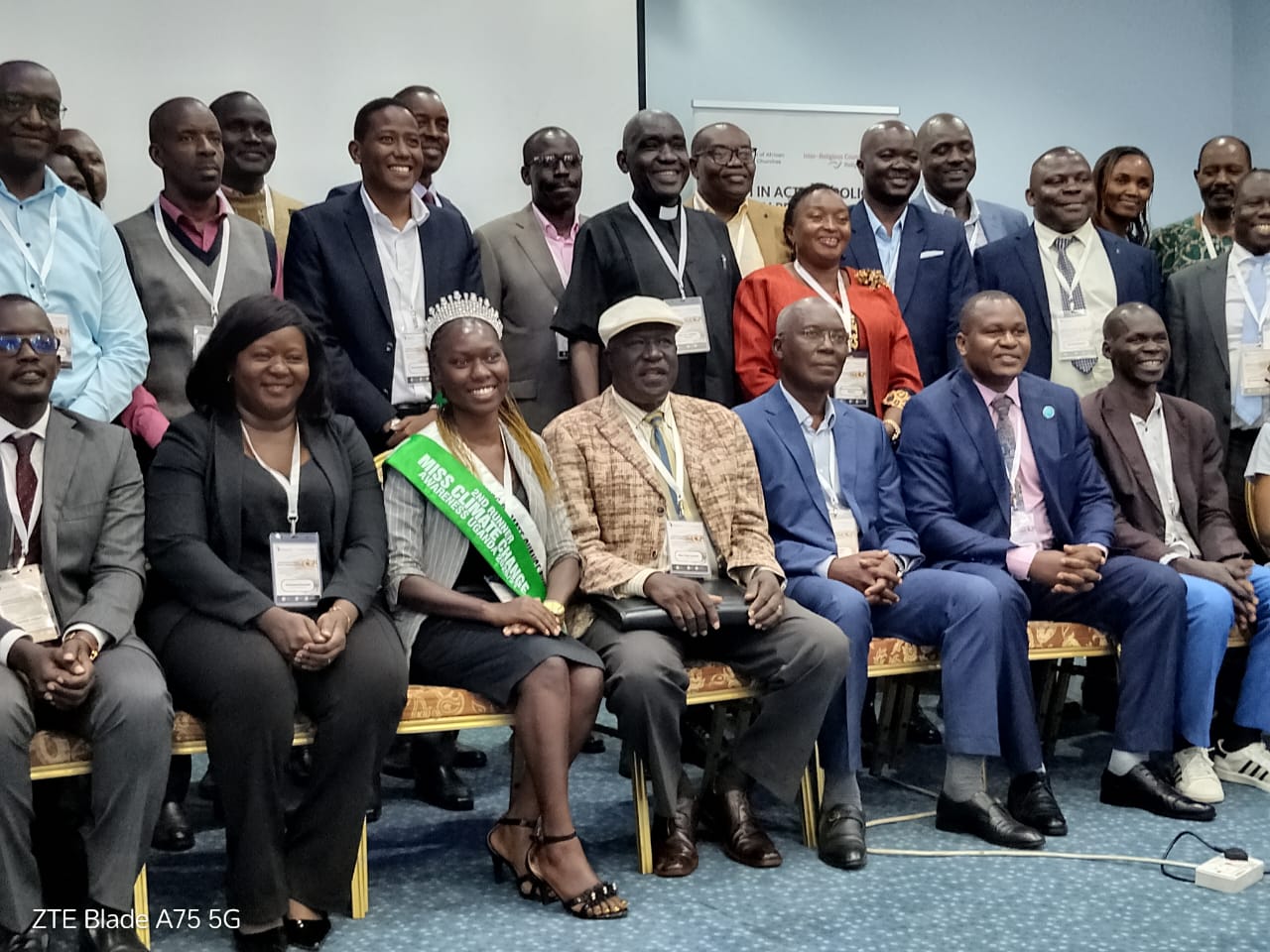
Religious leaders have raised concerns over worsening climate change, linking it to poor environmental management by sections of the population.
They warned that the continued destruction of wetlands and forest reserves is accelerating environmental degradation across the country.
Findings from a recent survey conducted in Agag, presented during a policy review and dissemination meeting organised by the Inter-Religious Council of Uganda (IRCU), show a serious adaptation gap among smallholder farmers.
The survey of 149 farmers revealed that 91.3 percent are aware of climate change, while 96 percent have experienced major climate-related hazards. The report notes that similar challenges are being experienced in other parts of the country.
Speaking at the meeting convened to disseminate the findings, Bishop Andrew Lugoloobi, a board member of the IRCU and general secretary of the Born Again Faith, said religious leaders have observed increasing environmental destruction driven by human activity.
He cited encroachment on wetlands and forest reserves as key drivers of climate change impacts.
Bishop Lugoloobi called for stronger enforcement by the National Environment Management Authority (NEMA). He said enforcement of environmental laws should be fair and consistent for all.
He also urged Parliament to amend the Climate Change Act, 2021 (Uganda), to clearly prohibit encroachment on wetlands by both citizens and investors.
He criticised what he described as double standards, saying some evictions target ordinary people while some factories and large investments are left untouched.
He further noted that Uganda continues to experience landslides, heavy rains, and dry spells, which are affecting agricultural productivity and food security.
He called for joint action between religious leaders, government agencies, and other stakeholders to strengthen environmental protection and management.
The Deputy Mufti, Ali Waiswa Muhammad, also criticised poor environmental practices.
He said many Ugandans are destroying forest reserves and wetlands for short-term survival without considering long-term consequences. He warned that such actions are increasing the country’s vulnerability to climate risks.
The religious leaders proposed several policy recommendations. These include formally integrating faith leaders, traditional leaders, and local community structures into local government climate action networks.
They also called for full operationalisation of Uganda’s climate change framework and improved collaboration between scientific and spiritual perspectives through continuous community education and dialogue.