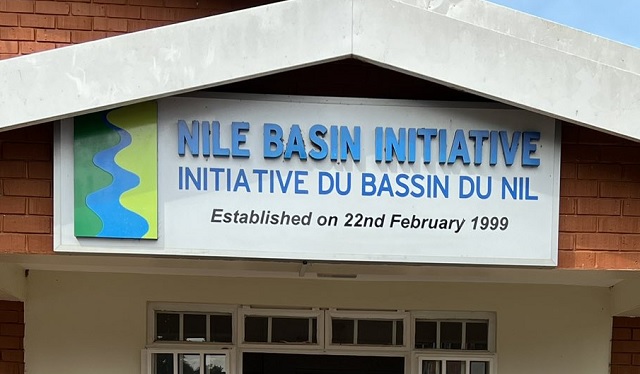
Everything that had been built over nearly four years at the Nile Basin Initiative was taken away.
“I believed in the work. I believed in the organisation,” said Matthew Rumanyika, who had joined NBI on 15 September 2020 as an accountant on a one-year renewable contract.
Year after year, the required performance standard was met, and the contract was renewed. In June 2024, a fresh one-year contract running to June 30, 2025, was issued. Every reason was given to believe the future at NBI was secure.
Then everything changed.
From as early as September 2023, verbal attacks had been directed at Rumanyika by a female colleague, with inappropriate language being used and unnecessary confrontations being picked in their shared office.
Suggestive messages were sent to him on WhatsApp; whenever they were ignored, hostility was turned against him.
On September 11, 2023, a verbal attack and threat were made in front of others.
A formal grievance was lodged with administration officer Charles Mwine, followed up in writing again in November. The concern was made clear: the job could not be done while an office was being shared with someone by whom bullying was being carried out.
The complaints were ignored by Mwine, and Rumanyika was redirected to his supervisors.
When a meeting was finally arranged by supervisor Josephine Lwasa on 28 November 2023, apologies were simply requested from both parties, and the matter was considered closed, as though what had been endured was merely a minor misunderstanding between equals.
Nothing was resolved. The same toxic environment was left unchanged.
By December 4, 2023, an unoccupied office had been quietly relocated to, simply so that work could be carried out in peace.
Exclusion was also experienced professionally. Meetings directly relevant to the accountant’s role were not attended. The annual staff retreat, held from December 10th to 16th 2023, was not included in, nor was a critical budgeting meeting held from May 29th to 31st 2024.
Of the six staff members who had started together, only Rumanyika was told to stay behind and finish it.
Then came what has been described as a coordinated attempt to manufacture a paper trail. On July 5, 2024, a performance evaluation for the prior year of 2023 was handed to Rumanyika by Lwasa, and a rating of “poor” was assigned.
The assessment was disagreed with entirely, and objections were laid out in writing on July 12, before the matter was formally escalated to Mwine on July 15.
A meeting was held on August 13, 2024. Rather than having the concerns engaged with honestly, a performance improvement plan was announced by Martin Mutua, head of corporate services.
The PIP memo was ordered to be signed immediately in the room. When time was requested to read it and consult a lawyer, the request was treated as misconduct.
“Asking to read a document before signing it is not insubordination. It is a basic right,” Rumanyika said.
A show-cause notice was issued, and two additional charges were added: that a recording camera had been placed in the workspace, and that insubordination had been committed.
Leave was then ordered to be taken to, in Mutua’s words, “reflect on my current trajectory.”
The camera, it has been explained, had been placed there for protection, given everything that had already been endured.
A false accusation of fund mismanagement had also been made, one from which Rumanyika was cleared only after an appeal was made to an impartial committee.
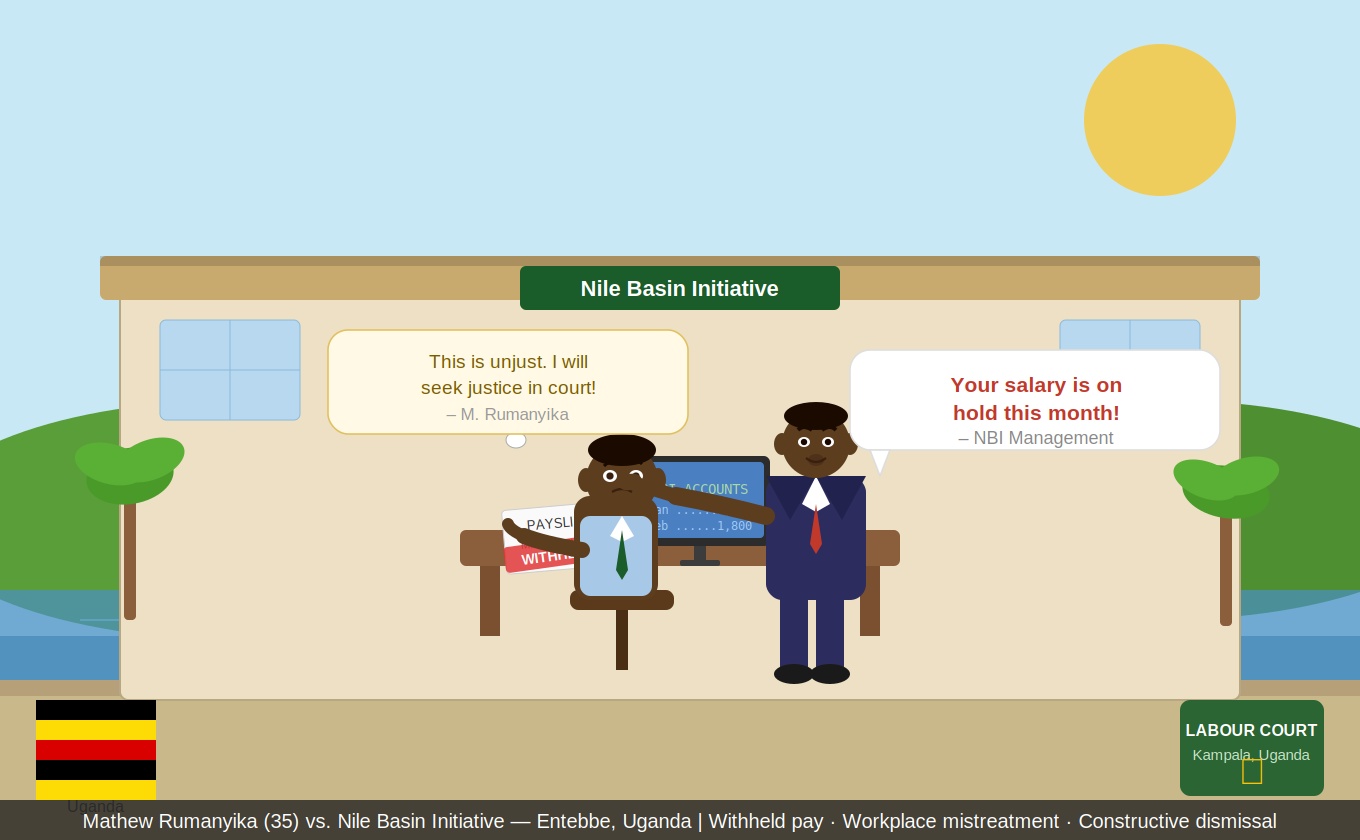
In addition, he was made to work on weekends and public holidays without a rest day or overtime pay while his salary for the months of July and August 2024 was withheld while all other staff were paid.
At one point, he says, he was working from 8.00 AM to 8.00 PM, Sunday to Sunday.
On August 30, 2024, Rumanyika submitted his resignation by email. Not because leaving NBI was what he wanted, but because remaining had been made impossible.
A constructive dismissal case was brought by lawyers at Katende, Ssempebwa and Co to the labour officer at Wakiso, under section 64(1)(c) of the Employment Act Cap 226.
According to the documents, reinstatement, compensation, damages, and legal costs of $15,000 were sought.
When the matter was taken to the industrial court, however, those specific issues were not considered by the judge. A ruling was made that NBI could not be sued in local courts, as diplomatic immunity was enjoyed by the organisation under the statute by which it had been established.
“I gave NBI four years of loyalty and dedication,” Rumanyika said.
“I have been seeking justice, but it is also elusive.”