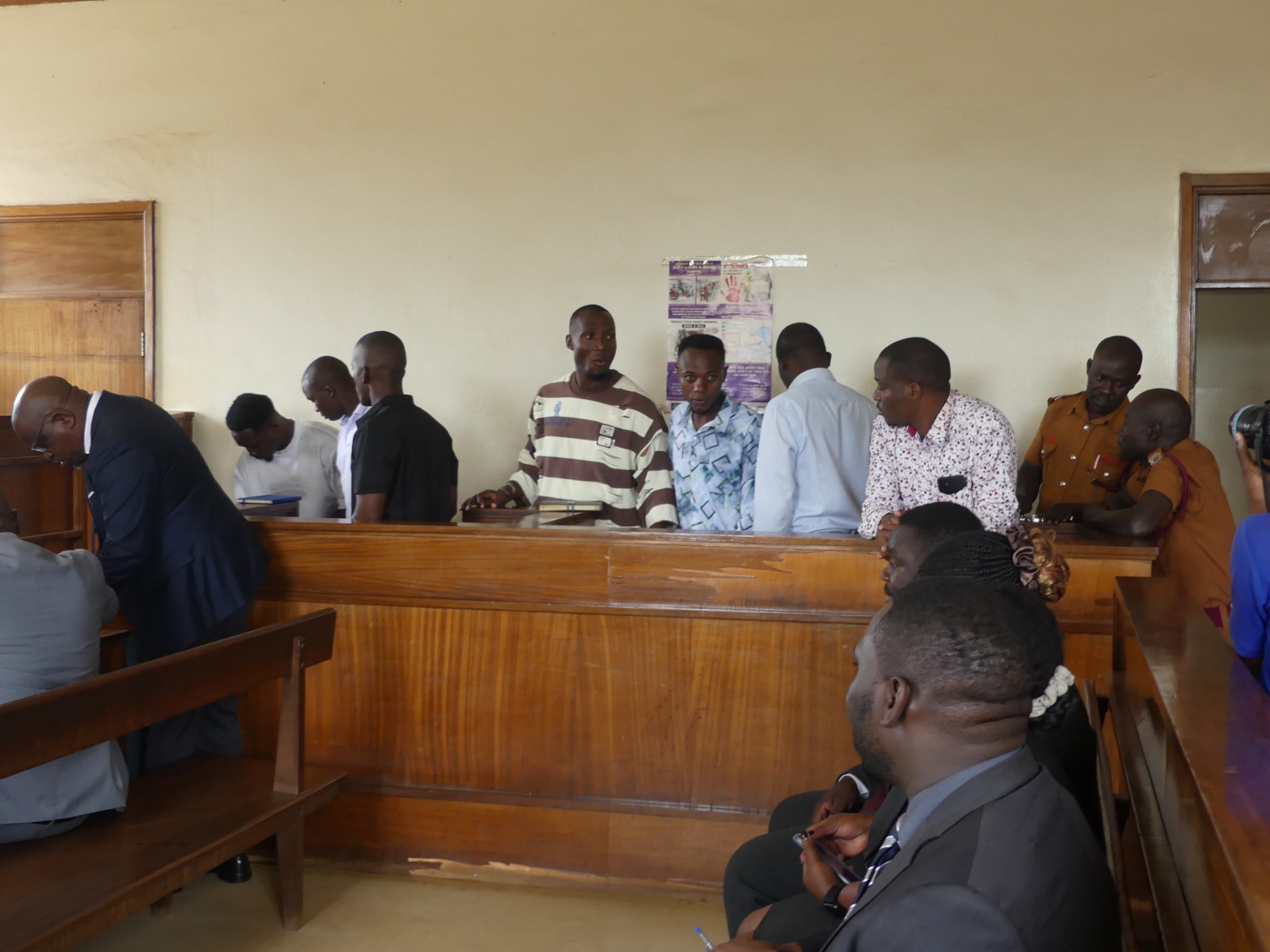

An application by Opportunity Bank Uganda to reopen a labour dispute it had already lost has been dismissed after the court faulted the bank and its lawyers for failing to properly account for their absence in court.
Justice Anthony Musana of the Industrial Court upheld an earlier ex parte judgment in favour of Fiona Solome Nakanwagi, a former staff member of the bank, saying Opportunity Bank had not shown “sufficient cause” to justify setting aside the decision.
In 2017, Nakanwagi was dismissed by the bank, and she took them to court.
In October 2024, when the case came up for hearing, the bank’s lawyers did not show up. Nakanwagi, through her lawyer, applied to proceed in the absence of the bank’s legal team.
The court allowed the request after confirming that the bank had been properly notified of the hearing date.
Nakanwagi then presented her evidence, including a witness statement and documents, and the court later ruled in her favour.
Several months later, Opportunity Bank returned to court seeking to overturn both the order that allowed the case to proceed in its absence and the final judgment.
The bank argued that its failure to attend court was not deliberate but was caused by a mistake by its lawyer.
In an affidavit, one of the bank’s lawyers, Phillip Kasimbi, told the court that he had attended an earlier session on April 14, 2024, where the hearing date was fixed. He said he communicated that date to lead counsel Julius Ahumuza by phone and email.
However, Kasimbi claimed that Ahumuza failed to record this date or notify the bank’s legal department, leading to a mess.
He insisted that the bank had been diligent throughout the case and that the failure to attend court was “due to this lapse in communication rather than a lack of interest in defending the suit.”
The bank’s lawyers asked the court to excuse the mistake, arguing that errors by counsel should not be held against an innocent client.
They cited several cases to support the position that “a mistake of counsel, even if negligent, constitutes sufficient cause.
They also invoked the constitutional right to a fair hearing and urged the court to allow the matter to be heard on its merits.
But Nakanwagi strongly opposed the application, arguing that the bank had full knowledge of the hearing date and had no valid excuse for failing to attend court.
She also pointed out that the bank had already filed a notice of appeal, making the application redundant.
He was fired by Nile Basin Initiative. Court said the NGO enjoys ‘diplomatic immunity’
Justice Musana sided with Nakanwagi.
In a detailed analysis, Justice Musana explained that the law allows a court to set aside an ex parte judgment only if the applicant proves either that they were not properly notified or that they were prevented from attending court by “sufficient cause.”
The judge quoted the law, stating that a party must show “that the summons was not duly served or that he or she was prevented by any sufficient cause from appearing when the suit was called on for hearing.”
In this case, the court found that the bank clearly had notice of the hearing. The key question then became whether there was a valid reason for the bank’s absence.
The court closely examined an email sent by Kasimbi after the April 2024 court session. The email had been copied to several officials within Opportunity Bank, including members of its legal department.
This evidence proved crucial.
Justice Musana rejected the claim that only one lawyer knew about the hearing date.
He said: “The idea that Mr. Ahumuza was solely in the know of the fixture is not reconcilable with the notion of mistake of counsel.”
Justice Musana added that other officials within the bank had also received the email and failed to act.
He criticised the bank for trying to shift blame to one lawyer without providing full explanations from the other people who were informed.
“[Opportunity Bank] cannot now stretch its own negligence and attribute it to Mr. Ahumuza,” Justice Musana ruled.
He also faulted the conduct of the bank’s legal team, saying they had not been transparent with the court.
The court was particularly critical of Kasimbi’s role, noting that the explanation provided was not convincing.
“Mr. Ahumuza left the task… to Mr. Kasimbi, whom we are not inclined to believe,” the judge said,
In the end, the court found that the bank had failed to prove any sufficient cause for missing the hearing.
With that finding, Opportunity Bank’s application was dismissed. So much for paying lawyers.