
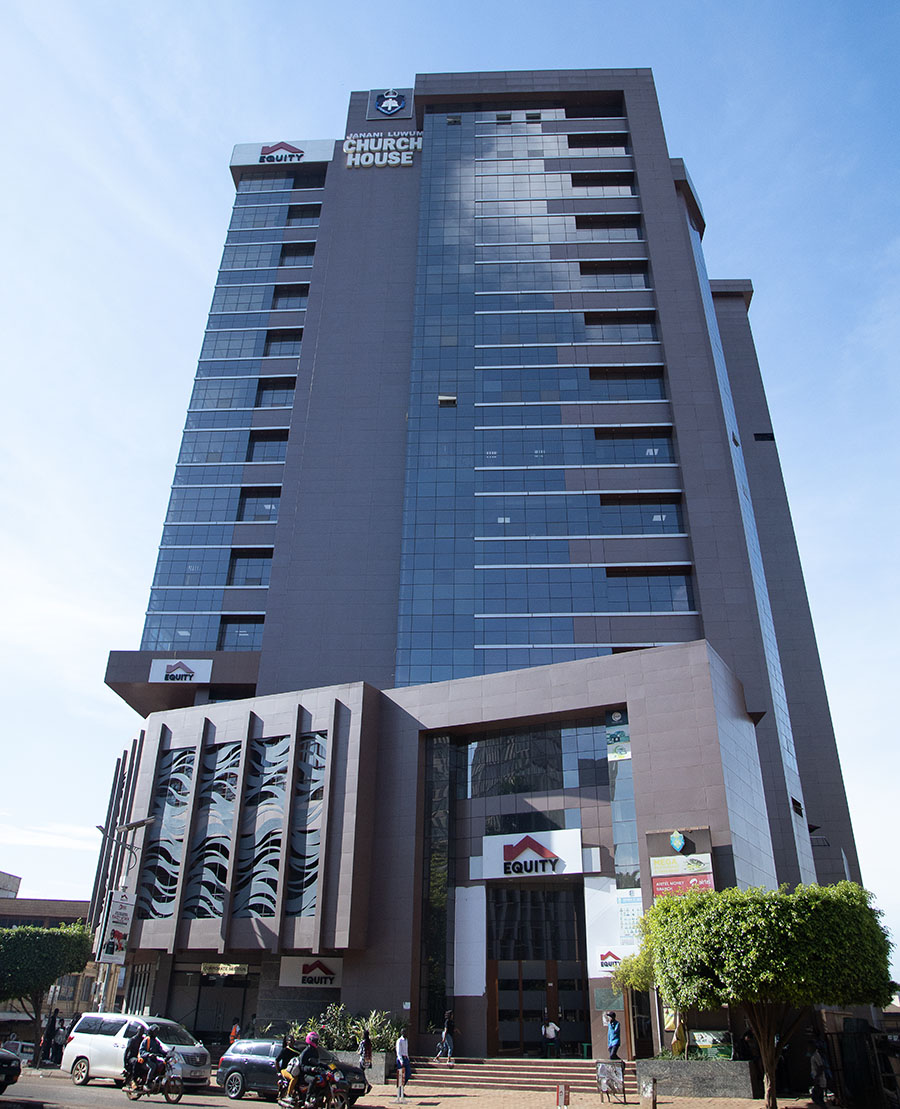
Equity Bank has been given a go-ahead by the court to pursue recovery of more than Shs 1.3 billion from Ratidu Trading Limited.
Justice Susan Odongo rejected an application by Ratidu Trading and its director, Titi Kayondo Kabi, who had asked the court to halt execution of earlier orders as they prepared to appeal.
The dispute has its roots in a loan facility that Equity Bank extended to Ratidu Trading Ltd. In 2023, the bank moved to recover Shs 1.3 billion after the company defaulted on the loan.
Ratidu Trading challenged the claim, insisting it was not indebted to the bank and arguing that it had already paid more than Shs700 million towards the loan.
However, the court found that the company had failed to provide any evidence to support that claim.
Unhappy with that outcome, Ratidu Trading filed another application seeking to review and set aside the judgment. It argued that its previous lawyers had been negligent and failed to attach proof of payment.
That application was also dismissed on August 25, 2025.
Still dissatisfied, Ratidu Trading moved to the Court of Appeal and, at the same time, returned to the High Court seeking a stay of execution to stop the bank from enforcing the judgment while the appeal was pending.
In their application, the company and its director argued that they would suffer serious loss if execution was allowed to proceed. They claimed their business could collapse and that valuable properties could be sold.
They told the court that the bank had already started execution proceedings and warned that “unless execution is stayed the applicants will suffer substantial loss.”
They also insisted that their intended appeal had high chances of success and that they were willing to provide security.
Ratidu’s lawyers, led by Joseph Katushabe of Grit Advocates, argued that the case raised important issues, including the right to be heard and alleged procedural irregularities.
“The intended appeal raises serious and triable issues,” they submitted.
On the other side, Equity Bank strongly opposed the application.
Through its lawyers, led by Arnold Kimara of Kimara Advocates and Consultants, the bank argued that the application was defective and had no legal basis.
The bank told the court that the order Ratidu sought to stay was a “negative order” that could not be executed in the first place.
It also questioned the validity of the intended appeal, arguing that the applicants had not obtained the necessary permission to appeal.
“There is no valid or competent appellate process,” the bank argued, adding that the notice of appeal filed by the applicants was “incompetent.”
She sued FIA for freezing her account in Centenary Bank. Judge sided with FIA
Justice Odongo agreed with Equity Bank on the key issues.
In a detailed ruling, she explained that for a court to grant a stay of execution, an applicant must show that they will suffer substantial loss, that the application was filed without delay, and that security has been provided.
She noted that a stay of execution is meant to temporarily suspend the enforcement of a judgment to preserve the subject matter of a dispute.
“It is a remedial measure intended to ensure that the subject matter of litigation is preserved and that the ends of justice are not defeated,” she said.
However, Justice Odongo found that the order Ratidu wanted to stay was not capable of execution.
She rejected the company’s argument that the dismissal of its earlier application had triggered execution of the main judgment.
On the issue of potential loss, Justice Odongo was not convinced that Ratidu had demonstrated the kind of harm required to justify a stay.
“The apprehension of financial inconvenience, without more, does not meet the evidential threshold,” the judge ruled.
She added that any financial loss could be recovered if the appeal succeeded.
The court also delivered a decisive blow to the company’s case by finding that its intended appeal was not properly filed before the court.
Justice Odongo noted that under the law, an appeal against a decision refusing review can only be filed with leave of court.
In this case, Ratidu had not obtained that permission.
In one of the most pointed remarks in the judgment, Justice Odongo said: “A likelihood of success cannot be predicated upon an incompetent appeal.”
She went further to describe the intended appeal as fundamentally flawed.
“The intended appeal is procedurally dead on arrival,” she said.
With those findings, the court concluded that the applicants had failed to meet the legal threshold for a stay of execution.
The decision means that Equity Bank is now free to proceed with the recovery of the Shs1.3 billion awarded to it in the original case.