2026 has us by the throat! No denying it. Three months in, and we have already seen the world order changing before our eyes. Internationally and at home. I’ll tell you how.
US/Israel war with Iran
The United States and Israel’s attack on Iran on February 28 took everyone by surprise. We had had a foretaste in June 2025 with a 12-day bombardment.
That had been a shock, but US President Donald Trump had reassured the jittery watching world that the lightning strike on Tehran had achieved all its goals: incapacitate Iran’s ability to create a nuclear bomb, destroy many of its sophisticated weapons manufacturing plants, and that was that. We could take that.
The prolonged assault on Iran that was unleashed on February 28 was on an order of magnitude we had not seen since 2003 during Operation Iraqi Freedom to remove Saddam Hussein and his party from power in Baghdad.
Operation Epic Fury, ordered by Trump, seemed to be about to dwarf George W. Bush’s war as it achieved stunning early successes. This included the assassination of not just many top military commanders but also the Iranian Supreme Leader Ayatollah Ali Khamenei and many members of his family.
We watched in astonishment, anticipating that Trump was about to achieve a two-for-two in as many months: replacing the leadership of a second major country as he had just done with Nicolás Maduro in Venezuela in January with unfathomable ease.
That did not happen, and 40 or so days later of fighting in Iran, it looks like it will not happen any time soon. The government of the Islamic Republic of Iran had evidently been preparing for this showdown and regrouped so quickly that the conflict has snarled to a stalemate that involves the entire world.
We are all paying the price for the US & Israel’s aggression towards Iran with higher fuel prices, food prices, and the cost of living rising. The worst bit: we have no idea when it will come to an end or get better.
Kasuku NRM Luseke
Twelve years ago, Kasuku was the butt of many jokes in Kampala after musician Eddy Kenzo “disciplined” Kasuku for claiming that Kenzo was paying off radio stations not to play friend-turned-rival Big Eye’s music.
The incident, which took place in 2014 at Centenary Park, shocked entertainment fans with the antagonists. Until that incident, Kenzo was not known to have a volatile temper, while Kasuku, while a media veteran, was still a struggling radio presenter with a fearless tongue.
Today, Kasuku is possibly Uganda’s most well-known digital media practitioner. His Kasuku Live YouTube channel regularly attracts over 10,000 viewers per broadcast, an enviable metric many a radio or TV station programme manager would die for. Kasuku has not toned down his truth-telling, spicy gossip of “ebyekisiru” (nonsense topics). Ugandans have come to appreciate it and reward him.
Just how much influence Kasuku (real name Isaac Katende) wields was demonstrated when he was chosen to be the face of the Jazz with Jajja talks in January and March. These were talks organised by the State House for President Yoweri Museveni to listen to the concerns of youth as he prepares for his seventh term in office in May.
Many pundits, including yours truly, feared Kasuku had miscalculated in allowing his name to be tagged with the problematic brand that President Museveni is today as he marks forty years in power in Kampala.
We were wrong. In that decade in the YouTube trenches, Kasuku had cultivated a community, much like American commentator DJ Akademiks, with his chat, of fiercely loyal supporters.
There has not been a noticeable dip in how many people watch Kasuku Live as I write this. But politicians and other important demographics have paid attention. Kasuku and his ilk are significant real power brokers going forward. The future is online.
Bobi Wine Flight into Exile
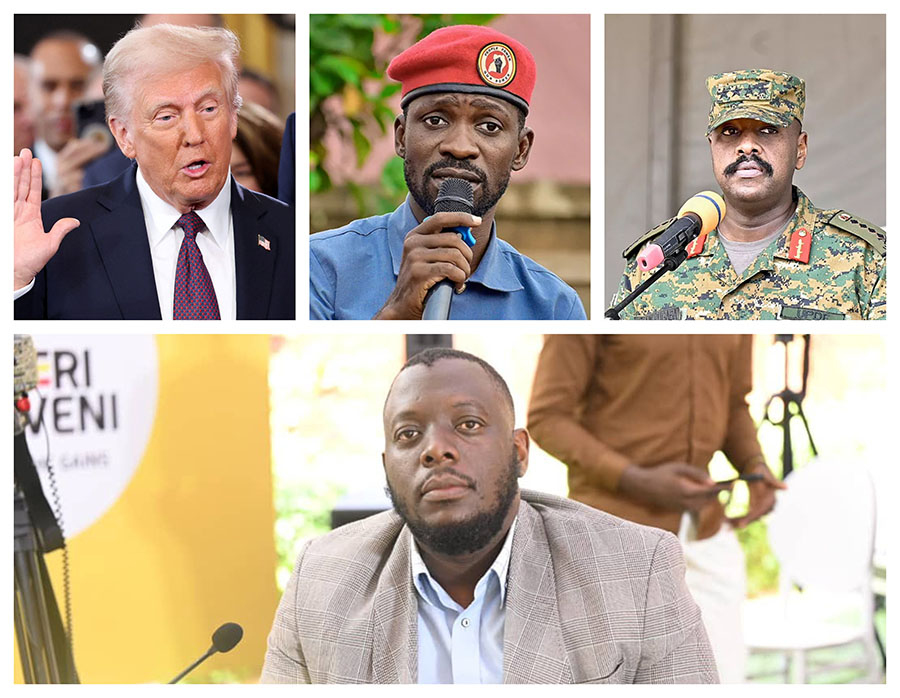
National Unity Platform leader Robert Kyagulanyi’s response to his 2026 election loss had been odd. Unlike in 2021, when Kyagulanyi and other NUP leaders vociferously protested what they described as the theft of their election victory, the 2026 reaction was more muted.
Kyagulanyi and NUP did not acknowledge defeat at the polls to incumbent President Yoweri Museveni. But neither was there talk of seeking redress in courts of law or taking their grievances to the electorate on the streets in protests.
Instead, Bobi Wine largely disappeared from public view not long after the January declaration of results. Video messages popped up here and there from Kyagulanyi claiming that he was on the run for his life in different parts of Uganda.
Shielded and protected by ordinary Ugandans, appalled at the state of the leadership of their country. Army commander Gen Muhoozi Kainerugaba, first denying, then ridiculing Kyagulanyi, added credence to Bobi Wine’s proclamations that he was a wanted man.
As several NUP leaders like Waiswa Mufumbiro and Muwanga Kivumbi joined hundreds of followers in prisons around the country.
The inevitable happened in mid-March when Bobi Wine announced that he had successfully exited Uganda, evading capture by state agents. Bobi Wine said he had not fled into exile in the United States but rather had gone to fulfil his international duties and would return any time.
There are murmurs that he could make a return to Uganda in April. Bobi Wine’s departure from the political scene did not seem to have a visible impact on the national discourse in the country.
It remains to be seen if Kyagulanyi can drum up a level of excitement about his party’s activities as he did in the 2019-2025 period when NUP was dominant, or if that fire was smothered by his calculated exile.
Intellectuals Exit Left Do Not Return
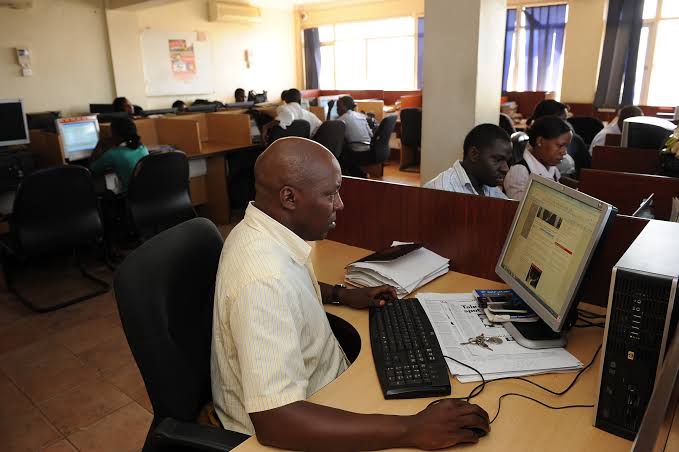
Editors are not fired every day. Each editor is an eco-system; their absence, if they are good, impoverishes the workroom they exit.
This is why the exit of Daniel Kalinaki from Nation Media Group (really Daily Monitor) at the end of March after nearly 23 years of service stunned the industry, even more than the country. There was a collective gasp of disbelief. Barely 50, Kalinaki was being put out to pasture in the prime of his talent.
Officially, Kalinaki retired. Unofficially, the picture is more troubling up close. But we have seen this play one too many times to be fooled. The last ten years of Artificial Intelligence advancements and economic volatility have been brutal for the media.
While we wait for the African Centre for Media Excellence to conduct a formal study, I can say with certainty that nearly 70% of journalists who entered the profession in 2004 have left. Some voluntarily, most because they were laid off.
This is unusual, alarming, and very bad for the fourth estate, which desperately needs not high-level skills at a time when it is fighting to justify its continued existence in the digital era, which believes anyone can report, but also personnel with institutional memory to separate truth from fake news, which is more prevalent than ever.
Kalinaki is one such talent who is still needed in journalism. Unfortunately, in his time as managing editor, he too presided over the forced retirement of talents who should never have left the media space at Namuwongo.
Ditto the same happening at New Vision under Don Wanyama and Next Media owned by Kin Kariisa, and on and on.
The next time you wonder, “Why is the news so boring?” Remember, it is not because there aren’t interesting and important things happening all around us.
You probably see some of them with your own eyes. It is because the stewards who would have brought you that news have been culled, the backroom is emptying, and there is almost no one in the kitchen. This is where we are.
Other Important Happenings
• First Lady Janet Kataaha Museveni is unwell.
• Uganda passes Copyright Law
• Ggaba daycare school attack