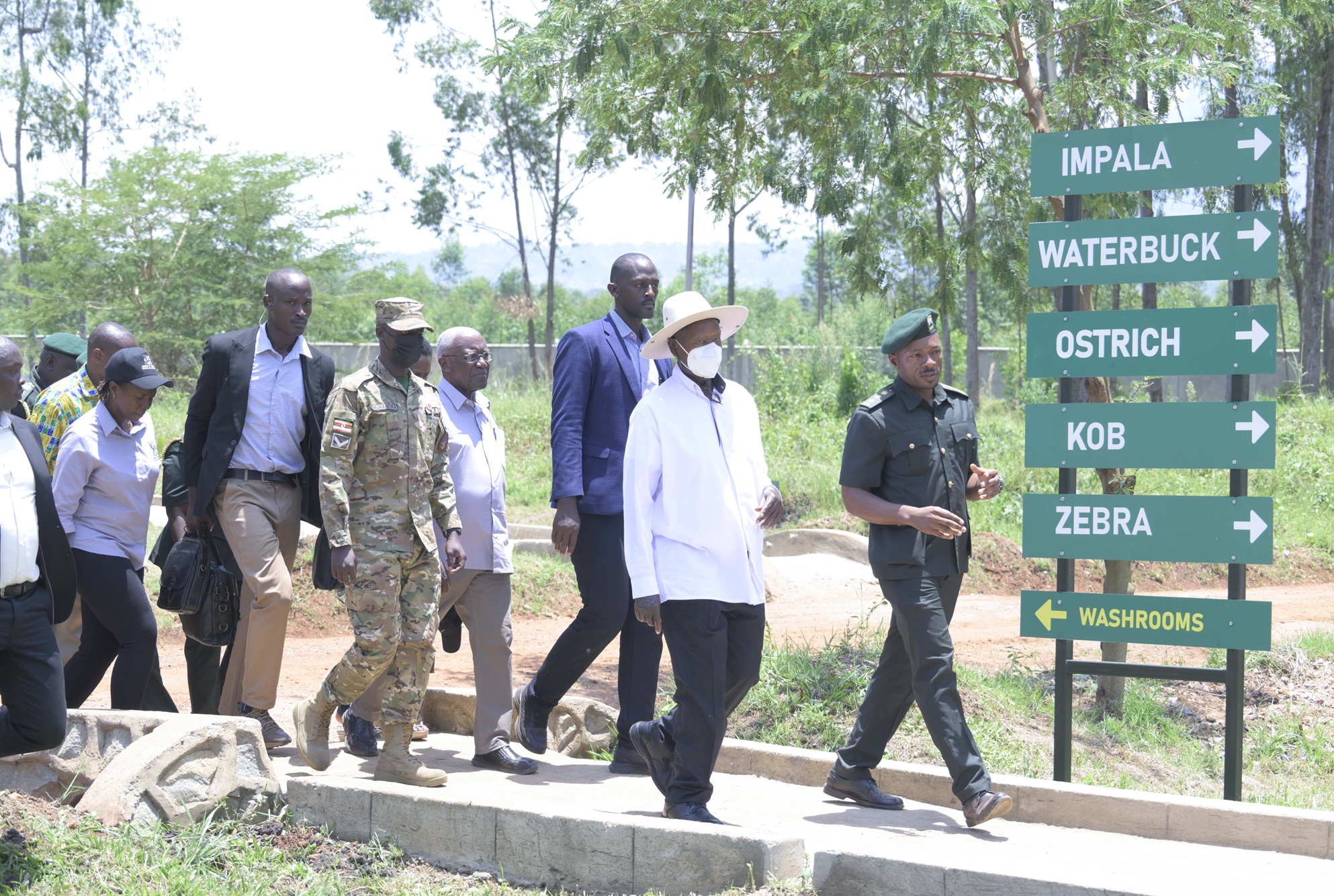
President Museveni has urged Ugandans to embrace tourism as a major source of household income, saying the industry offers opportunities for communities that may have limited land for commercial farming.
Museveni made the call on Sunday, September 27, 2026, while presiding over Uganda’s World Tourism Day celebrations at Mbale Secondary School Grounds in Mbale City. The celebrations were held under the theme, “Digital Agenda and Artificial Intelligence to Redesign Tourism.”
The president said tourism is one of the country’s important service industries because it creates business opportunities across accommodation, transport, food, entertainment, guiding and cultural enterprises.
He urged Ugandans to position themselves to benefit from the money generated by tourists instead of viewing tourism as an activity reserved for large hotels and tour operators.
Museveni also commissioned the Mbale Wildlife Conservation Education Centre, a new regional wildlife facility established to promote conservation education, tourism and community engagement in Eastern Uganda.
The centre, which is commonly referred to as Mbale Zoo, is part of efforts by Uganda’s wildlife authorities to establish regional conservation education centres.
The facility began receiving wildlife earlier this year and is expected to support education, tourism and local economic activity.
Museveni urged residents of the Elgon sub-region to participate in the four broad areas of wealth creation identified by Government: commercial agriculture, manufacturing and artisanship, services, and information and communication technology.
He said Uganda’s economic transformation will depend on households moving away from subsistence production and engaging in activities that generate income.
The president also unveiled a Tourism Conservation Strategy for the Elgon sub-region, calling for stronger protection of forests and wetlands.
He warned that deforestation, wetland encroachment and other forms of environmental degradation could undermine tourism because Uganda’s natural attractions depend on healthy ecosystems.
Museveni also called for the development of last-mile infrastructure to tourism sites, including roads, electricity, water and communication networks.
He said Uganda had made progress in providing peace, security and major transport infrastructure, but more investment was needed to connect tourism attractions to surrounding communities.
Tourism Minister Col. Tom Butime said Uganda is increasingly using digital technology and artificial intelligence to market destinations and improve the visitor experience.
He said technologies such as digital booking platforms, smart park gates and AI-supported safari planning could make tourism services more accessible and efficient.
Butime described the Elgon sub-region as rich in tourism products, including Mount Elgon, scenery, food, culture and the hospitality of local communities.
He, however, identified limited investment, access to capital and visa-related challenges among the obstacles affecting tourism growth in the region.
The Netherlands Ambassador to Uganda, Angèle Samura, said there were opportunities for greater cooperation between Uganda and European partners in hospitality, skills development, sustainable tourism and digital technology. She has served as the Netherlands’ ambassador to Uganda since August 2026.
Samura said European tourist arrivals to Uganda increased from about 38,000 in 2024 to approximately 150,000 in 2025, according to figures cited at the event.
Mbale City Mayor Joyce Matuka Kidulu said digital technology could help promote the city and the wider Bugisu region by making its attractions more visible to domestic and international visitors. Kidulu became Mbale’s first female city mayor after the 2026 elections.
During the celebrations, Museveni also proposed that the Bugisu Anthem could be considered for the proposed East African Federation if regional political integration is achieved.
The World Tourism Day celebrations brought together government officials, tourism operators, local and cultural leaders, development partners and other stakeholders to discuss how technology, investment and conservation can expand Uganda’s tourism industry.