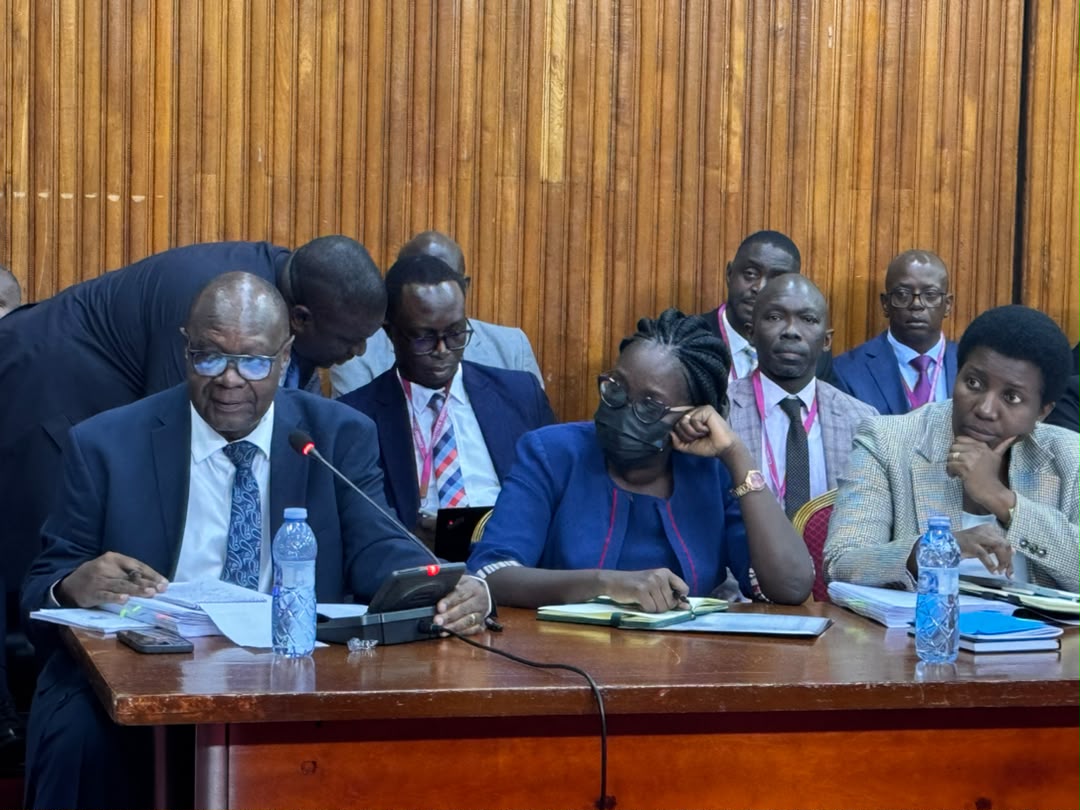
Officials from the Ministry of Works have defended spending Shs793 o billion in domestic arrears, saying pressure from contractors and the need to secure land for the standard gauge railway forced them to pay from current budgets.
They appeared before Parliament’s Public Accounts Committee (Central Government), chaired by Patrick Nsamba Oshabe, the Kassanda North MP. The committee was reviewing queries raised by the Auditor General for the 2024/25 financial year.
The audit found that the ministry had budgeted for, and received, only Shs10bn for settling domestic arrears that year.
Ferigo Kambale, the Kasese Municipality MP, asked why the ministry had spent Shs793bn on arrears, including pension arrears.
Nsamba suggested the money had been shared out among officials because they lacked authority from the finance minister and Parliament to spend it. He asked whether they had any written approval from the minister.
Waiswa Bageya, the ministry’s outgoing permanent secretary, said that outside obligations linked to the Uganda National Roads Authority (UNRA) and the Uganda Road Fund (URF), the ministry received Shs10 billion for arrears.
That was not enough to cover the Shs242 billion reported as owed at June 30, 2024.
He said most of the debt was owed to people affected by the railway project and to contractors’ interim payment certificates (IPCs).
Because of pressure from contractors and the need to acquire land for the railway, he said, the ministry paid out of its current budgets under the relevant budget codes.
Anthony Angura, the Tororo South MP, said the ministry was doing the opposite of what Dr Ramathan Ggoobi, the finance ministry’s permanent secretary and secretary to the treasury, had called budget indiscipline.
Angura asked whether officials had amended their work plan themselves. He also asked why the contracts had no contract managers and why some procurement was done outside the electronic government procurement system (eGP).
Kambale also asked about transfers from the contingency fund and about the ministry’s underperformance.
Bageya said the underperformance came mainly from externally funded projects that were previously under UNRA. He said lack of counterpart funding was the main obstacle.
The affected projects included Namugamba-Budadiri, Moyo-Yumbe and Nakapiripirit roads.
Pamela Annet Kirungi, the Kabarole Woman MP, asked why funds were released late to the ministry but not to other entities. Nsamba clarified that the problem was insufficient releases rather than delays.
Kirungi also asked why officials awarded contracts before money was available.
James Kaberuka, the Kinkizi West MP, asked what the merger of the ministry and Unra, which the president signed into law in December, would mean in practice.
Nsamba asked why officials had not waited for Unra’s audited books before making adjustments. Emily Binyerekeho, the ministry’s head of accounts, said adjustments of Shs609 billion arose from the merger with the Uganda Road Fund. She added that Unra’s debt had reached Shs1.4 trillion.
Officials said work on the budget framework paper had slowed their work plan.
Wamakuyu Mudimi, the Elgon North MP, asked why not all planned outputs had been delivered. Officials blamed lack of funds and the way functions were aligned when government agencies were rationalised.
Margaret Nazziwa, the Kagadi Woman MP, raised open trenches at Muhoro in her constituency and criticised the contractor’s conduct. Nsamba asked the ministry to speak to the contractor, who was not named.