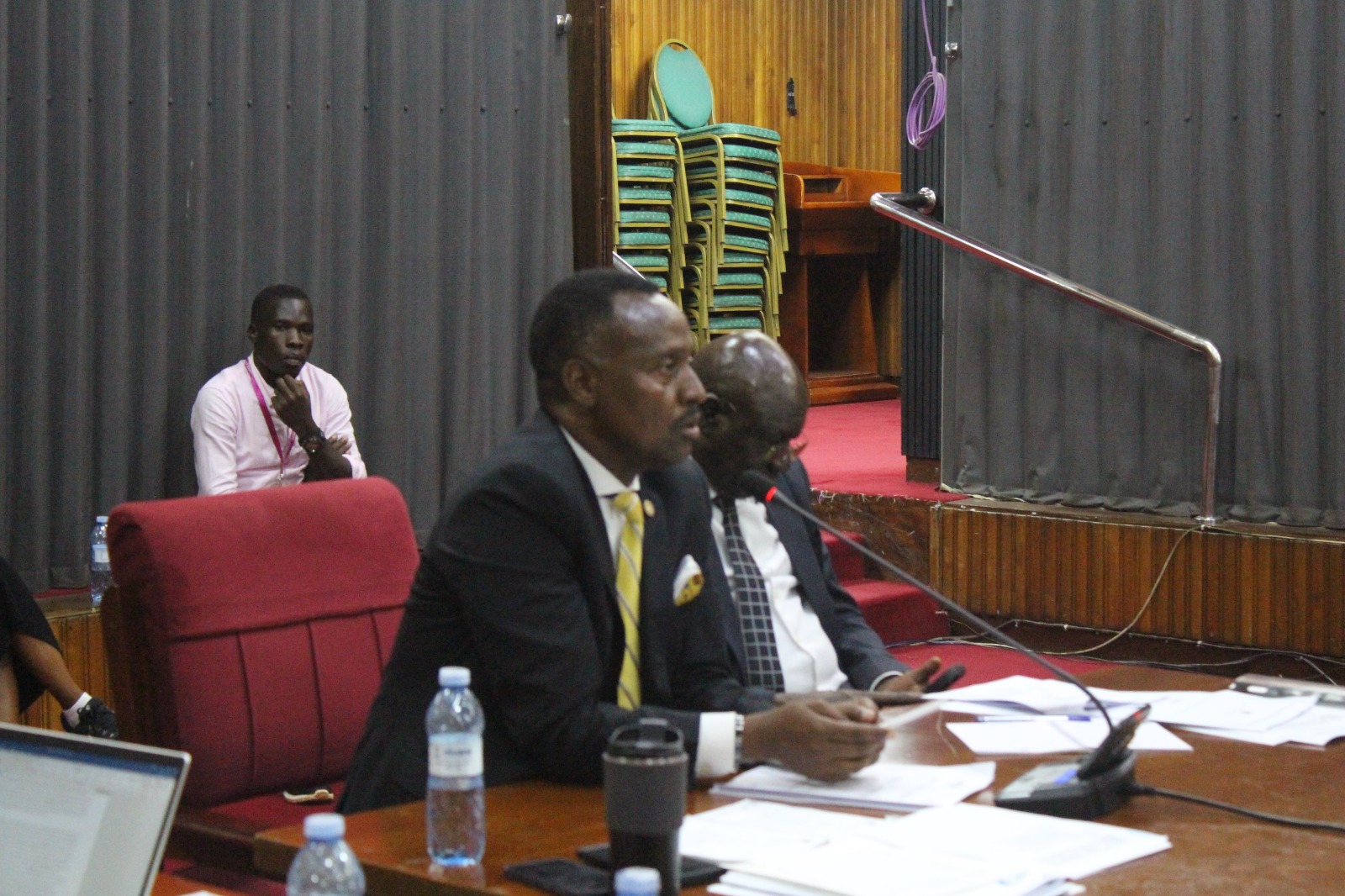
MPs on the Finance committee have asked the president of the Uganda National Traders Alliance, Godfrey Katongole, to withdraw remarks that they said misled the public by suggesting legislators do not pay taxes on fuel and other utilities.
The committee, chaired by Amos Kankunda, confronted Katongole as he presented traders’ views on proposed tax policies for the next financial year, which they argue are unfair to businesses across the country.
“We have acknowledged your concerns, our brother and friend. What you are labelling us is not true, and we ask you to withdraw the statement so we can proceed,” Kankunda said.
Katongole, who appeared before the committee in a pink shirt and purple suit, struggled at times to make his submission in English. He later retracted his remarks.
“With due respect, honourable members, I withdraw the statement. But I ask you to come on the ground because you do not know what happens there,” he said, drawing laughter and heckling from MPs.
Kankunda said the committee was willing to engage government agencies on traders’ concerns but urged the alliance to be more organised in its submissions.
He said the traders’ representatives, drawn from groups had demonstrated knowledge of the issues affecting them.
He added that despite their formal dress, MPs were well informed about what happens in Kampala’s central business district and other trading hubs across the country, rejecting claims of a disconnect between policymakers and traders.
“Some of us are business people. We understand the environment you operate in,” Kankunda said, promising further engagement once the alliance improves its organisation.
Dickson Collins Kateshumbwa cautioned traders against raising issues that fall outside the committee’s mandate.
Kankunda said MPs were familiar with supply chains, from importers and distributors to wholesalers, retailers and consumers, adding that traders act as intermediaries in tax collection on behalf of the Uganda Revenue Authority.
The traders raised concerns about several proposed tax measures. They opposed changes in the Stamp Duty Amendment Bill 2026, arguing for retention of the current 1.5 per cent rate to support legitimate property transfers.
They criticised the Income Tax Amendment Bill 2026, particularly the proposed 6 per cent withholding tax on the purchase of non-business assets such as land.
They also objected to a 10 per cent withholding tax on commissions paid by telecommunications companies to mobile money agents, saying it would hurt small operators.
On rental tax, traders said the proposal to file and pay taxes monthly would increase compliance burdens.
They called for the VAT registration threshold to be raised to at least Shs500m, instead of the proposed Shs250m in the Value Added Tax Amendment Bill 2026.
Further concerns were raised about the Excise Duty Amendment Bill 2026.
Traders said proposed increases would push up prices, citing sugar, which would rise from Shs100 to Shs300 per kilogram, cooking oil from Shs200 to Shs400 per litre, and cement adhesive grout from Shs500 to Shs1,000 per bag.