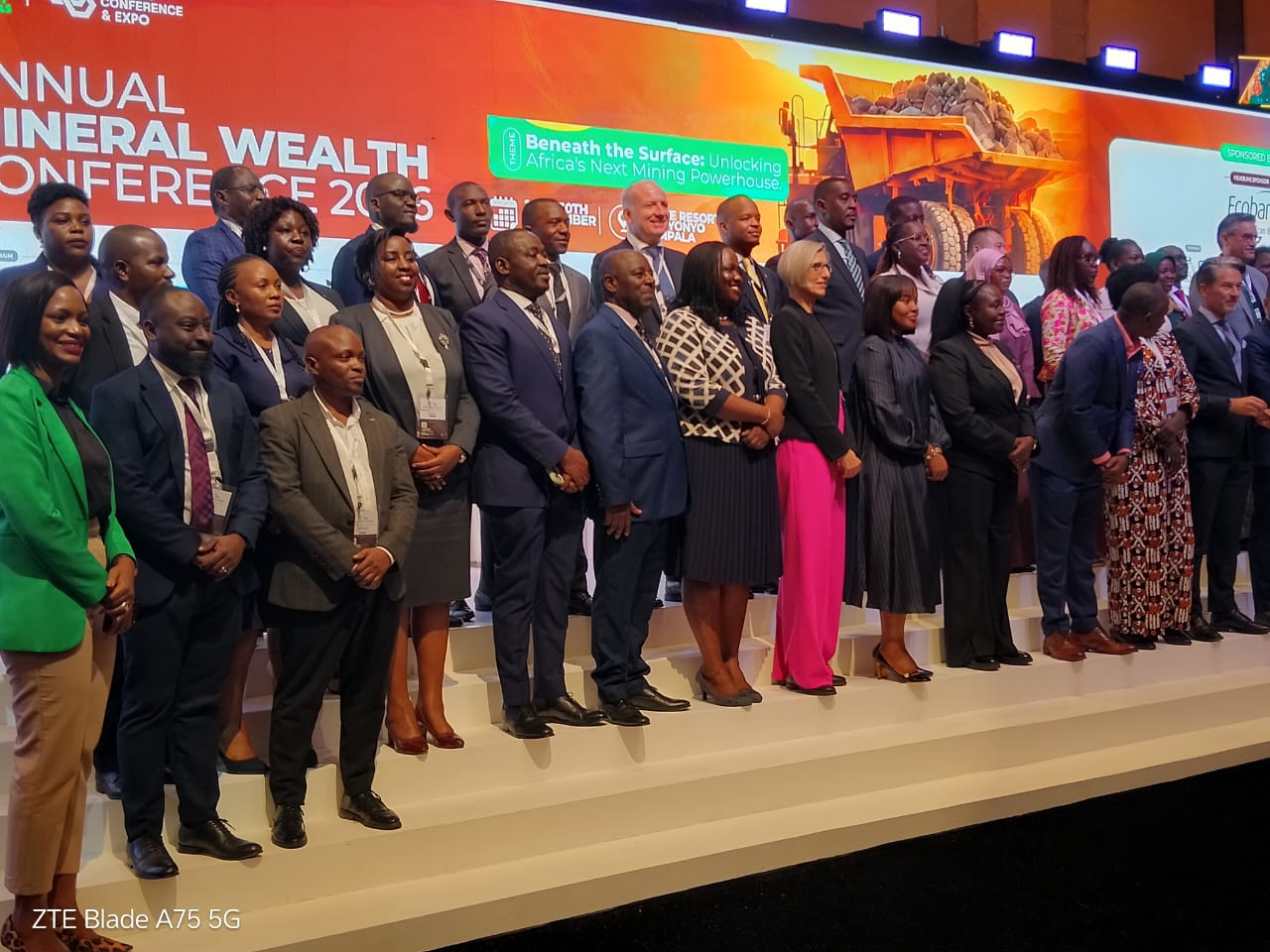
Uganda’s mining sector players have called for the establishment of an independent regulator to oversee the industry, arguing that separating regulation from policy-making would improve efficiency, transparency and investment in the sector.
The call was made during the opening of the 15th International Annual Mineral Wealth Conference at Speke Resort Munyonyo in Kampala.
The two-day conference is being held under the theme, “Beneath the Surface: Unlocking Africa’s Next Mining Powerhouse” and has attracted more than 1,000 delegates from about 30 countries.
Aggrey Hashaba, chairperson of the governing council of the Uganda Chamber of Energy and Mineral Development, said the mining sector needs an autonomous regulator to provide effective oversight and support the industry’s growth.
Hashaba said several functions, including policy-making, legal frameworks, inspections and licensing, are currently closely linked within the government structure, which he said limits the independence and efficiency of regulation.
“An independent regulator can be able to support optimisation of the sector, separate from the ministry’s policy functions,” Hashaba said.
He said a strong regulatory institution would also help build confidence among investors and ensure that Ugandans participate meaningfully in the development of the country’s mineral resources.
Hashaba called for greater investment in human capital and stronger national participation in the mining industry, saying Ugandans should play a central role in developing and benefiting from the country’s mineral wealth.
He also urged the government to increase funding for the mining sector, saying the industry requires adequate resources to develop its institutions, infrastructure and technical capacity.
Mining and quarrying currently contributes about 2.2 per cent to Uganda’s gross domestic product, according to figures cited at the conference.
Hashaba said the sector has significant potential to contribute more to the economy if the country strengthens regulation, investment and local participation.
The State Minister for Energy, Sidronius Okasai Opolot, who officially opened the conference, acknowledged the sector players’ concerns about regulation and said the government was working to strengthen the institutional framework governing mining.
Okasai said Uganda already has independent regulatory arrangements in the petroleum sector and that similar reforms are being considered for mining.
“As a ministry, we acknowledge your concerns, for instance, having an independent regulator just like in oil and gas and petroleum. We are working towards ensuring that artisanal miners also have their own regulators, and we still have several laws that require streamlining,” he said.
He said Uganda needs to move beyond simply extracting minerals and instead develop productive value chains that create jobs, increase incomes and generate more revenue for the country.
“We need productive potential instead of being just a mining country. We have policies and laws, but they need to be streamlined,” Okasai said.
He said the government was also working to define an appropriate administrative structure for the sector, including the possibility of establishing a standalone regulator.
Okasai said investors need reliable geological and mineral data before committing their money to the sector and called for more investment in data collection, infrastructure and financing.
“We want to see our mining industry contributing meaningfully towards our revenue collection,” he said.
He also encouraged investors and other stakeholders to focus on value addition so that Uganda can benefit from its minerals beyond the extraction stage.
Value addition, he said, should be supported by infrastructure, investment and policies that encourage mineral processing and the development of industries around Uganda’s mineral resources.
Grace Muliisa, managing director of Ecobank Uganda, described the conference as a significant milestone for Uganda’s mining industry and said value addition should remain central to efforts to transform the economy under the government’s 10-fold growth strategy.