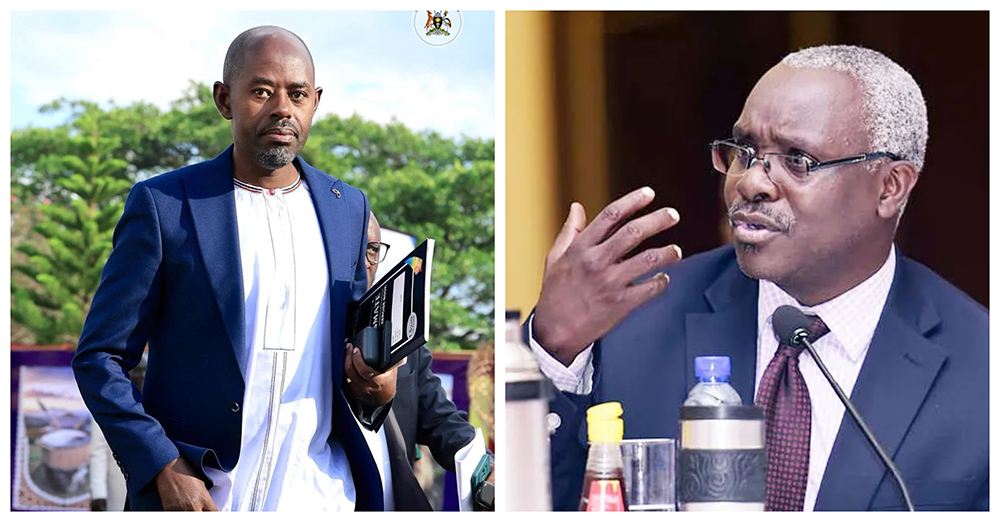

By Phillip Karugaba
Your Excellency, you congratulated NRM MPs for passing the Protection of Sovereignty Bill, 2026, and dismissed its critics as shameful and disgusting.
You invoked the 1971 coup as a cautionary tale about foreign interference. Respectfully, this response addresses not only what your statement said, but also what it did not say.
There is a Luganda proverb, “Nantabulirirwa alisabala obw’ebbumba”, meaning that one who refuses advice embarks on a journey in a clay boat. It is in that spirit that this response is made, and in the same spirit that many Ugandans reacted strongly to the Bill.
The critics you described as shameful and disgusting spoke in defence of the Constitution, as is their right and duty under Articles 3 and 38, which guarantee citizens the right to participate in and influence government policy. Through the exercise of those constitutional rights, Ugandans assert the sovereignty guaranteed under Article 1.
Let us begin with what is true. The 1971 coup was a national tragedy and the historical grievance you describe is real. Foreign powers have interfered in African affairs with devastating consequences, and Uganda paid a terrible price during the eight years that followed Idi Amin’s rise to power. Foreign interference can indeed be harmful.
The question, however, is whether this Bill genuinely addresses that danger or whether the threat of foreign interference is being used to justify something entirely different.
Uganda’s own history on sovereignty is complex. In 1979, Tanzania helped remove Amin from power. The NRA war also received support from countries such as Tanzania, Cuba and Libya. In 2005, the International Court of Justice found Uganda liable for violating the sovereignty of the Democratic Republic of Congo and ordered reparations.
For much of your presidency, Uganda’s national budget has depended heavily on donor funding. One cannot rely on foreign resources to run the State while simultaneously invoking sovereignty to silence citizens questioning how that State is governed.
The portrayal of foreign influence as a new and uniquely dangerous threat also ignores Uganda’s own history. When Kabaka Muteesa I invited Christian missionaries to Buganda in the 1870s, he was making a deliberate political calculation.
He sought to use external actors as a counterweight to Arab and Egyptian influence and as a source of literacy, technology and diplomatic leverage. That was not weakness. It was strategy.
Where foreign engagement advances Uganda’s interests in trade, education, technology, health and justice, it has always been welcome. The objection to this Bill is not opposition to sovereignty.
The objection is that a law drafted with limited transparency, passed hurriedly and framed broadly enough to capture legitimate civil society activity risks becoming an instrument of state control rather than a genuine sovereignty law.
Your statement congratulated MPs and criticised opponents, but it did not address the constitutional objections raised against the Bill.
In its original form, the Bill concentrated sweeping powers in the hands of a minister. Critics argued that it threatened the rights of Ugandans in the diaspora, freedoms of expression, association and worship, the right to earn a livelihood, the right to a fair trial and the broader civic right to participate in shaping government policy.
Those critics stand on the Constitution itself. They rely on rights, freedoms and citizenship protections that were specifically designed to shield Ugandans from the dangers historically associated with broad security legislation.
There is no shame in defending constitutional rights.
A meaningful defence of the Bill would require engagement with its actual text and with the constitutional concerns raised by citizens. That engagement did not happen in your statement, nor during the parliamentary process that preceded the Bill’s passage.
Sovereignty is not threatened only by foreign actors. Your statement says little about internal threats to sovereignty, including the misuse of public resources belonging to the very citizens whose sovereignty government now claims to defend.
As Bishop Emeritus Zac Niringiye told Attorney General Kiryowa Kiwanuka at Namirembe Cathedral shortly before the bill was passed, sovereignty is about ordinary citizens accessing medicine in hospitals, receiving quality education and travelling on roads free of potholes.
Sovereignty means having a State that works for its people, spends public money honestly, delivers services faithfully and treats all citizens equally before the law.
Corruption is therefore a sovereignty issue. Every shilling diverted from a hospital, school or road weakens the State’s ability to serve its citizens and diminishes the sovereignty worth defending.
Recently, some African governments raised concerns over proposed United States health funding arrangements because of fears about digital sovereignty and data privacy.
In Kenya, parts of a similar US health agreement were suspended by the High Court over privacy and sovereignty concerns. Yet your government appears less concerned about such issues.
One example illustrates why appeals to sovereignty cannot replace the rule of law.
In the Karamoja iron sheets scandal, resources intended for vulnerable communities were misappropriated. The prosecutions that followed attracted attention not because of their reach, but because of their limits.
Former minister Agnes Nandutu received a four-year prison sentence. Yet other senior officials implicated in the same scandal, including Vice-President Jessica Alupo, Prime Minister Robinah Nabbanja, Speaker Anita Among, Finance Minister Matia Kasaija and State Minister Amos Lugoloobi, have not faced similar consequences.
The Director of Public Prosecutions even dropped charges against Lugoloobi after court proceedings had already established a case to answer.
That is not sovereignty. It is its opposite.
A sovereign State governed by the rule of law applies justice equally to both the powerful and the powerless. Until that principle is consistently upheld, official appeals to sovereignty in defence of restrictive legislation will continue to ring hollow.
You addressed your statement particularly to the Bazzukulu, the younger generation. They, too, deserve a response.
To Uganda’s young people, your true inheritance is a constitutional claim to a State that spends public resources honestly, prosecutes corruption fairly and protects your right to speak, organise and dissent.
True sovereignty is sovereignty that serves citizens and gives young Ugandans a fair opportunity to build decent lives in their own country.
The Protection of Sovereignty Bill deserves serious, open and constitutional debate, the kind of debate that many believe did not occur during its passage.
The bill’s critics are not enemies of sovereignty. They are citizens who believe a sovereign Uganda must be governed under the Constitution, manage public resources honestly and apply the law without fear or favour.
Ugandans who raised concerns about the bill deserve recognition for participating in public debate. Parliament also deserves recognition for making significant amendments that moderated some of the Bill’s most controversial provisions.
For that reason, we respectfully urge you not to assent to the Bill in its current form and instead return it to Parliament for further review of its constitutionality, particularly its consistency with Articles 1, 28, 29(1)(a), 38, 42 and 45, as well as Uganda’s treaty obligations.
That would not be a sign of weakness. It would reflect statesmanship and respect for constitutional governance.
We also call for anti-corruption prosecutions to proceed equally against both powerful and ordinary citizens, without selective mercy.
These are not opposition demands. They are constitutional demands.
A sovereignty that cannot withstand scrutiny from its own citizens is not genuine sovereignty. It is merely authority, and history shows that authority alone is far more fragile.
The author is a lawyer and a member of the Citizens’ Coalition Against the Protection of Sovereignty Bill