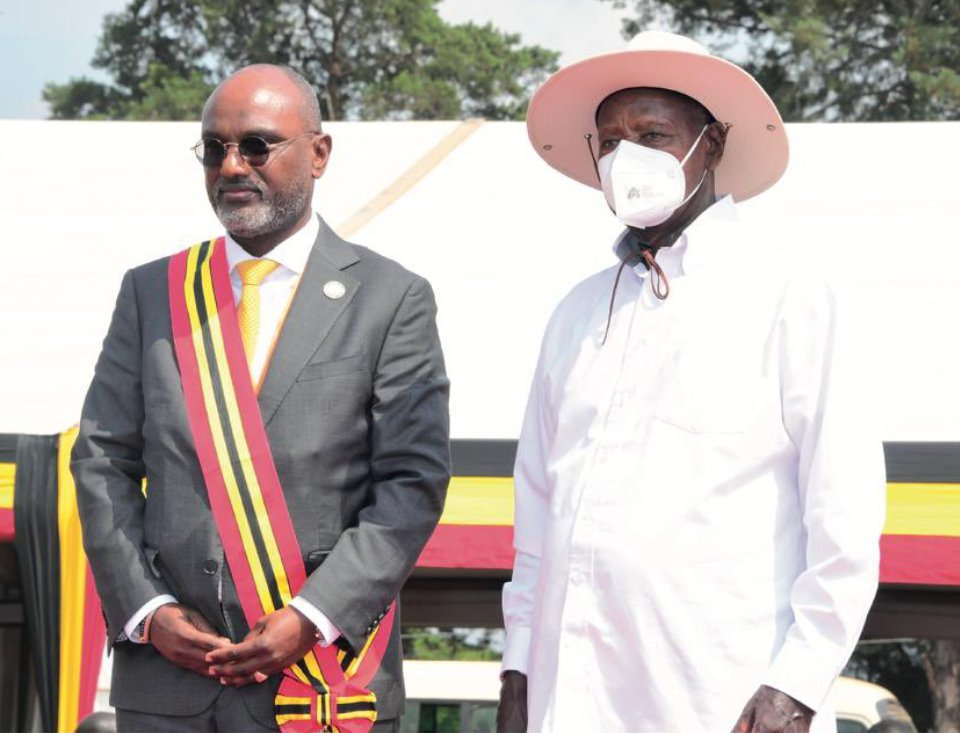
There have been some shocks and surprises about the cabinet list announced by President Museveni on Tuesday.
However, the inclusion of Adonia Ayebare as the new minister of Foreign Affairs may not have come as a surprise to those who have been watching Uganda’s diplomatic space for some time.
For years, Ayebare has been one of Uganda’s most visible and influential foreign policy figures. He has represented Uganda at the United Nations, advised on regional peace and security matters, defended Kampala’s positions during diplomatic disputes, and built a reputation as one of President Museveni’s most trusted international envoys.
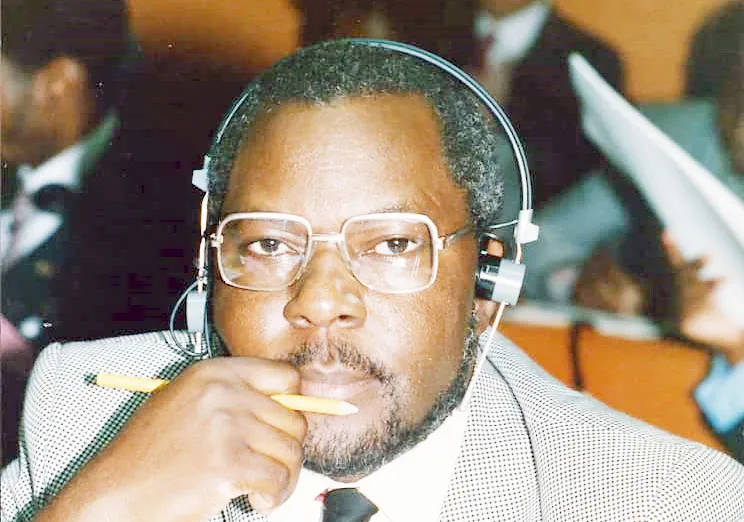
Yet his journey to the top of Uganda’s diplomatic establishment started in the newsroom in 1998 as a reporter at the East African Business Week.
People who interacted with Ayebare in those years say he was quiet, analytical, and deeply interested in regional politics and economics. But he was also calculative according to one person who observed him.
“At Museveni’s press conferences, he often asked those long questions where he would begin by praising the president’s decision or actions and then point out what needs to be done,” said the person, a retired journalist.
Yet those early media jobs gave him something that many career diplomats never fully develop. He learned how to explain complex issues in simple language and how to shape political narratives.
Ayebare later earned a degree in mass communications from Makerere University, then headed to the United States, where he acquired a master’s degree from Long Island University and the Fletcher School of Law and Diplomacy at Tufts University. He also holds two doctoral degrees.
By the mid-2000s, he had moved into Uganda’s diplomatic service, serving as ambassador to Rwanda and Burundi before joining Uganda’s UN mission in New York as deputy permanent representative.
Ayebare’s transition into diplomacy coincided with Uganda’s growing involvement in regional peace and security issues in the Great Lakes region and the Horn of Africa.
Over the years, he served in several diplomatic and advisory roles, including assignments linked to peace negotiations and regional mediation efforts.
In 2017, Museveni appointed him Uganda’s Permanent Representative to the United Nations in New York, one of the most sensitive diplomatic postings.
At the UN, Ayebare became Uganda’s public diplomatic face during a period when Kampala was increasingly involved in regional security operations and continental politics.
He defended Uganda’s military deployments in Somalia under the African Union mission and consistently supported Kampala’s argument that instability in neighbouring countries directly affects Uganda’s security and economy.
He also played a visible role during Uganda’s hosting of the Non-Aligned Movement summit and the G77+China meetings in Kampala, events that the government viewed as proof that Uganda was becoming an important diplomatic player within the Global South.
Ayebare’s diplomatic style has often reflected Museveni’s own worldview. On X, he has regularly defended the president’s foreign policy positions, especially on regional security, Pan-African cooperation, and what the government describes as resistance to foreign interference in African affairs.
It was his advice that Uganda take a neutral position on the Russia-Ukraine conflict.
That loyalty may partly explain why Museveni increasingly brought him closer to the centre of government.
Last year, Ayebare was appointed an ex officio member of the cabinet, allowing him to participate in cabinet discussions even before becoming a full minister.
His elevation to Foreign Minister now places him at the centre of Uganda’s international relations at a complicated moment.
Uganda faces growing diplomatic pressure over governance, human rights concerns, and controversial laws such as the recently signed Protection of Sovereignty law, which critics argue could restrict political freedoms and foreign-funded activities. Ayebare vocally supported the enactment of the law.
The region is also tense. Relations in eastern Congo remain delicate, partly because of military operations and controversial statements made by military leaders, including Gen Muhoozi Kainerugaba on social media.
As foreign minister, Ayebare will be expected to reassure international partners while also remaining loyal to Museveni’s increasingly assertive foreign policy posture.
The bigger question, however, is whether Ayebare was appointed because of his diplomatic competence or because of politics.
The answer may be both.
Museveni has historically preferred loyal technocrats who can defend government policy without openly challenging the political establishment. Ayebare fits that description. That combination, for now, makes him politically safe.
Still, our local politics has not always been kind to technocrats.
Former Finance ministers Dr Ezra Suruma and Maria Kiwanuka entered government with strong professional reputations but later struggled within our highly political power system.
Monica Azuba, a career engineer who replaced embattled Abraham Byandala as minister of Works and Transport in 2016, was sacked in 2019.
Dr Ham Mulira, who was appointed to lead the newly formed ministry of ICT in 2006, failed to navigate local political interests and was out of the job by 2009.
Ayebare could face a similar challenge.
Some say his survival in the sensitive ministry will depend on managing political interests, parliamentary pressure, and competing centres of power within government.
One advantage Ayebare may have is that he already understands the political environment around Museveni.
Unlike some technocrats who entered the cabinet as outsiders, Ayebare has spent years operating close to the president’s inner foreign policy circle. He is also close to Gen Muhoozi Kainerugaba, the CDF, who openly called for him to be appointed to the ministry.
Will Ayebare eventually transition into elective politics?
Well, it will depend. He hails from Isingiro West, a constituency currently occupied by Rauben Arinaitwe.
If he chooses to stand in 2031, he will follow the path of several technocrats who were appointed to the cabinet but later realised that they had to shore up their positions by building a political base.
The most prominent one is Dr Ruth Aceng, the new minister of ICT and National Guidance, and former Health minister, who first gained prominence as a medical technocrat in the cabinet. She is now the MP for Lira City.
Ayebare’s case may depend on whether he develops a political base beyond diplomacy. At the moment, he is known more in diplomatic circles than among ordinary voters.
For now, however, he appears focused on consolidating Uganda’s foreign policy position at a time of regional uncertainty and increasing geopolitical competition.
The real test for Ayebare starts now.