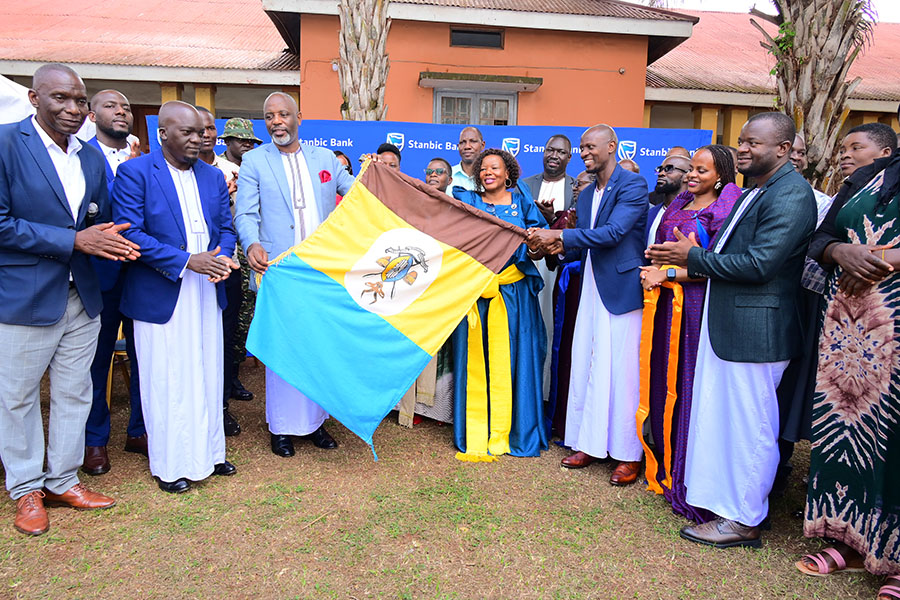
More than 30,000 low-income women entrepreneurs in the Busoga sub-region are set to benefit from affordable financing, business development support and digital financial services under a new partnership between the Busoga Kingdom, the Gates Foundation and Stanbic Uganda Holdings Limited (SUHL).
The Women’s Economic Empowerment (WEE) Programme was launched at the Busoga Kingdom headquarters in Bugembe, Jinja City. It is aimed at addressing one of the biggest challenges facing women who own nano and micro enterprises: limited access to affordable credit and business support.
The programme will provide financing alongside entrepreneurship training, financial literacy, digital skills, mentorship, insurance, savings solutions and market linkages to help women build sustainable businesses and improve household incomes.
The initiative brings together the community mobilisation role of the Busoga Kingdom, the Gates Foundation’s expertise in advancing financial inclusion and Stanbic’s financial services and enterprise development capabilities through Stanbic Bank Uganda and Stanbic Business Incubator Limited (SBIL).
Representing the Kyabazinga of Busoga, the Katukiro of Busoga, Dr Joseph Muvawala, said empowering women entrepreneurs is critical to Uganda’s social and economic transformation.
“When you empower a woman economically, you uplift an entire family and strengthen the community. Many women work tirelessly to support their households, yet continue to face barriers in accessing finance and business opportunities,” the Kyabazinga said in a message delivered by Dr Muvawala.
“This partnership gives them the tools, knowledge and confidence to build sustainable enterprises and improve their livelihoods. We commend the Gates Foundation and Stanbic for joining hands with the Busoga Kingdom to transform lives through economic empowerment.”
Dr Muvawala said the programme complements government efforts to improve livelihoods by combining affordable financing with practical business development support.
“Access to capital alone is not enough. Entrepreneurs also need skills, mentorship and market opportunities to build resilient businesses. This partnership addresses those needs in an integrated way, creating lasting economic opportunities for women and their families,” he said.
Women own and operate thousands of Uganda’s micro and small enterprises, particularly in the informal economy. However, many remain excluded from formal financial systems because they lack collateral, have limited financial literacy and do not have access to financial products designed to meet their needs.
The programme seeks to bridge that gap by providing an integrated pathway from financial inclusion to enterprise growth.
Speaking on behalf of Stanbic Bank Uganda, the Head of the Economic Enterprise Restart Fund (EERF), Stephen Segujja, said the initiative reflects the bank’s commitment to driving Uganda’s growth by expanding economic opportunities for underserved communities.
“At Stanbic, we believe economic inclusion is one of the most powerful drivers of sustainable development. Through this partnership, women entrepreneurs will gain access not only to affordable financing, but also to the business skills, digital capabilities and market connections they need to grow resilient enterprises,” Segujja said.
“We are investing in businesses that will create jobs, strengthen communities and contribute to Uganda’s long-term prosperity.”
The chief executive of Stanbic Business Incubator Limited, Catherine Poran, said enterprise development will be central to the long-term success of the programme.
“Access to finance creates opportunity, but enterprise development sustains it. Our role is to equip women entrepreneurs with practical business skills, financial management capabilities, digital literacy and mentorship so they can build businesses that create jobs, increase household incomes and contribute meaningfully to Uganda’s economy,” Poran said.
One of the beneficiaries, Safinah Namukose, a trader from Buwenge, described the initiative as a timely intervention for women seeking to grow their businesses.
“Many women have the determination to succeed but lack affordable financing and the skills to expand their businesses. This programme gives us hope that more women will be able to improve their incomes, support their families and create opportunities for others,” she said.