The Minister of Finance, Henry Musasizi, has urged microfinance institutions to stop pouring money into buildings and to invest in digital platforms, so that more Ugandans, especially those in villages, can save with ease.
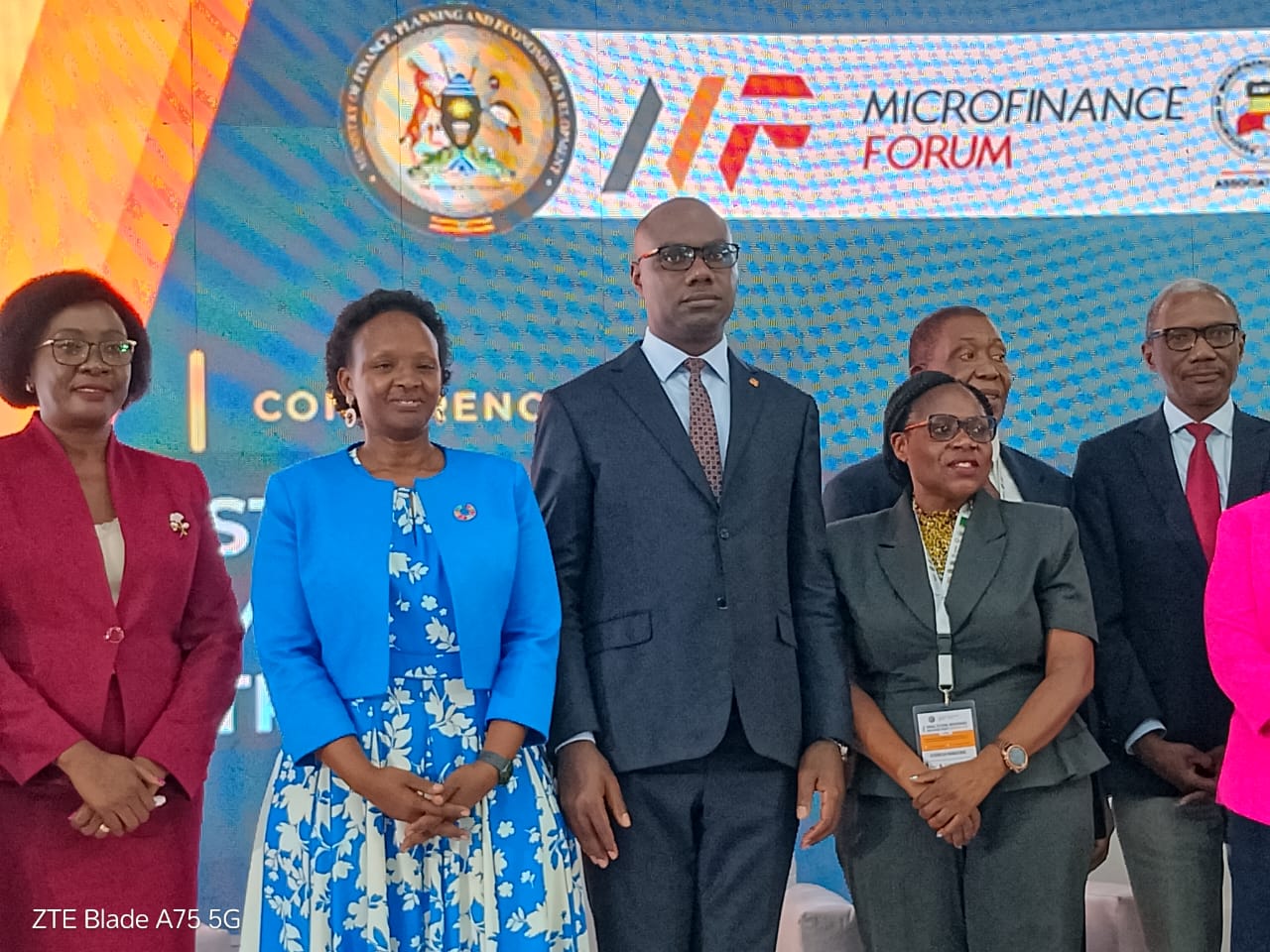
He was speaking on Thursday while opening the fourth National Microfinance and Savings Groups Conference at Hotel Africana in Kampala.
The two-day meeting is being held under the theme “Strengthening Sustainable Microfinance for the Socio-Economic Transformation Agenda”.
Musasizi challenged microfinance institutions to take the lead in promoting financial inclusion, so that every household can benefit from their services.
He said many people in rural areas believe in saving, but the way saving is organised holds them back. Most systems still require customers to visit a financial institution again and again.
“Many financial institutions invest heavily in putting up buildings, but this should change,” he said. “Instead, invest in digitalisation going forward.”
He asked institutions to make better use of online banking, mobile phones and other channels to reach savers where they live.
The minister also linked saving to income. Managers, he said, must encourage Ugandans to work and improve their household incomes, because people can only save when they earn.
Shartsi Kutesa Musherure, the minister of state for finance in charge of microfinance, said Uganda had made real progress on financial inclusion.
She cited the FinScope Uganda 2023 survey, which found that 81% of adults used financial services in 2023, up from 77% in 2018.
But Kutesa Musherure said big challenges remained, including low savings, limited access to affordable and productive finance, and high lending costs.
“Our priority must therefore be to ensure that financial services are accessible, affordable, responsible and sustainable, enabling households and enterprises to save, invest and manage risks, and contribute to economic growth,” she said.
She said the government would keep strengthening the microfinance sector through regulatory reforms and institutional development, in line with Uganda’s Vision 2040.
Tadeo Atuhura, the communications manager of the Microfinance Support Centre (MSC), said the centre was set up to run some of the government’s presidential initiatives and programmes. One of them is Emyooga, a programme that gives savings and credit groups access to start-up money.
He said the centre’s mandate was to raise household incomes. It also wanted more Ugandans to take part in the money economy and to keep the microfinance institutions strong enough to help the poor.
The FinScope survey counts people who use both formal services, such as banks and mobile money, and informal ones, such as savings groups.