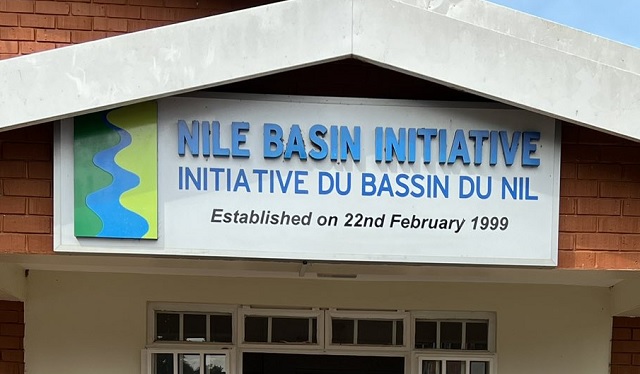
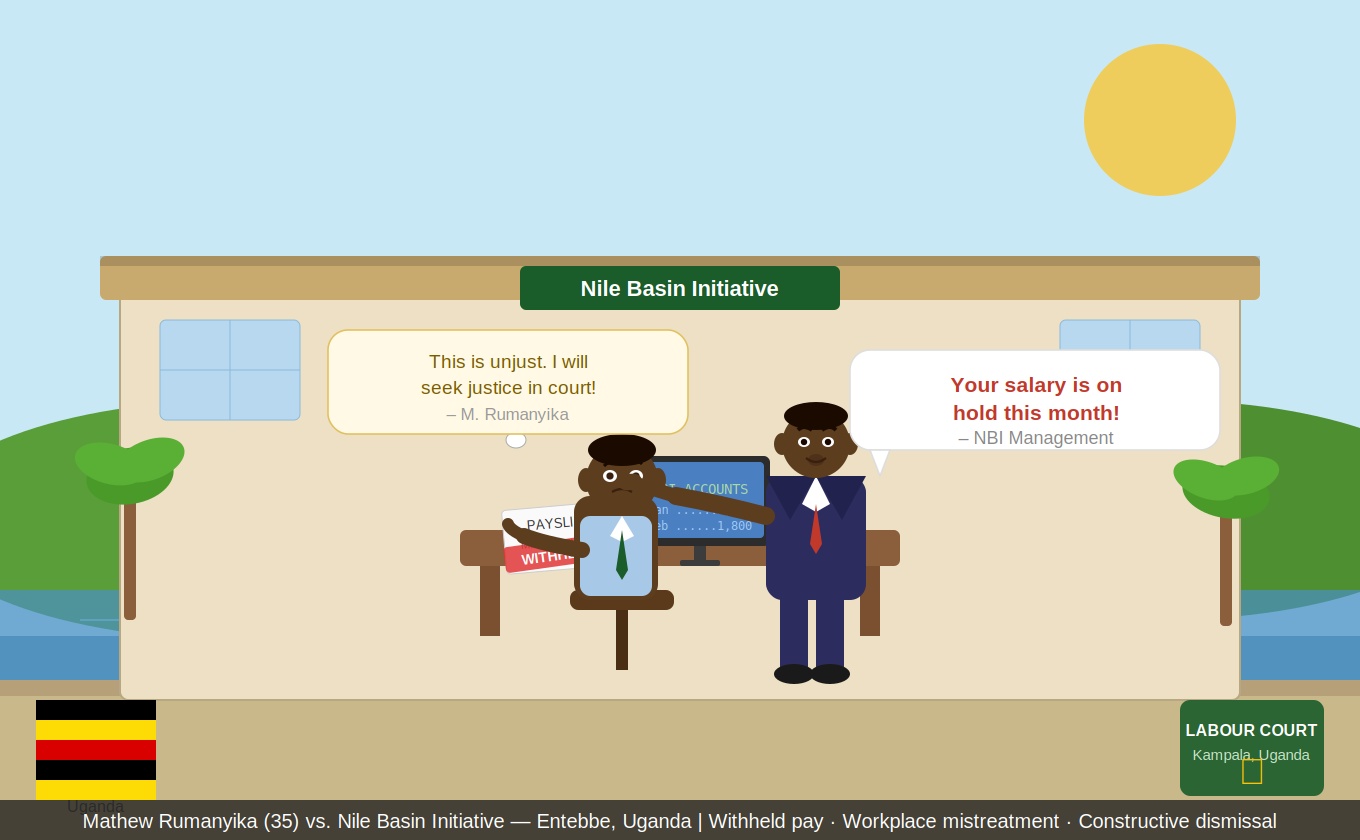
When Mathew Rumanyika joined the Nile Basin Initiative in September 2020, he believed he had secured the kind of job many accountants dream about.
The regional intergovernmental organisation, which coordinates cooperation among countries along the Nile Basin, hired him as an accountant on a one-year renewable contract.
Rumanyika says he was recruited for what was expected to be a long-term project lasting up to 10 years. At the time, he thought the job would provide stability and professional growth.
Instead, according to court documents filed before the Industrial Court in Kampala, the four years that followed became what he describes as a period of humiliation, overwork, false accusations, and psychological distress.
In his claim against the Nile Basin Initiative, Rumanyika accuses the organisation of constructive dismissal, workplace victimisation, defamation, and failure to provide a safe and fair working environment.
In court, the Nile Basin Initiative denied all the accusations.
The labour case was dismissed on a technicality after the judge ruled that NBI could not be sued in a local court because it enjoyed diplomatic immunity.
Rumanyika says his troubles began almost immediately after he reported for duty.
Although his official working hours were from 8 am to 5 pm, Monday to Friday, he says his supervisor verbally informed him that he would be required to work late into the night and on weekends due to a backlog caused by the Covid-19 shutdown.
“At first I believed it was temporary,” Rumanyika says in the court filing.
But according to him, the long hours never stopped.
He claims he worked beyond official hours for nearly four years without overtime compensation, despite some employees allegedly receiving overtime payments every month.
The pressure, he says, intensified as his responsibilities grew.
Despite the difficult conditions, Rumanyika says his performance remained strong. His contracts were renewed annually, and in 2023, he reportedly scored 80% in a performance appraisal.
That appraisal led to another contract renewal.
But just weeks later, he says management abruptly placed him on a Performance Improvement Plan, commonly referred to as a PIP.
Rumanyika claims the decision shocked him because he had just received a strong performance review.
He says the NBI Human Resource Manual stated that to be placed on a PIP, he had to score below 45%.
His supervisor claimed some areas still required improvement.
Rumanyika says the targets set under the PIP became almost impossible to achieve.
At the same time, he says he was assigned to facilitate a two-week workshop at Speke Resort Munyonyo, where he handled payments to staff, delegates, and service providers while also supporting logistics and attendance management.
While doing this, he says he was expected to continue posting accounting transactions in real time to avoid delays in bank reconciliations.
Then came the annual audit.
Rumanyika says several senior staff members travelled out of the country during the audit period, leaving him to deal with external auditors almost alone.
At one point, he says, he was also required to cover for a colleague who had travelled to Dubai for a graduation ceremony.
Between October and December 2023, Rumanyika claims he worked eight consecutive weekends without a single rest day.
“This posed a great danger to my health,” he says in the filing.
Despite the effort, he says his supervisors later rated his performance during the PIP period as below average.
The relationship with some colleagues also deteriorated badly.
Rumanyika accuses a female colleague of making inappropriate comments to him shortly after he joined the organisation.
According to the claim, she allegedly asked him personal questions about his relationships and body, and later proposed a romantic relationship, which he rejected.
Rumanyika says tensions between them escalated over time and eventually turned into repeated verbal altercations.
He claims he formally complained to the organisation’s human resource officials and requested a change of office space because the two shared the same office.
“I could not continue to discharge my duties while sharing an office with someone whose conduct amounted to bullying,” he states.
But Rumanyika says management failed to adequately address his grievances.
The most damaging accusations, however, came from another colleague.
In the claim, Rumanyika says a staff member accused him of stealing money on two separate occasions.
The first allegation involved $125, which Rumanyika insists had actually been deposited except for some damaged notes rejected by the bank.
According to his account, the rejected notes were returned to the colleague, who signed acknowledging receipt.
But later, he says, the discrepancy was interpreted as theft.
A second accusation followed in September 2023 involving $3,697.
Rumanyika says he was suddenly summoned into what turned out to be a disciplinary hearing without prior notice.
He claims he was not informed of the charges in advance, was not allowed adequate time to prepare a defence, and was denied the opportunity to question his accuser.
According to the court filing, the committee found him guilty and ordered monthly salary deductions.
Rumanyika says he felt humiliated and isolated.
“They treated me like a criminal,” he says.
Months later, according to the claim, the disciplinary and appeals committee reportedly cleared him of wrongdoing.
But Rumanyika says the damage to his reputation had already been done.
He alleges that colleagues continued referring to him as a thief even after he was exonerated.
According to the filing, he was thereafter blocked from handling cash transactions and excluded from certain responsibilities.
The accusations, he says, threatened not only his job but his professional future as an accountant.
Rumanyika says allegations of theft could lead to the loss of his practising licence and bar him from public office.
He also claims that separate allegations of sexual harassment could have exposed him to criminal prosecution and imprisonment.
The experience, he says, left him emotionally exhausted, and he tendered his resignation because of this hostile work environment.
For now, Rumanyika says he simply wants his name cleared.
“I worked hard for that organisation,” he says.
“What happened to me was unfair.”