



Market Intelligence Group’s 2026 media survey has become the centre of a dispute in Uganda’s media industry after the Uganda Media Owners Association (UMOA) questioned the credibility of the research and called on stakeholders to disregard its findings.
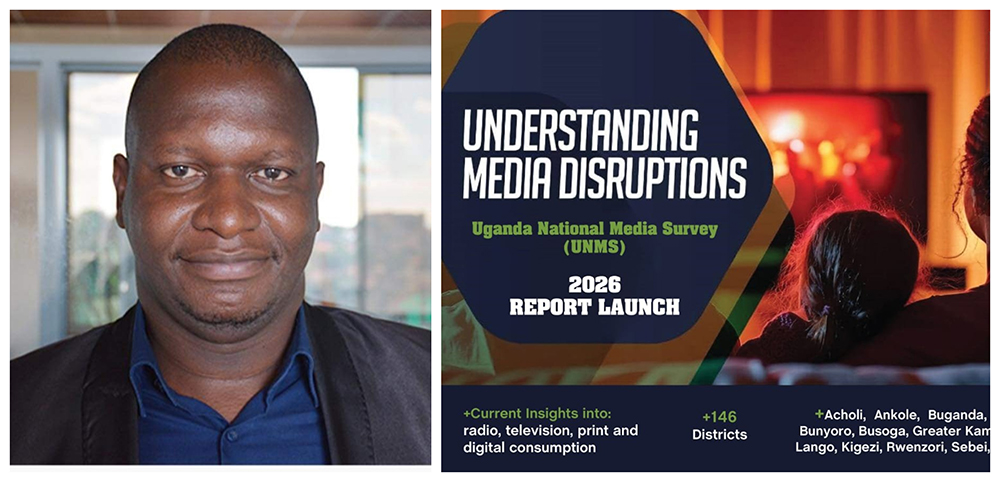
The survey, led by MIG managing director Dr Joel Isabirye, was conducted between May and June 2026 and covered radio, television, print and online media consumption.
According to the report of the survey, 26,733 respondents were ineterviewed using quantitative cross-sectional design, simple random sampling and electronic fieldwork.
The report says respondents were drawn from across Uganda’s sub-regions, including Acholi, Ankole, Buganda, Bugisu, Bukedi, Busoga, Greater Kampala, Karamoja, Kigezi, Lango, Rwenzori, Sebei, Teso, Tooro and West Nile. It also examined media consumption by age, gender, social class, education level, preferred media platform, programmes, presenters and time of viewing.
One of the most prominent findings, which has become the centre of the dispute, is the ranking of television stations.
According to the report, NBS TV emerged as the leading English-language television station watched in Uganda, followed by NTV and Uganda Broadcasting Corporation (UBC).
In the local-language television category, Bukedde TV was ranked first, followed by Sanyuka TV, Galaxy TV, Spark TV, TV West and BBS.
The survey also examined television viewing according to different time slots and programme categories, including news, current affairs, political talk shows, entertainment and sports.
It further ranked television personalities in categories such as current affairs, news, entertainment and sports.
The findings gave NBS TV particularly strong results in several programme categories.
NBS Live at 9 was ranked the leading evening English news programme, while The Frontline was ranked the most-watched English political talk show. NBS Barometer led the Luganda political talk show category, while NBS After 5 topped the evening entertainment category.
For the third consecutive year, Douglas Lwanga was ranked the leading entertainment television personality, while Samson Kasumba topped the English news anchor category.
Canary Mugume was ranked second among English news anchors and Victoria Sibiya fourth while Adam Kungu Al-Mahadi was ranked the leading current affairs television presenter.
The survey also looked at newspapers and online publications. Daily Monitor featured prominently among physical newspapers consumed, while monitor.co.ug, bbegmedia.com, newvision.co.ug and nilepost.co.ug were some of the most prominent online media.
But it is the television rankings, particularly the position given to NBS TV, that have triggered the biggest controversy.
Shortly after the survey was released, UMOA issued a statement questioning its findings. The association said it had identified what it described as “misrepresentations and inaccurate information” and urged its stakeholders and the public to disregard the report.
UMOA also said it did not subscribe to MIG’s market research and indicated that it works with organisations it considers credible in media research.
The response has now turned into a legal dispute with MIG, through its lawyers Kajubi & Co Advocates, giving UMOA 10 days to retract the statement, apologise publicly and undertake not to repeat the claims.
MIG’s lawyers have particularly taken issue with UMOA describing the findings as “purported research findings”, as well as its reference to “several misrepresentations and inaccurate information” and its call for the public to disregard the report.
Dr Isabirye, the brain behind the survey has defended the research and questioned why UMOA did not first contact MIG before issuing its statement.
He said the research firm had invited UMOA to previous report launches and had even shared its questionnaire before the fieldwork.
“They did not contact us. We have always invited them to the launch of the reports so that they can ask questions and we provide answers,” Isabirye said.
He also defended MIG’s methodology, saying the firm used a large sample and face-to-face interviews.
“We have a bigger sample, we do face-to-face administration of the questionnaire,” he said.
According to MIG, the survey covered 146 districts, making geographical coverage one of the key arguments used by Isabirye in defending the findings.
For Dr Isabirye, the controversy could now be settled in court if UMOA does not meet MIG’s demands.







Personally, I would ask lots of questions. If you are going to rank stations and programs in local media consumption, and you fal to even make a mention of Akawungeezi, then you know you’re doing hogwash. What do really people watch on Bukedde, Spark and Sanyuka that warrants them those positions!? You will only realize that these are the station whose audience Isabirye understands and has worked for. I have not seen the radio category, but I know he will tell us Beat fm leads the park, followed by Super fm. In other words, these results truly reflect Isabirye’s opinions and sentiments. Thank God, they’re not considered credible enough to be used by advertisers to influence spending. Let MIG pull-up amd double their efforts. Five years to come, we may consider looking into your research findings.