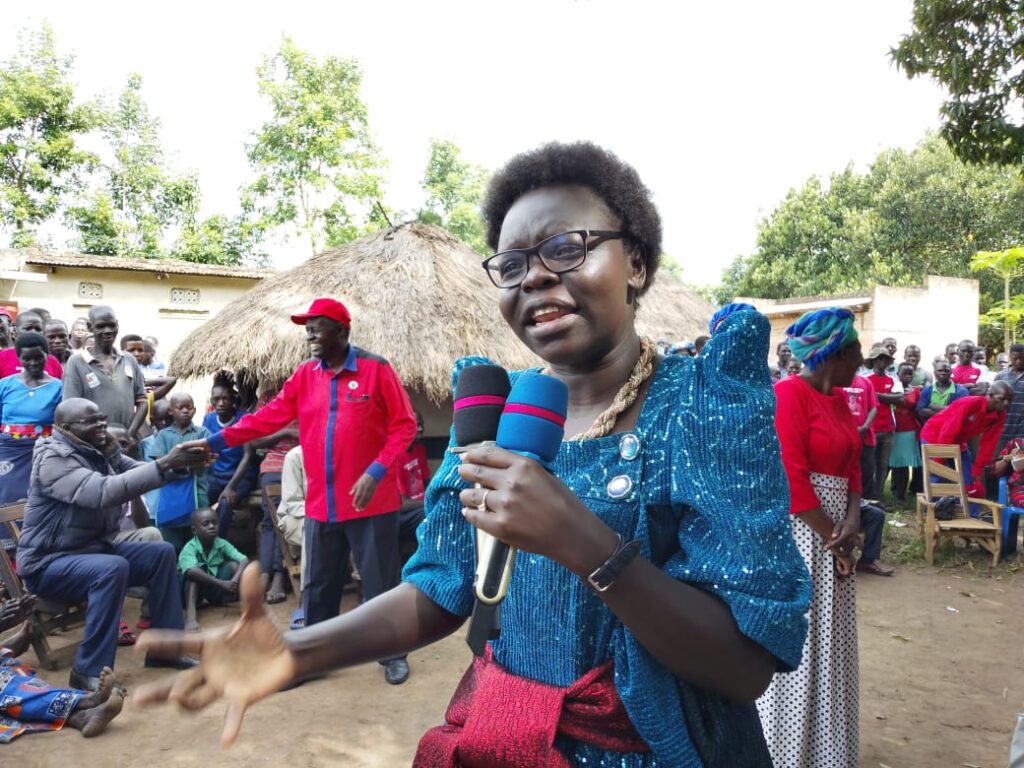
Oyam North MP Eunice Otuko has called for the revival of Lira Spinning Mills, saying the factory could help drive agro-industrialisation, create jobs and increase the value of cotton produced in northern Uganda.
Otuko made the call when she appeared before Parliament’s committee on Tourism, Trade and Industry on Thursday to present her proposal for the revival of the long-dormant factory.
She said Lira Spinning Mills, which has been inactive for about 40 years, was established as a strategic national asset to provide a ready market for cotton grown by Ugandan farmers.
According to Otuko, the factory’s closure has led to the loss of productive employment opportunities and deprived cotton farmers, particularly in northern and eastern Uganda, of a stable domestic market where their produce could be processed and sold at a higher value.
“The once thriving giant of the Lango sub-region was established as a strategic national asset designed to consume Ugandan-grown cotton.
However, cotton farmers across Northern and Eastern Uganda now sell their cotton with little to no value addition,” Otuko told the committee.
She said reviving the factory would also create employment opportunities for thousands of young people and women in Lira City and neighbouring districts.
“Reviving Lira Spinning Mills will directly promote the Buy Uganda, Build Uganda (BUBU) framework by providing the domestic production capacity required to operationalise the second-hand clothes import restrictions under the newly enacted External Trade (Amendment) Act, 2026,” she said.
The External Trade (Amendment) Act, 2026, introduces a 30% environmental levy on imported second-hand clothing and worn articles.
Otuko argued that restrictions and additional charges on second-hand clothes imports should be accompanied by increased local production capacity so that Ugandans can access locally manufactured clothing and other textile products.
She said the revival of Lira Spinning Mills could absorb up to 7,000 unemployed young people and women, while also creating opportunities for cotton farmers, transporters, traders and other businesses linked to the textile industry.
Otuko told the committee that an engagement with the Uganda Investment Authority had indicated that about $58 million would be required to establish a fully integrated and modern spinning mill.
She proposed that the investment could be undertaken through government recapitalisation or a public-private partnership.
“Government needs to undertake a comprehensive technical, financial, legal and commercial assessment of Lira Spinning Mills to establish its current structural status and investment requirements,” she said.
She further proposed that the required financing could be mobilised through the Uganda Development Corporation, provided the process complies with public finance laws.
Members of the committee welcomed the proposal, saying the revival of the factory could help expand industrial activity and provide more Ugandans with opportunities to participate in the formal economy.
Hon Abraham Isamat, the NRM MP for Kapir County, said the proposal could also revive cotton production in the Teso sub-region, where many farmers previously depended on the crop.
Isamat said the absence of factories capable of processing agricultural produce had slowed the development of cotton and other commercial crops in the region.
“We still have ginneries where cotton can be stored, but the government is concentrating more on coffee production, which has taken time to be embraced in Teso. There is also vast land in Northern Uganda, and if this idea is processed, they will swing into cotton growing,” he said.
He said establishing a reliable market for cotton would give farmers an incentive to increase production because they would have greater confidence that their produce could be sold and processed locally.
Sironko District Woman Representative Asha Mafabi said the revival of the spinning mill should be accompanied by measures to increase food production in the region.
Mafabi said agricultural development should support both commercial production and household food security so that communities benefit from increased economic activity without compromising access to food.
The committee is considering the proposal following a motion tabled in Parliament by Otuko in July 2026.
The proposed revival of Lira Spinning Mills comes at a time when Uganda is seeking to increase local manufacturing, create jobs for its growing population and add value to agricultural products before they are sold on local and international markets.
For cotton farmers in northern and eastern Uganda, the revival of the factory could provide a domestic market for their produce while linking farming to the textile and garment industries.
The proposal, however, will require the government to establish the current condition of the factory, determine the cost of restoring or rebuilding its facilities, and identify a sustainable financing and management model before any major investment is made.