
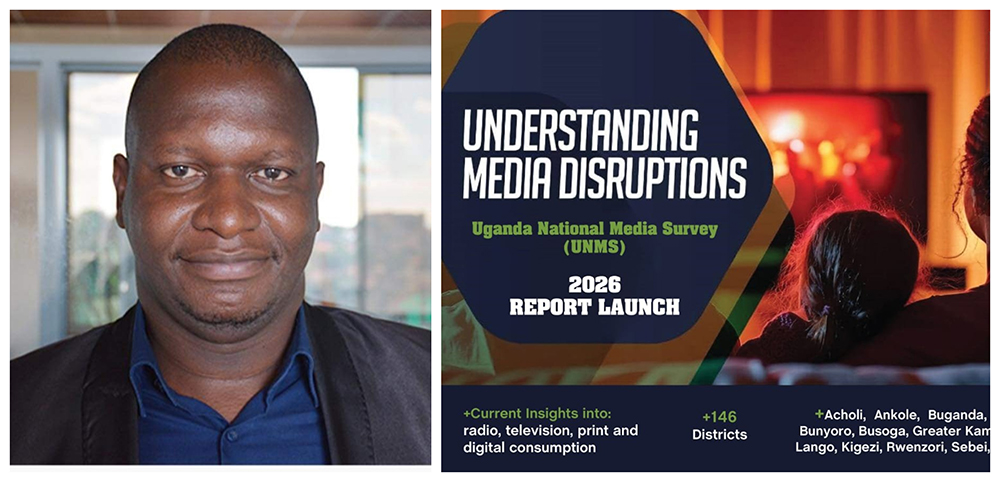
Market Intelligence Group (MIG) has threatened to sue the Uganda Media Owners Association (UMOA) over a press release disputing the findings of its latest media survey.
In the survey, NBS Television was ranked as Uganda’s leading television station, something that UMOA has disputed.
Lawyers representing the research firm, Kajubi & Co Advocates, issued a notice of intention to sue in which they affirmed that their client is prepared to defend its research methods and findings in court.
The dispute follows the release of Market Intelligence Group’s 2026 Media Survey, which placed NBS TV at the top of the television rankings, prompting a response from UMOA, which questioned the accuracy and credibility of the findings.
In a statement, MIG says UMOA issued a press release about the survey shortly after its launch which labelled the findings, “purported research findings”.
In its release, UMOA also said the research contained “several misrepresentations and inaccurate information”.
MIG’s lawyers say these statements were defamatory and have instructed UMOA to provide the remedies demanded by their client, failure of which legal proceedings will be commenced against the association and all persons responsible for the publication.
MIG was established in 2011 and specialises in professional research, including audience measurement, market research and socio-cultural, economic and political research.
It is led by Dr Joel Isabirye, a renowned media researcher.
The company insists that its media survey was conducted professionally and scientifically and says it has extensive evidence to support its research process and findings.
A source close to Market Intelligence Group said the criticism was unfair to the teams involved in collecting and analysing the data.
“It is an insult to the research teams that criss-cross this country collecting data, the data analysts who sit and review this data, and the vast amount of resources spent moving even in the most remote areas of this country,” the source said.
The company believes the courts should be allowed to determine whether its research methods and findings were sound rather than having the results dismissed through a public statement.
The controversy has also exposed long-running disagreements within Uganda’s media industry over audience measurement and the methods used to determine which broadcasters attract the largest audiences.
Media industry insiders say disputes over research findings are not new, particularly when the results change the position of established broadcasters.
“This is nothing new. The history of media research in Uganda since 1994 shows that it has always been contested, as stations that are not appearing in the top stations bicker with those at the top,” a member of UMOA said.
The source said broadcasters have previously accepted research findings when they performed well but sometimes challenged the same research when their rankings fell.
Another media industry source said the growing number of research companies conducting audience surveys had increased competition in the market.
The source alleged that established research firms could be threatened by newer players and might therefore seek support from industry associations to protect their commercial interests.
“They even tried to force government agencies to baptise one privately owned research firm. How do you attempt such a monopoly in a liberal economy?” the source said.
The source also claimed that some research companies had previously covered only about half of Uganda, while MIG had expanded its research to 146 districts.
“It is only when they realised that Market Intelligence Group covers 146 districts that they started stating the same in their advertisements. It is business politics,” the source said.
Market Intelligence Group says the legal process will provide an opportunity to present evidence on how the survey was conducted, how the data was collected and analysed, and how the final rankings were reached.