Stanbic Bank Uganda has launched a new sustainability programme aimed at helping local businesses improve their environmental, social and governance practices and become better positioned to attract investment.
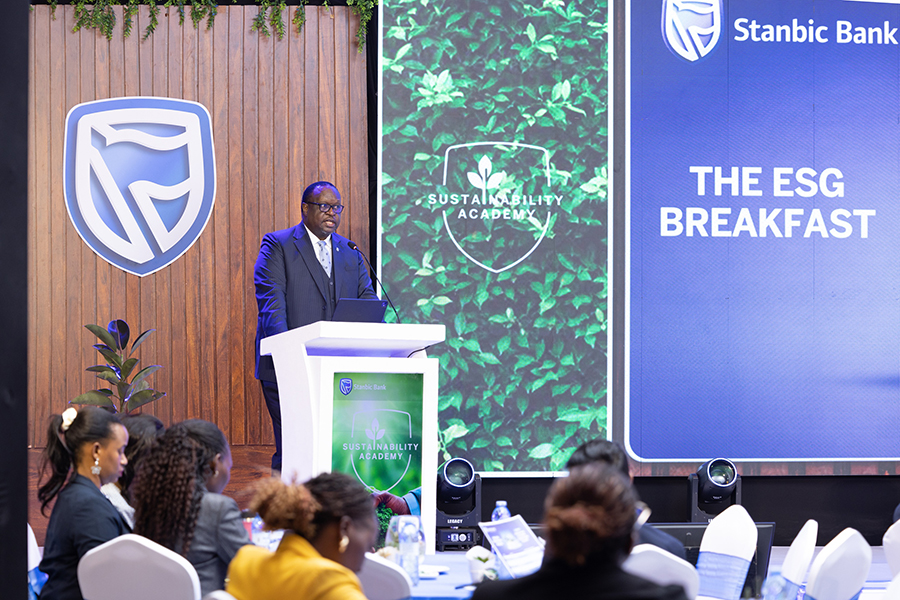
The bank unveiled the Sustainability Academy and the ESG Client Readiness series in Kampala as part of activities to mark its 35 years of operations in Uganda.
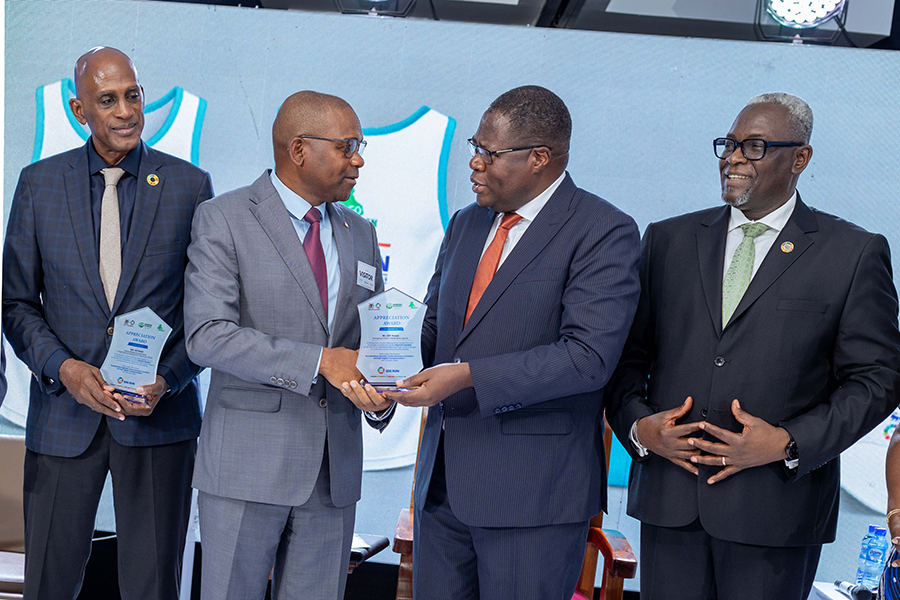
The first ESG Readiness forum brought together business leaders, Stanbic clients and other industry stakeholders to discuss how stronger environmental, social and governance practices can help businesses access financing, enter new markets and become more resilient.
ESG refers to the way businesses manage their impact on the environment, treat employees and communities, and maintain responsible and transparent systems of management.
The initiative is part of Stanbic Bank Uganda’s Positive Impact Agenda, which provides a framework for supporting sustainable economic development through five key areas, including climate resilience and environmental sustainability.
Stanbic Bank Uganda chief executive Mumba Kalifungwa said the bank’s 35 years of operating in Uganda had shown the importance of sharing knowledge and skills that can help businesses grow together with the economy.
“As we mark 35 years in Uganda, we are reflecting on how best to give back to the clients and communities that have been central to our journey. Through the Sustainability Academy, we are sharing knowledge, practical tools and expertise that can help businesses strengthen their competitiveness, attract investment and position themselves for long-term growth,” Kalifungwa said.
He said sustainability was increasingly becoming an important requirement for businesses seeking international capital, joining global supply chains and building confidence among investors and business partners.
Kalifungwa pointed to a recent sustainability-linked funding deal secured by Standard Bank Group as an example of the growing importance of sustainable business practices in accessing capital.
“Standard Bank Group recently secured $800 million in sustainability-linked funding from international investors, with demand exceeding $1 billion. This capital is available to support businesses across markets such as Uganda,” he said.
However, he said many businesses still needed to strengthen their governance structures, reporting systems and sustainability capabilities if they were to take full advantage of such opportunities.
The forum also examined the link between sustainability and Uganda’s long-term economic development plans.
Speakers noted that Uganda’s ambition to grow its economy from about $50 billion to $500 billion by 2040 will require significant investment in areas such as agro-industrialisation, tourism, mineral beneficiation, science, technology and innovation.
They said attracting the investment needed to support this transformation would increasingly depend on businesses showing that they have good governance systems, manage environmental risks responsibly and operate in a sustainable manner.
Cathy Adengo, head of sustainability at Stanbic Bank Uganda, said the Sustainability Academy was created to help businesses move beyond discussing sustainability and put practical measures in place.
“Sustainability is no longer a future consideration. It is a business imperative. Through the Sustainability Academy, we are providing businesses with practical knowledge and tools to better understand the risks and opportunities shaping today’s operating environment,” Adengo said.
Nicholas Kiiza, acting head of client coverage in the Corporate and Investment Banking division, said improving sustainability capabilities would help Ugandan businesses access international financing and participate more effectively in regional and global supply chains.
The forum also featured Katlego Mogoba, Standard Bank Group’s head of environmental and social risk in Corporate and Investment Banking, who spoke about the role of sustainability in improving risk management, investment readiness and business resilience.
Additional perspectives were provided by Atacama Consulting and corporate practitioners, including Roofings Limited.
The Sustainability Academy is available free of charge and can be accessed using mobile phones, tablets and computers.
It provides self-paced learning modules covering renewable energy, climate-smart agriculture, water and wastewater management, carbon markets, as well as basic sustainability and ESG principles.
Stanbic said the academy is intended to give businesses practical knowledge that they can use to identify sustainability risks, respond to changing market demands and take advantage of emerging opportunities.