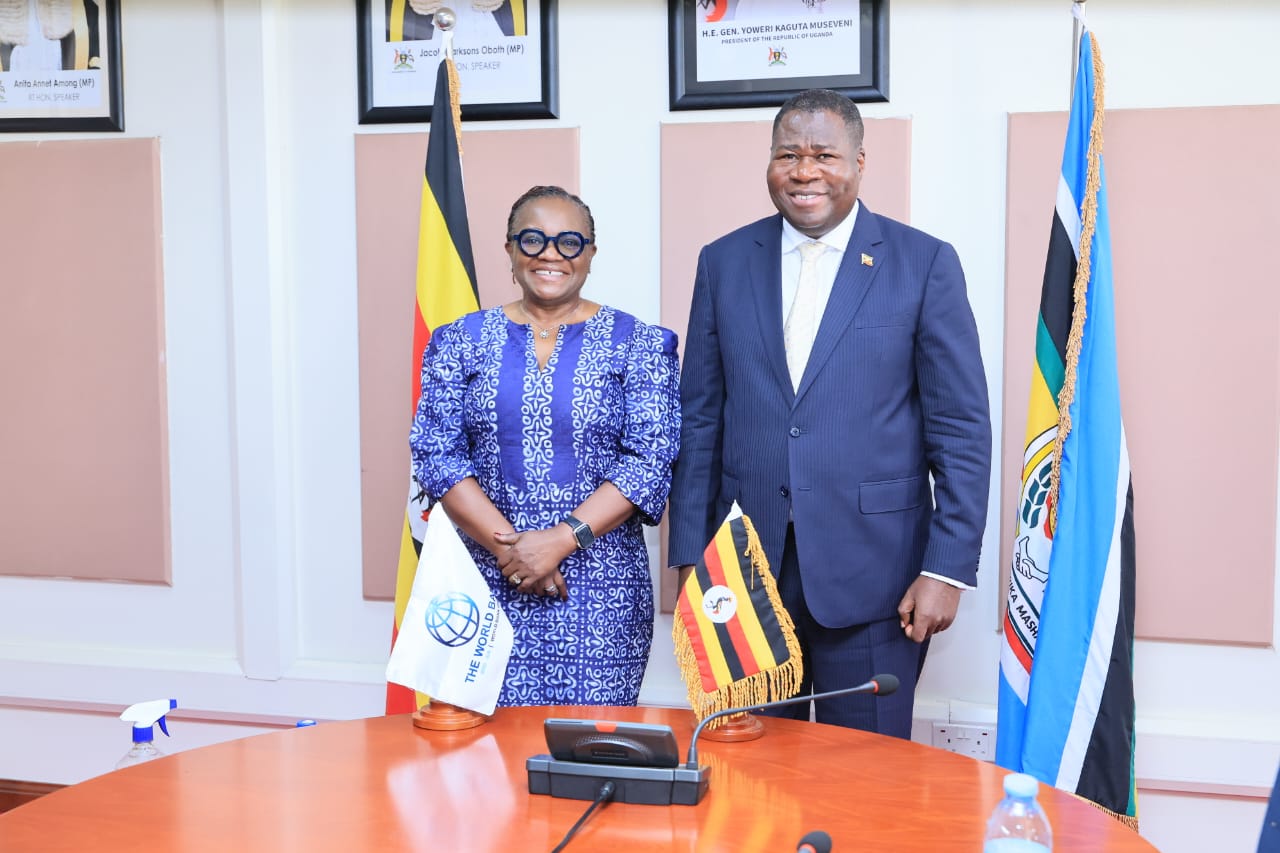
The World Bank Group has raised concern over delays in the implementation of projects it is financing in Uganda, warning that lengthy procurement procedures, slow contract approvals and inadequate implementation capacity are holding back service delivery.
Francesca Ayodeji, the World Bank Group’s country executive director, said Uganda had mobilised substantial financing but was struggling to translate the available resources into completed projects that benefit citizens.
Speaking to journalists after meeting Speaker Jacob Marksons Oboth at Parliament, Ayodeji said delays in project implementation were affecting the country’s ability to use development financing effectively.
“Uganda has mobilised substantial financing. However, approximately 68 per cent of the active portfolio remains undisbursed,” Ayodeji said.
She attributed the delays to lengthy approval processes, procurement and contract management challenges, limited implementation capacity, and delays in providing counterpart funding and operational resources.
Counterpart funding refers to the contribution that the Ugandan government is required to provide towards projects supported by development partners.
Ayodeji called on Parliament to strengthen its partnership with the World Bank Group to create a predictable environment in which reforms and investments can deliver results.
She said timely funding was necessary to ensure that projects financed by the bank were not only constructed but also properly operated and maintained.
She also called for closer parliamentary attention to project delivery, value for money and the inclusion of citizens’ priorities in development programmes.
The World Bank Group proposed several areas of engagement with Parliament, including regular strategic discussions with parliamentary leadership, targeted briefings for relevant committees and knowledge-sharing sessions on job creation, public finance, human capital development and infrastructure delivery.
The group also offered to share evidence and international experience to help MPs make informed decisions and strengthen their oversight of government programmes.
However, Oboth expressed concern over complaints from Ugandans about delays in implementing government projects, saying Parliament was ready to work with the World Bank Group to address the challenges.
He called for a review of some of the procedures that contribute to delays, particularly those relating to project approvals and compensation of people affected by government projects.
Oboth suggested that the World Bank Group should consider approving projects where the affected communities had given their consent, even as the government continued with the necessary compensation processes.
He assured the World Bank delegation that Parliament was committed to supporting the group’s work and promised further engagement with the Prime Minister to improve coordination and project implementation.
Oboth also spoke about his personal experience with World Bank-funded projects, recalling that he had previously attended a training programme organised by the institution in Washington while he was still practising as an attorney.
“Can you imagine coming from my rural village of Muwafu while still an attorney, just getting chosen to go for that training?” he said.
Amos Kankunda, the chairperson of Parliament’s Budget Committee, proposed the adoption of an electronic procurement system to reduce delays and improve efficiency in public procurement.
However, he acknowledged that the adoption of the system itself was taking longer than expected.
Kankunda said he was surprised that Uganda’s procurement processes were experiencing significant delays, particularly when compared with the timelines reported by the World Bank Group.
Dr Gerald Kasigwa, chairperson of the Presidential Advisory Group on Budget, asked the World Bank delegation to document the challenges it encounters while implementing projects in Uganda and include them in its report.
Kasigwa, who has previously supported the Southern African Development Community (SADC) on World Bank-funded projects, particularly in procurement, said documenting the challenges would help identify areas requiring intervention.
Sarah Lwansasula, deputy chairperson of the Public Accounts Committee (Central Government), also called for a review of Uganda’s procurement processes to establish the major causes of delays.
In response, Ayodeji explained that the World Bank Group provides technical guidance and reviews procurement processes but does not directly participate in the procurement of contractors for government projects.
She presented figures showing that Uganda takes considerably longer than the African regional average to complete some procurement stages.
According to the figures, bid evaluation in Uganda takes an average of 287.3 days, compared with 154.7 days across the African region.