The Entebbe High Court circuit has inspected a disputed 306-acre piece of land at Nakigalala in Wakiso, including the remains of a family graveyard that relatives say was destroyed during the construction of the Entebbe Expressway.
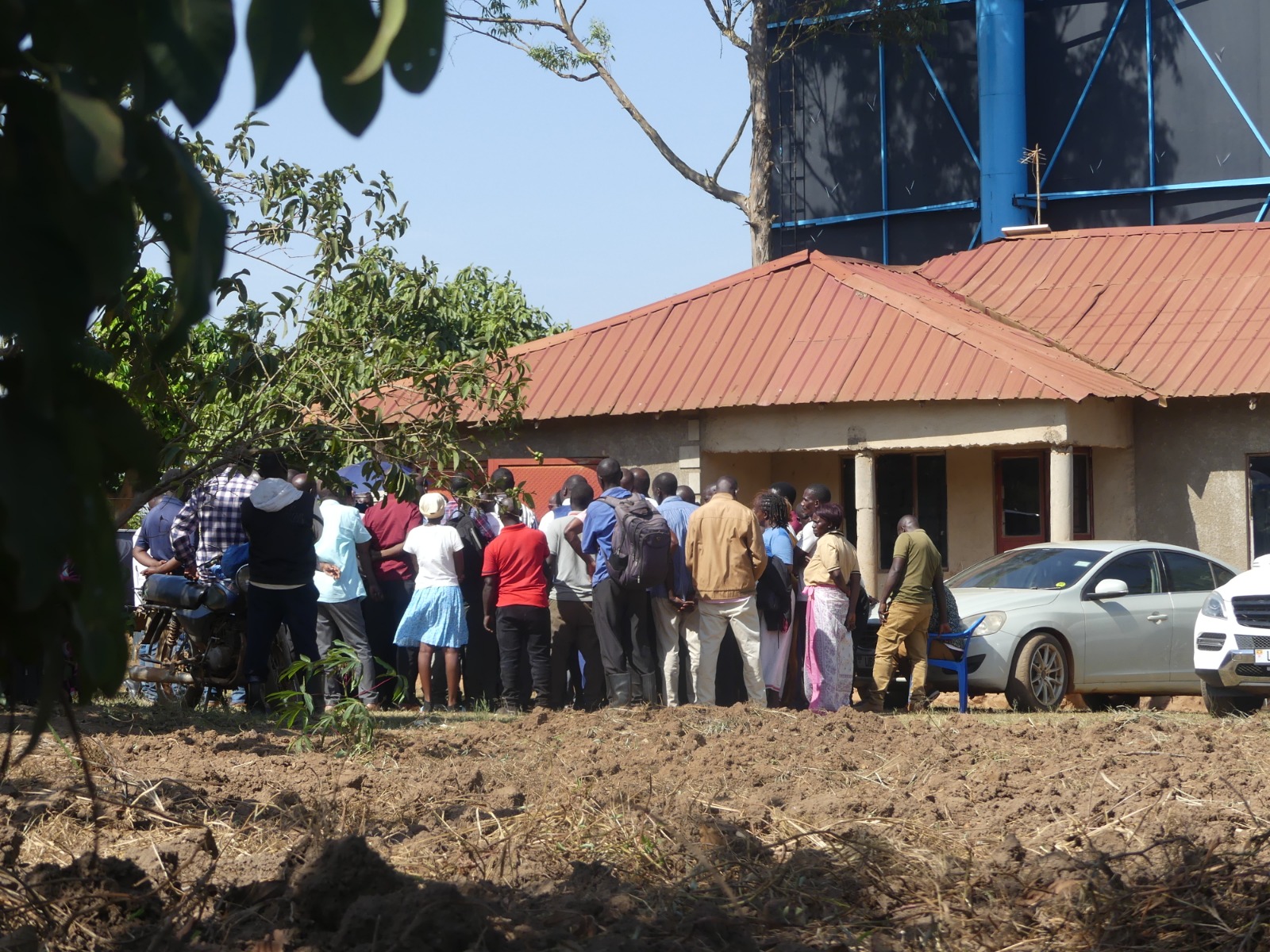
The court visit was led by Assistant Registrar Rashida Butanula, who toured parts of the contested land, spoke to residents and local leaders, and heard accounts from representatives of the family of the late Muwanga Omuweesi and Madhvani Group.
The land, located along the Entebbe Expressway, is the subject of a long-running legal dispute between the estate of the late Muwanga Omuweesi and Madhvani Group.
The Muwanga family is represented by lawyer Brian Kupper Rubihayo, while Madhvani Group Limited is represented by Kampala Associated Advocates (KAA).
During the fact-finding visit, Ms Butanula inspected housing structures, crops and other developments on the land. She also spoke to local council leaders, family members who live on or use parts of the land, and representatives responsible for security at the Madhvani Group’s Nakigalala operations.
Tonny Lukuyega, the chairperson of Nakigalala Cell, told the court that he knew the Muwanga family and was aware of their former family home and graveyard in the area.
He said part of the family’s land was affected by the construction of the Entebbe Expressway, including the area around the Kajjansi Interchange.
“This family lost a lot because of the construction of the Entebbe Expressway. They started by demolishing their house, which was replaced with this small one. Their graveyard was destroyed, and at night the bodies were exhumed and taken to an unknown place,” Mr Lukuyega told the court.
The account was presented to the court as part of the evidence from the family side. The circumstances surrounding the alleged exhumation and the location of the remains remain matters for determination through the relevant proceedings.
Mr Lukuyega also told the court that local authorities recognise Robert Kayongo and Benjamin Kalumba Ssebuliba as administrators of the family estate.
He said family members currently living at the site were led by their sister, Alexanderia Nantege.
Kayongo told the court that the family had been involved in a dispute with Madhvani Group over the land since 2013.
He alleged that some employees or security personnel associated with the company had, on several occasions, gone to the family’s home and mistreated its members.
“We opened several complaints at Kajjansi Police Station, but we have not been helped. Police are always shielding Madhvani workers by releasing them on police bond, and they start from where they stopped,” Kayongo said.
These allegations have not been proved in court and were denied by a representative of the Madhvani Group’s security team.
Ssebuliba also told the court that the family’s claim to the land goes back to their great-grandfather, Muwanga Omuweesi, whom the family says received the land from the then Kabaka of Buganda, Daudi Chwa II.
He said the family claims a title was created on October 20, 1913, during the British colonial administration, and that a certificate of registration was issued under reference FC9662.
According to the family, Madhvani Group’s interest in part of the land originally arose from a 99-year lease covering about 49 acres.
Mr Ssebuliba told the court that the lease later expired and that the family was surprised when a freehold title was subsequently obtained over the disputed property.
“We are disturbed by this case and mistreatment by Madhvani Group because this land is private Mailo, but we are wondering how it was turned into freehold,” Mr Ssebuliba said.
He further claimed that investigations by different government institutions had supported the family’s claim to the land.
The family has also alleged that the change in the land tenure and subsequent registration were irregular. Those claims are contested and remain before the court for determination.
Mr Ssebuliba appealed to President Museveni to intervene in what he described as the family’s long-running struggle over the land.
He also alleged that the company’s relationship with some government officials had affected efforts to resolve the dispute. These allegations were made by the family and have not been established by the court.
Daniel Mukula, who heads the Madhvani company’s security team at Nakigalala Tea Estate, rejected the allegations against the company’s security personnel.
Instead, he told the court that members of the Muwanga family had repeatedly entered areas being used by company workers to grow food.
Mukula said this was the reason some incidents involving the family had been reported to Kajjansi Police Station.
The competing accounts form part of the wider dispute that has been before the courts for more than a decade.
The administrators of the estate, Ssebuliba and Kayongo, are pursuing the case on behalf of the estate of the late Muwanga Omuweesi.
The family alleges that the land, identified as Block 374 and measuring about 306 acres, is family Mailo land and that the Madhvani Group and other parties unlawfully acquired an interest in it.
Madhvani Group, together with its subsidiary Kakira Sugar Works and the Commissioner for Land Registration, are parties to the proceedings.
The family has accused the respondents of unlawfully changing the tenure of the land from Mailo to freehold. The allegations are contested, and the court has not yet made a final determination on ownership.
Court records indicate that the dispute has been before the courts since 2013.
In 2022, the Land Division of the High Court issued a temporary order restraining agents, workers and employees of Madhvani Group Limited from claiming, selling, alienating or mortgaging the disputed land until the main case is determined.
The order was an interim measure and did not amount to a final ruling on who owns the land.
The historical ownership of the property is also contested.
According to documents presented in the case, the Muwanga family maintains that their great-grandfather, Muwanga Omuweesi, was the original Mailo landowner and that he received the land from Kabaka Chwa II.
The documents cited by the family state that a title was created on October 20, 1913, with a certificate of registration sealed as FC9662 under the colonial administration.
The family also points to an earlier or subsequent freehold title created in 1925 in the names of Uganda Rubber and Coffee Estates Limited and Nsimbe Estates.
The competing historical records and the effect of the different titles are among the issues that the court will have to consider before making a final decision.
Following the site visit, Butanula said the court would consider applications filed by both sides concerning the maintenance of the status quo while the main cases are pending.
The court is expected to rule on those applications before the substantive dispute over ownership is finally determined.
The site visit allowed the court to observe the disputed property and hear directly from people connected to the land as it considers the evidence in the case.