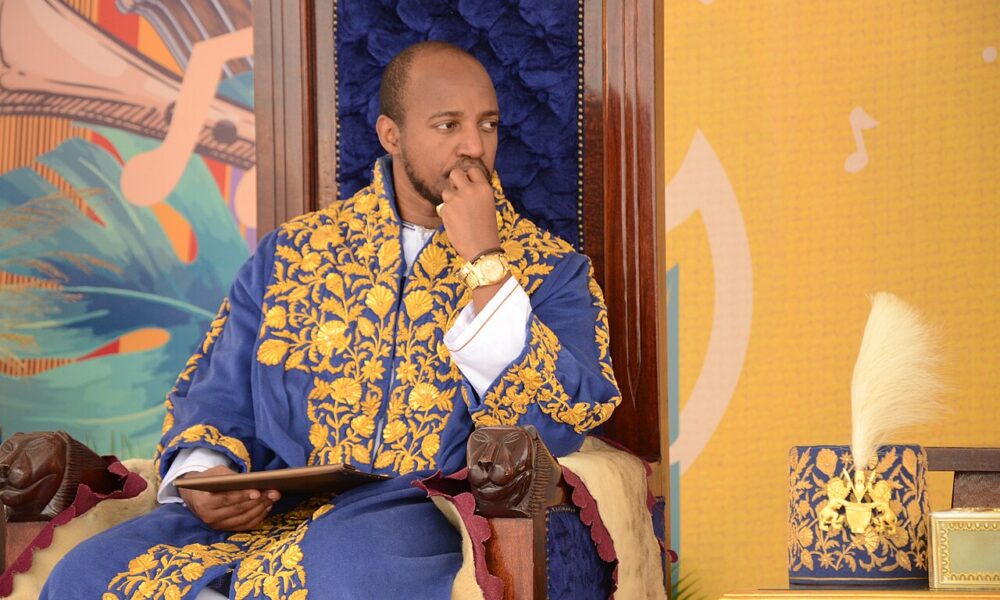
For three weeks, Tooro Kingdom insisted that King Oyo Nyimba Kabamba Iguru was fine. On Thursday night, it was confirmed that he was dead.
King Oyo died in the United States at about 10 pm. He was 34.
His death was announced by the kingdom’s prime minister, Calvin Armstrong Rwomiire Akiiki, in a statement that closed a reign of almost 31 years and reopened questions about how the palace had handled the truth about his health.
Rwomiire described the loss as “immeasurable” to the royal family, the Batooro people and the nation. He asked Tooro’s subjects to “remain united, calm and prayerful” during the mourning period, and moved quickly to reassure them that the crown itself was not in danger.
“The continuity of the crown is assured,” he said.
Three weeks of mixed signals
The manner of King Oyo’s death has drawn almost as much attention as the death itself.
On August 3, Tooro Kingdom officials publicly dismissed social media reports that the king was seriously unwell. They said he was in the United States for official engagements and further studies, and insisted his health was not in question.
“We wish to reassure all our people that His Majesty is in good health,” the kingdom said at the time, urging Ugandans to trust only its official channels and ignore what it called false and misleading claims circulating online.
For the next three weeks, that reassurance held. Then, on the afternoon of August 27, the story changed abruptly.
As speculation about the king’s death spread on social media, the kingdom issued a new statement. This time it did not deny that something was wrong. It confirmed that King Oyo was in a critical condition, and appealed to the public to pray for him rather than spread unverified claims.
Within hours, the palace’s tone shifted again. Just after 10 pm, Rwomiire’s statement confirmed what many had already begun to fear: the king had died.
A source close to the royal family later confirmed that King Oyo had been hospitalised with cancer in the United States, and that he died there on Thursday.
Yet the sequence, from firm denial to critical illness to confirmed death within the space of three weeks, has left many Ugandans asking why the palace held back the truth for so long, and whether an earlier acknowledgement of his condition might have changed how the country prepared for this moment.
A childhood spent on a throne
To understand why King Oyo’s death has shocked the country so deeply, it helps to understand how little of a childhood he actually had.
He was born on April 16, 1992, to Omukama Patrick David Matthew Kaboyo Rwamuhokya Olimi III and Queen Best Kemigisa. On August 26, 1995, his father died suddenly at the royal palace in Fort Portal, and everything about young Oyo’s life changed overnight.
He was enthroned as Omukama on September 12, 1995, just three weeks after his father’s death and a matter of days after the funeral. He was three years old.
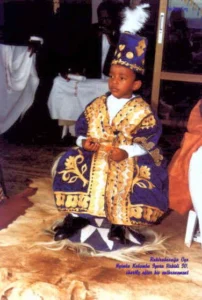
He was literally a baby and even played with toys during the ceremony, oblivious of the weight of expectation and responsibilities the new role had brought.
The distinction of becoming one of the youngest reigning monarchs in the world was later recognised by Guinness World Records.
Growing up in public, ruling without power
Regents and senior kingdom officials managed King Oyo’s early reign, since a toddler obviously could not run a royal institution. He would not take full operational control of Tooro’s affairs until he turned 18, in April 2010, when he was formally invested with the powers of the throne.
That left him with an unusual life story because he was king before he could read, a king through primary school, a king through his teenage years, and a king through whatever education and personal development he pursued into adulthood.
Ordinary rites of passage that other people go through privately, he went through as a public figure with a title attached.
Traditional kingdoms in Uganda, including Tooro, were abolished by the Milton Obote government in 1967 and only restored as cultural institutions in the early 1990s.
That history shaped Oyo’s father’s life too. Kaboyo succeeded his own father in 1965, was crowned in 1966, then lost his kingdom to abolition the following year.
He went on to serve as Uganda’s ambassador to Cuba, before the restoration of the monarchy allowed him to return to the Tooro throne.
By the time Oyo inherited the crown in 1995, Tooro’s Omukama, like other cultural leaders, held cultural and ceremonial authority rather than political power.
He was head of a kingdom without command over a government. His influence lay in his ability to speak for the Batooro, to champion causes, and to represent continuity in a community that valued its royal history.
Within those limits, King Oyo used his position to campaign on education, healthcare, environmental protection, tourism and youth empowerment across the Tooro sub-region.
Earlier this year, he donated 50 acres of his own private land to the government for the construction of a modern stadium in Fort Portal, a project intended to support youth sport and talent development in the area. It became one of the more visible acts of his later reign.
An eerie coincidence
There is a detail in King Oyo’s death that has struck many Ugandans as almost too strange to be true.
King Oyo’s father, Kaboyo, died on August 26, 1995. King Oyo died on August, 27, 2026, exactly 31 years and one day later.
It is a coincidence, but it has added a layer of poignancy to how Tooro is processing this loss. A father who inherited his throne as an adult, lost it to abolition, and reclaimed it late in life.
A son who inherited his throne as a toddler and held it, without interruption, for nearly the whole of his life. Both men died suddenly, both away from public warning, and both left kingdoms that had to quickly reassure their people that the institution would survive them.
What happens next for Tooro
Rwomiire’s statement on Thursday night was carefully worded to prevent panic. He confirmed that King Oyo “leaves behind a Prince as his heir,” but said the identity of that heir would only be formally revealed, “at the appropriate time, in accordance with the traditions and customs of Tooro Kingdom.”
That approach mirrors, in some ways, what happened in 1995. Then, as now, the kingdom moved to reassure the public quickly that succession was settled even before all the details were public.
If history is any guide, Tooro’s traditional institutions are likely to lean on senior officials, family elders and possibly a regency arrangement while the succession process is formalised, particularly if the named heir turns out to be a minor, as King Oyo himself once was.
In the immediate term, attention will turn to funeral arrangements, a period of official mourning, and tributes from political, cultural and religious leadership, several of whom had already begun paying respects to King Oyo within hours of the announcement.
Longer term, the kingdom faces the delicate task of introducing a new, likely unfamiliar face to a public that has never known Tooro without King Oyo as its Omukama.