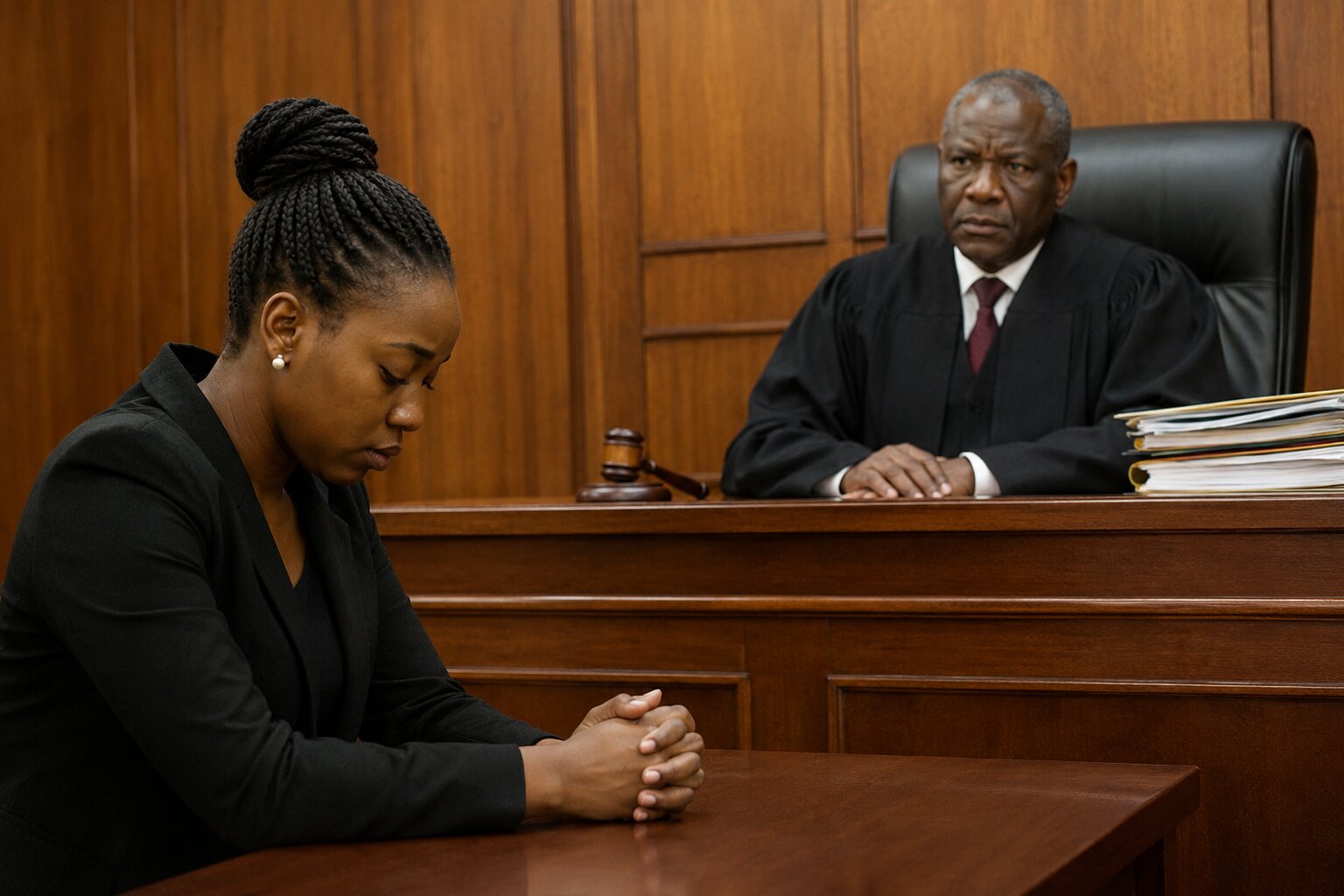
A lady who wrote a defamatory social media post alleging that a young lawyer was a rapist and habitual abuser of women has been ordered to pay Shs 60 million by the High Court.
Justice Collins Acellam awarded Douglas Kasirye, the lawyer, Shs50 million in general damages and another Shs10 million in exemplary damages after he ruled that Sheena Ahumuza Bageine’s posts were in bad taste.
The judge also ordered Bageine to issue a public apology and retraction within 14 days, and awarded Kasirye the costs of the suit.
The dispute began on January 2, 2020, when posts concerning Kasirye by Bageine, aka Tasha, started appearing on social media platforms, including X, Instagram, Facebook and WhatsApp. Sheena is a grand daughter of former minister Shem Bageine.
Kasirye told the court that the publications falsely portrayed him as a rapist, a habitual abuser of women and a person of immoral character.
The allegations, he said, spread beyond social media and reached his family, friends, professional colleagues and members of the legal fraternity.
He asked the court to award him general and punitive damages, permanently stop further publication of the statements, order Bageine to retract them and issue a public apology, and award him interest and costs.
Kasirye testified that the posts appeared from a social media account identified as @sheena-sheenzy.
Among the words he relied on were references to him as a “RAP/57”, allegations that he had raped a woman and claims that he had been beaten in a bar for groping a woman.
The court noted that screenshots produced by Kasirye showed the account had about 6,021 followers, 83 comments, 995 reposts and 1,679 likes.
Kasirye also produced a video recording, which he said he had personally captured, in which Bageine appeared and made further statements concerning him.
The defendant, Bageine, acknowledged that the photographs appearing on the account were hers, that the name “Sheena” appearing on the page was hers and that she was the person shown in the video.
But she denied making the Twitter (X) publications and denied controlling the account.
The court noted that Bageine’s written defence had not specifically stated that the account did not belong to her or that somebody had impersonated her.
Kasirye’s lawyers argued that the evidence taken as a whole established that Bageine owned and controlled the account.
They also argued that she could not now deny ownership after the issue had already been dealt with during scheduling.
They argued that Kasirye had proved the ingredients of defamation and deserved damages, a permanent injunction, a retraction, a public apology, interest and costs.
Bageine’s lawyers argued that Kasirye had failed to prove, on the balance of probabilities, that Bageine authored, published or was responsible for the disputed posts.
They also argued that Kasirye had not produced sufficient evidence of legally recognisable injury to his reputation.
They, therefore, asked the court to dismiss the case with costs.
Bitature’s “not-registered-in Uganda” courtroom trick runs out of steam
Kasirye’s father, Douglas Sendagire Kabenge, told the court that his son’s reputation had been damaged and that he personally approached Bageine’s grandfather (Shem Bageine), who expressed displeasure and promised to engage Bageine and her father to seek an apology and removal of the publications.
But Justice Acellam treated parts of Kasirye’s father’s evidence cautiously because some of it was hearsay and there was no independent documentary evidence to support claims that Kasirye had lost employment because of the allegations.
In her effort to prove her claims, Bageine called a witness, Bertha Nkwanzi Mwesigye, who alleged that Kasirye had sexually assaulted her.
But her evidence turned out to be particularly important because she made a clear distinction between assault and rape.
Mwesigye said: “Carlton Douglas Kasirye did not rape me. He assaulted [me].” She also accepted that her evidence did not prove that Kasirye was a rapist.
Justice Acellam noted that Mwesigye had not reported the alleged assault to police and that there was no independent evidence supporting her account.
During cross-examination, Kasirye accepted that a police complaint did not result in a criminal prosecution. He also had no documentary evidence of physical or psychiatric injury.
He had subsequently enrolled as an advocate, obtained employment and continued handling clients and attending social events.
Justice Acellam said those facts weakened some of the claims about professional and psychological damage, but they did not disprove that the publications had caused him embarrassment and distress.
He ultimately found that Kasirye had proved his defamation case on a balance of probabilities with the help of screenshots, correspondence, video, police investigation report, Bageine’s admissions and the history of the case.
“I am satisfied that [Kasirye] has established, on a balance of probabilities, that the impugned publications are legally attributable to [Bageine],” he ruled.
He said the allegations were of the “gravest kind” because Kasirye had been publicly portrayed as a rapist and habitual abuser of women.
Justice Acellam said social media made the situation worse because defamatory material can be shared, reposted and reproduced almost instantly and can remain available long after the original publication.
He said Bageine had not apologised or retracted the publications despite receiving a formal demand and awarded Kasirye Shs50 million in general damages, saying the amount was intended to compensate him for injury to his reputation and publicly vindicate his good name.
Justice Acellam awarded another Shs10 million to Kasirye in exemplary damages, saying the case was exceptional because of the gravity of the allegations, the persistence of the publications after a formal demand, the absence of an apology, and the foreseeable damage caused by social media.
“Freedom of expression, though fundamental, is not absolute. It does not extend to the dissemination of false and defamatory statements which unlawfully injure the reputation of another,” Justice Acellam said.