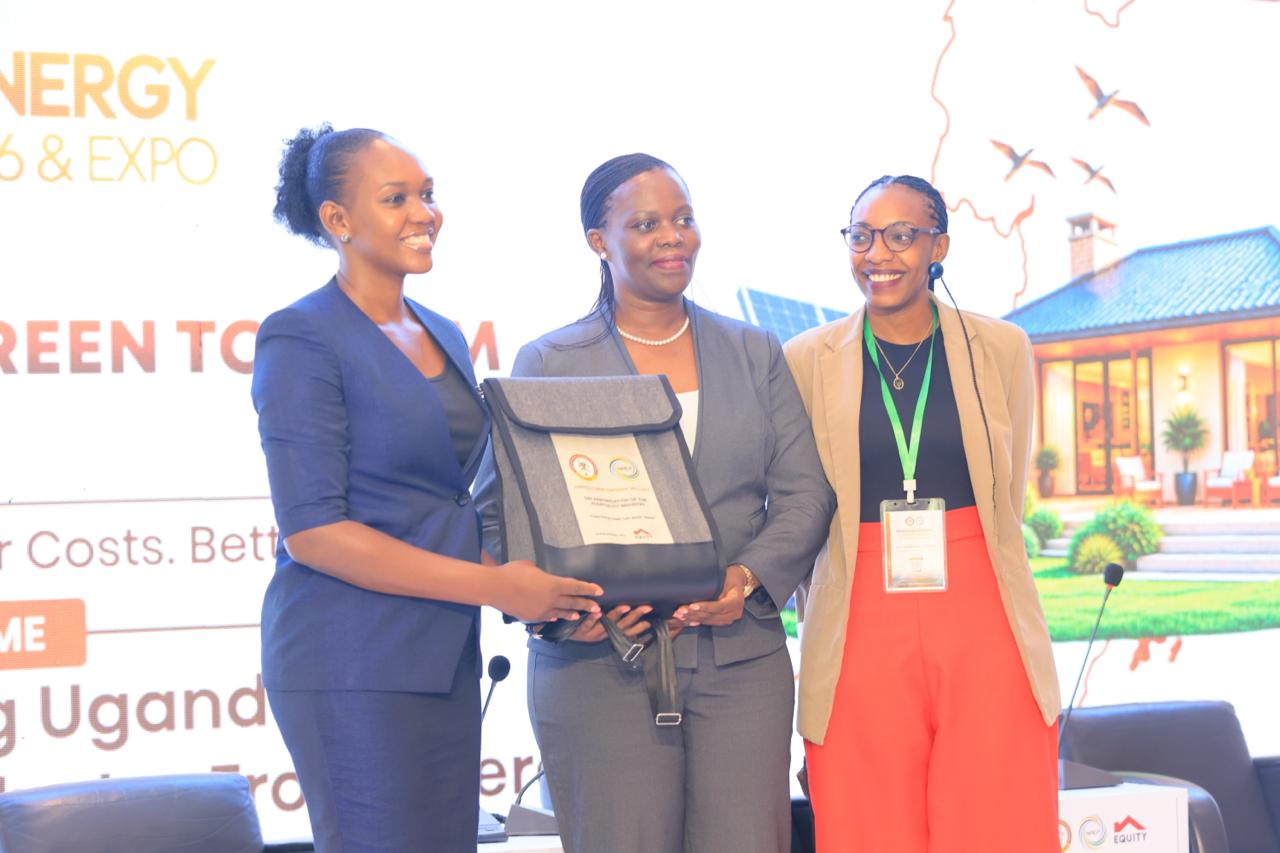

Stanbic Bank Uganda has donated 35 solar-powered street lights worth about Shs100 million to Kabale University to improve security and visibility on the campus.
The donation is part of activities marking 35 years of Stanbic Bank’s operations in Uganda under the Standard Bank Group.
The bank said the project is intended to make it safer for students, lecturers and visitors moving around the campus at night, while also promoting the use of renewable energy.
Speaking at the handover ceremony, Stanbic Bank Uganda chief executive Mumba Kalifungwa said the donation reflects the bank’s belief that investing in people is key to Uganda’s development.
“As we celebrate 35 years of operating in Uganda, we are reminded that our success is closely linked to the progress of the communities we serve,” Kalifungwa said.
He said the anniversary was not only an opportunity for the bank to look back at its achievements, but also to consider how it could make a greater contribution to communities in the years ahead.
“Our answer is simple: invest in people,” he said.
Kalifungwa said the 35 street lights should not be viewed simply as an anniversary gift, but as an investment in the safety and wellbeing of the university community.
“Beyond improving visibility, these lights will enhance safety and security for students, lecturers and visitors while promoting the use of clean energy,” he said.
He said the impact of the project would be seen in the daily experiences of students and staff who use the campus after dark.
“Every student who walks safely across campus in the evening and every lecturer who leaves work with greater confidence will remind us that meaningful partnerships create lasting impact,” Kalifungwa said.
He also commended Kabale University for expanding access to higher education and contributing to research, community outreach and regional development.
Kabale University became a public university in 2015 after starting as a community-founded institution.
Kalifungwa said education remains one of the most important investments a country can make because universities produce professionals, entrepreneurs, scientists and innovators needed to address future challenges.
“Education remains one of the most important investments any country can make because universities nurture the leaders, entrepreneurs, scientists and innovators who will solve tomorrow’s challenges,” he said.
“As Stanbic Bank, we believe investing in education is investing directly in Uganda’s future.”
He said Stanbic’s support for education goes beyond infrastructure and includes programmes such as the Stanbic National Schools Championship, which promotes innovation and entrepreneurship among young people.
Kalifungwa also highlighted the bank’s Positive Impact Agenda, through which Stanbic aims to mobilise Shs1 trillion by 2028 to support women, young people and farmers through financial inclusion, enterprise development and sustainable growth.
Representing the Vice-Chancellor, Associate Professor Helen Musanabera Byamugisha, the Deputy Vice-Chancellor for Finance and Administration thanked Stanbic for supporting the university.
She said the solar lights would address a practical challenge facing students and staff, particularly those who move around the campus during evening hours.
“We are grateful to Stanbic Bank for this valuable contribution. The solar-powered street lights will improve visibility and create a safer environment for students and staff,” Byamugisha said.
Kabale RDC Maj (Rtd) Godfrey Katamba welcomed the donation, saying security was essential to creating a suitable environment for learning.
“A university is a home, a centre for research and a place where students should feel entirely safe. This contribution addresses one of our highest priorities, security,” Katamba said.
Kabale University Guild president Justus Drake Kyarikunda said the installation of the lights would address a long-standing concern among students, especially those attending evening lectures and studying late.
“We appreciate Stanbic Bank for partnering with the university to improve safety and the overall student experience,” Kyarikunda said.
Kabale University was established in 2002 by the people of Kigezi. It started with 42 students and has since grown into a public university serving students from different parts of Uganda and neighbouring countries.