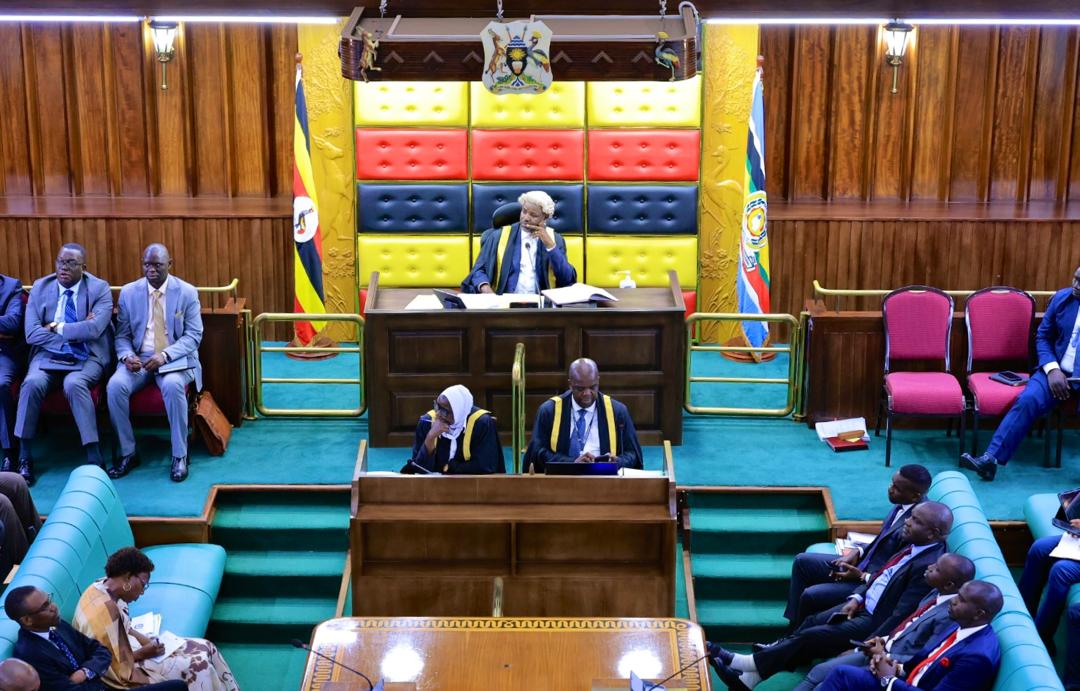
Deputy Speaker Thomas Tayebwa has asked the government to clarify how banks should treat former politicians and other politically exposed persons who have left public office, amid complaints that some are struggling to access financial services.
Tayebwa raised the matter during plenary at Parliament after saying he had received complaints from former legislators and ministers who claimed that their status as politically exposed persons continued to affect their banking transactions even after leaving office.
“I have got complaints from former colleagues and ministers that it is becoming hard to carry out financial transactions because the law still regards them as politically exposed persons. I therefore ask the Deputy Attorney General to explain on the matter,” Tayebwa said.
Under the Anti-Money Laundering Act, a politically exposed person is an individual who is or has been entrusted with a prominent public function in Uganda or another country.
The definition covers senior politicians, senior government officials, judicial and military officials, senior executives of State-owned corporations and important political party officials. It also covers certain people who have held prominent functions in international organisations.
The issue attracted support from several legislators, who argued that the current approach could make it difficult for former public officials to return to private business or secure employment after leaving office.
Paul Mwiru, the opposition whip, said the requirements could affect legitimate businesses operated by people who had previously held public office.
Mwiru, who is also the Jinja South Division East MP, said that despite being a manufacturer with legitimate sources of income, he sometimes faces difficulties when conducting business because of the additional scrutiny associated with his political background.
Obongi County MP Kaps Hassan Fungaroo also called for clearer limits on how banks should treat former politicians.
Fungaroo said he personally experienced difficulties with banking after leaving Parliament, including challenges relating to a dollar account that he needed for his business activities.
He said he was involved in supplying goods to the Democratic Republic of Congo and South Sudan and argued that legitimate business should not be unnecessarily restricted simply because an individual previously held public office.
Gomba Woman MP Sylvia Nayebare called for former public officials to be properly “derisked” where their individual circumstances do not warrant continued enhanced scrutiny.
She said this would enable former leaders to invest and participate more effectively in the economy.
Bukoto East MP Sarah Babirye Kityo said failure to review the system could expose former MPs and other senior public officials to financial difficulties after leaving office.
She said some former legislators struggle to find employment or establish businesses because financial institutions continue to subject them to additional checks linked to their former positions.
Responding to the concerns, Deputy Attorney General Jackson Kafuzi, who is also the Kyaka South MP, said Uganda’s law does not provide a specific cut-off period after which a person automatically ceases to be considered politically exposed.
Kafuzi said financial institutions instead apply a risk-based approach when dealing with politically exposed persons.
Tayebwa nevertheless urged the government to consider changes that would make it easier for former public officials to return to ordinary financial and economic activities after leaving office.
He said some other countries provide a defined period after which former politically exposed persons can be subjected to less stringent treatment, depending on their individual risk.
The Minister of Defence Kiryowa Kiwanuka reminded MPs that banks may also be required to follow the laws and regulations of the countries where their parent institutions are based.
He called for stronger application of the risk-based approach and urged legislators and other public officials to comply with their tax obligations and provide the necessary documentation to financial institutions.