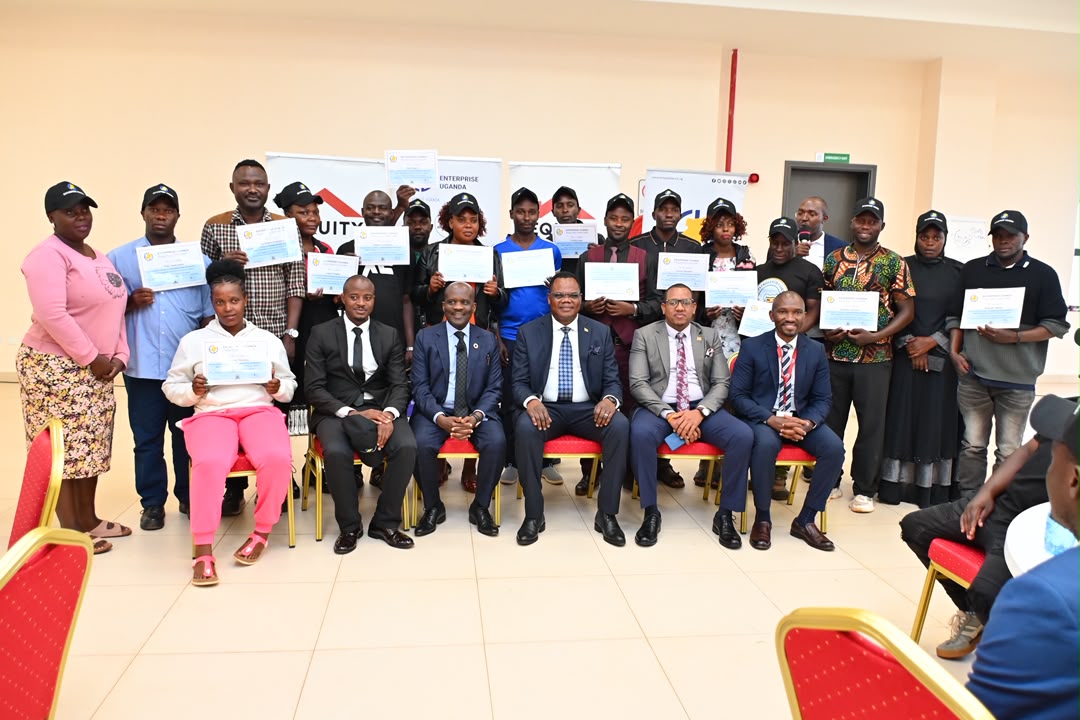
Two hundred Ugandans who returned from South Africa have received financial literacy and entrepreneurship training to help them rebuild their livelihoods and establish businesses in Uganda.
The two-day workshop, held at Enterprise Uganda’s offices in Butabika equipped participants with skills in financial management, business planning and enterprise development.
The training comes amid a government commitment of Shs2 billion to the returnees’ Savings and Credit Cooperative Organisation (SACCO). The money is intended to help members access financial support to start businesses and restore their livelihoods.
Dickson Ogwang Okul, who represented the Minister of Gender, Labour and Social Development, said President Museveni was supporting the initiative to help the returnees regain their financial independence.
“This support is an important step towards helping our people rebuild their livelihoods. We want returnees to invest in productive businesses, restore their financial independence and create opportunities for fellow Ugandans who may return in the future,” Okul said.
He said the government would also help returnees obtain the documentation needed to recover equipment they left behind in South Africa.
Okul added that the government would engage its South African counterpart over possible compensation for assets left behind by the returnees.
Many of those who returned home face the challenge of starting again after losing property, businesses and other assets they had accumulated while living and working in South Africa.
Charles Ocici, the executive director of Enterprise Uganda, said financial assistance alone would not be enough to help them recover.
He emphasised the need to rebuild their confidence and help them recognise the skills and experience they could use to establish new businesses.
“What is the mindset of a returnee who comes back thinking, ‘I have lost everything I worked for, and I am home with nothing’? Recovery requires more than money. They must recognise that they still have skills, experience and the ability to build again,” Ocici said.
He said the training was intended to help participants identify viable business opportunities, manage their money and make informed investment decisions.
Ocici’s remarks highlight one of the major challenges facing the returnees: turning their experience and available resources into sustainable sources of income in a country where they may have to establish new business networks and find customers from scratch.
Bob Paul Lusembo, Equity Bank Uganda’s head of micro segments, who represented the bank’s managing director, Gift Shoko, urged participants to start small and grow their businesses through careful financial planning.
“There is no dignity in poverty. We want our returnees to regain their confidence, start small and build businesses that support their families,” Lusembo said.
He emphasised the importance of saving, financial discipline and business planning in building enterprises that can survive and grow over time.
For the returnees, the training is an initial step towards economic recovery. However, the success of the programme will depend on whether participants can translate the lessons into viable businesses and obtain the financing and market access needed to sustain them.
Mathias Baguma, the chairman of the returnees, said the workshop had provided participants with practical knowledge and guidance on how to restart their economic activities.
“The training has equipped us not only with knowledge but also opened avenues on where we are to restart and how,” Baguma said.