
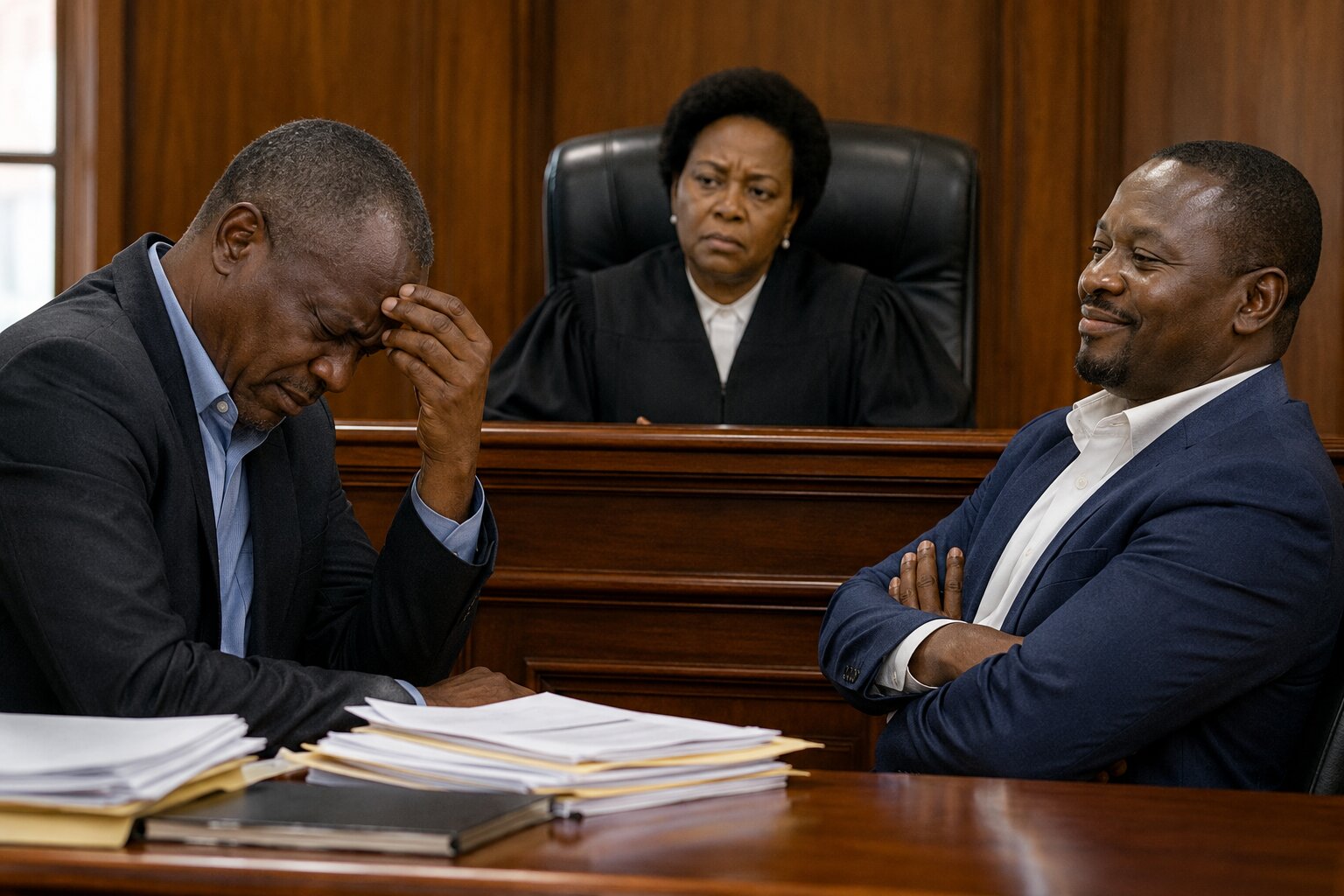
A family investment that began with hopes of building retirement homes in Naguru has ended in a costly court battle, with the High Court ordering Denis Tindyebwa and his wife, Christine Tindyebwa, to refund Shs 991 million to Geoffrey Tindyebwa and his wife, Lillian Njeri Tindyebwa.
Justice Patience Rubagumya ruled that Geoffrey Tindyebwa had failed to honour key promises they made to the plaintiffs in a 2011 agreement to construct 12 apartments on Balikuddembe Road in Naguru.
The case stood out because it was a disagreement within the Tindyebwa family.
Geoffrey Tindyebwa and Denis Tindyebwa are brothers, and their wives, Lillian Njeri Tindyebwa and Christine Tindyebwa, were also parties to the agreement.
The family members had previously planned to invest together in real estate through a company called Memory Investments Ltd.
However, after disagreements over how to structure the venture, they abandoned that idea and instead signed a Memorandum of Understanding in April 2011.
The agreement required Geoffrey and Lillian to contribute money towards constructing the apartments, while Denis and Christine were to contribute the land and obtain bank financing for the project.
According to the agreement, Geoffrey and Lillian would eventually own four of the 12 apartments, complete with condominium titles, while Denis and Christine would retain the remaining eight units.
Geoffrey and Lillian told court that they eventually contributed Shs 1.9 billion towards the project, which was even more than the amount originally agreed upon.
They said construction was completed in 2012, but despite paying for the apartments, they never received possession of the four units, the condominium titles, or any rental income from the completed apartments.
Instead, they told the court that Denis and Christine later sold the entire property in 2019 for Shs 6.5 billion without protecting their interests. Although they eventually received Shs 945 million, they argued that this was far below what they had invested and what they were entitled to receive.
Denis and Christine admitted signing the agreement but denied breaching it.
They argued that Geoffrey and Lillian’s entitlement to the apartments depended on clearing bank loans that had financed construction.
They also maintained that the apartments were converted into serviced apartments because of financial challenges, and that rental income was too low to meet operating costs and loan repayments.
They further argued that when the property was eventually sold, the proceeds were shared after settling outstanding debts, meaning Denis and Christine had already received what was due to them.
Geoffrey and Lillian procured the legal services of Alex Kabayo, Janet Murungi and Reagan Ahumuza of SM & Co. Advocates, who argued that Denis and Christine failed to transfer the four apartments and condominium titles despite receiving full payment.
The lawyers also said Denis and Christine failed to account for rental income collected from tenants, introduced unsupported project expenses, and ignored an agreement requiring sale proceeds to be deposited into a joint bank account for fair distribution.
However, Denis and Christine, through their lawyer John Fisher Kanyemibwa of H&G Advocates, said that there was no breach because the parties were actually partners in a joint business rather than buyers and sellers of apartments.
They maintained that everyone shared the project’s risks and rewards, and that the delays and eventual sale of the apartments resulted from financial pressures and bank loans rather than misconduct by the defendants.
He accused his wife of practising witchcraft and filed for divorce. A female judge said “No”
One of the biggest questions before the court was whether the parties had been partners. Justice Rubagumya carefully examined the evidence and concluded that they were not.
Instead, she found that the Memorandum of Understanding clearly established an investor-developer relationship under which the plaintiffs were purchasing four apartments.
Justice Rubagumya held that Denis failed to inform the bank that Geoffrey and Lillian had already acquired interests in two fully paid apartments.
She said Denis and Christine failed to formally ask the bank to process individual condominium titles and failed to hand over the apartments that had already been paid for.
“In the premises, I find that [Denis and Christine] breached the contract when they failed to inform the bank about [Geoffrey and Christine’s] interest in the two apartments that had been fully paid for as well as hand over the two apartments that had been fully paid for,” Justice Rubagumya said.
Although Denis claimed that operating expenses and loan repayments consumed the income, she said he had produced unaudited financial statements prepared by himself without supporting receipts or independent verification.
She discovered that Denis breached the parties’ agreement by failing to direct the buyer to deposit sale proceeds into a jointly operated bank account.
Justice Rubagumya further found that Denis changed the apartment project into serviced apartments without first obtaining Geoffrey and Christine’s consent.
After considering the evidence, she concluded that the plaintiffs deserved to recover the unpaid balance of their investment.
“It is only just and equitable that [Geoffrey and Christine] are refunded their full contribution to the investment,” Justice Rubagumya said before awarding them Shs 1 billion representing the balance of their investment that had never been refunded.
She also awarded them general damages of Shs120 million for the hardship caused by the prolonged dispute.
Justice Rubagumya observed that Geoffrey and Lillian had invested in the apartments while working abroad and had intended the property to support them during retirement.