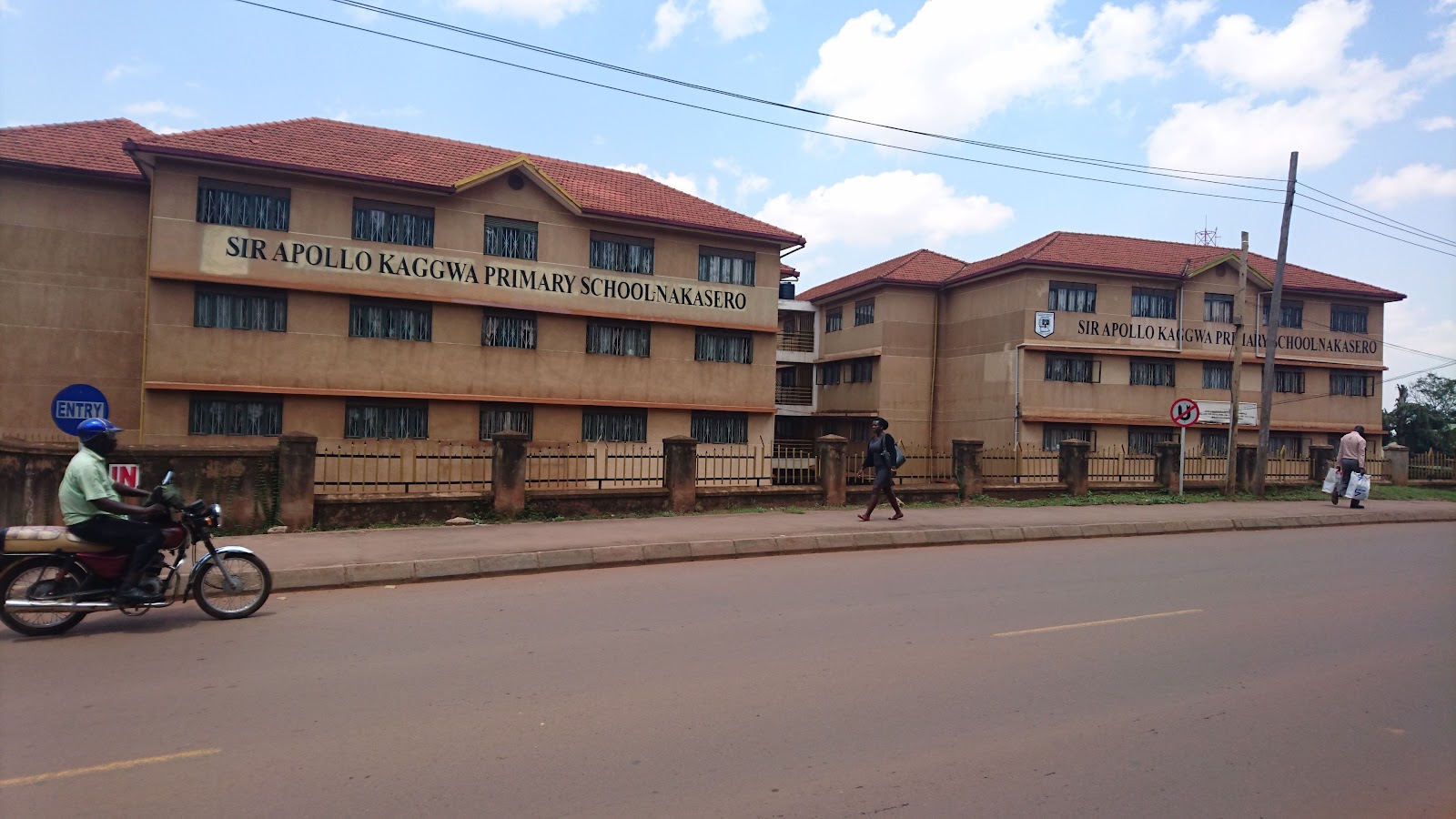
Sir Apollo Kaggwa Primary School will have to pay a former pupil, Naswif Katongole, Shs 5 million after two of its teachers caned him in 2011 and he suffered emotional and physical distress, Justice Simon Peter Kinobe has ruled.
Justice Kinobe’s ruling brings to an end a legal battle that has raged for 15 years after Katongole’s mother, Lilah Babirye, sued the school over the incident.
When the case was filed, Katongole was still a minor, and his mother sued on his behalf. After he became an adult, the court allowed him to continue the case in his own name, although his mother remained a party to the suit.
According to the family, everything began in September 2011 while Katongole was a pupil at Sir Apollo Kaggwa Primary School in Kampala. Babirye said two teachers, Grace Lumu and Joseph Owino, severely beat him during separate incidents while they were teaching.
She claimed that after the caning, Katongole suffered serious injuries, psychological problems, and difficulty walking. They argued that the school was responsible because the teachers were acting during the course of their employment.
Babirye told the court that the child’s condition became so serious that she left her job in New Delhi to return and care for him. She said treatment in Uganda did not help, forcing the family to seek specialised medical treatment in South Africa.
According to the evidence, the school later signed a memorandum of understanding agreeing to contribute Shs 98 million towards Katongole’s treatment abroad and another Shs 13 million for travel expenses.
However, Babirye said the money was not enough because treatment costs much more than what the school paid.
She also claimed that because of caring for her son, she lost income worth Shs 650 million and even sold some of her property to pay medical bills.
At first, the school denied responsibility, arguing that there was no medical evidence linking Katongole’s illness to the caning. It insisted it only agreed to pay for treatment because the family had threatened negative publicity.
The school also argued that the teachers had acted on their own and not with the authority of the school. It said corporal punishment was against school policy and that both teachers had been dismissed after the incident.
The school further claimed Katongole had not lost years of schooling as alleged and maintained that the family was trying to obtain more money after receiving the agreed treatment contribution.
Sir Apollo argued that Katongole’s family had given up its right to sue after signing what it described as a final settlement agreement in November 2012, which prevented either side from taking legal action over Katongole’s treatment and cancelled all previous agreements.
Court says NIC was right to dismiss officer who rejected a ‘promotion’
Justice Kinobe rejected the school’s argument, saying the so-called final settlement was actually a new contract and not a valid addendum because it cancelled the earlier agreement without offering any new consideration to the family.
“The so-called final settlement agreement dated the 27th day of November 2012 imposed upon [Babirye] the burden of foregoing any future legal action in respect of Naswif’s treatment. However, it did not create any fresh obligation on the [school] beyond what had already been undertaken,” he said.
Justice Kinobe therefore concluded that the agreement was “void and unenforceable for want of consideration,” allowing the lawsuit to proceed.
Katongole personally told the court that his mathematics teacher, Grace Lumu, caned him three times on the waist after he failed only three questions in a mathematics examination.
He said that immediately after the beating, he lost feeling in his right leg, and days later, another teacher, Joseph Owino, punished the entire class for making noise.
Katongole said he tried to explain that he was already sick but was beaten before he could sit down.
He told the court that he then lost feeling in his left leg and has since struggled to walk, cannot sit for long periods, cannot play like other children, and continues to suffer emotional trauma.
During questioning by Justice Kinobe, Katongole described the stick used by the teacher as one that resembled the handle of a scrubbing brush wrapped in white tape. He said that after the third stroke, he felt sharp pain before his right leg became numb.
His mother, Babirye, testified that her son suffered severe injuries and produced medical reports before the court.
She also explained how the school agreed to contribute towards treatment in South Africa, but said the family spent much more than the amount contributed.
Another witness, Racheal Nagujja, who was caring for Katongole while his mother was working abroad, said she collected him from the school sickbay after being informed by the school nurse that he had been caned and was unable to stand.
Sir Apollo Kaggwa’s lawyers from Majoli, Bogere, and Mutakirwa Advocates argued that the final settlement should have stopped the case from ever being filed.
They also argued that the teachers who caned the boy were “acting out their own” and that the school could not be blamed for what they did. The school denied that Katongole suffered any injury linked to the caning, and said there was no medical evidence connecting the two.
To support this defence, the school called Dr Edirisa Mutebi, a physician who had examined Katongole and told the court that the boy’s spinal problem looked like it came from a viral infection, not from being beaten.
Mutebi said that if trauma had caused the injury, there would have been evidence of damage to the bones, but the scans were normal.
On the other side, Babirye’s lawyers from Anguria & Co. Advocates argued that the memorandum of understanding was proof that Sir Apollo Kaggwa Primary School had admitted responsibility for the beating.
They said the caning was the sole reason Katongole fell behind in school and could not enjoy a normal childhood like other children.
On the question of what actually caused the boy’s injuries, Justice Kinobe sided with the school’s doctor, noting that none of the medical reports the family presented actually linked the caning to the spinal problem.
He wrote that the school’s evidence “appeared more credible,” and because of this, he refused to award special damages to cover medical bills or the mother’s lost income.
However, Justice Kinobe did not let the school off completely and said that the caning itself happened and was illegal.
He said corporal punishment had already been declared unconstitutional, ruling that the teachers were employees of the school acting within their duties when they caned the boy.
Justice Kinobe said Sir Apollo Kaggwa Primary School was vicariously liable for their actions, whether or not the caning directly caused the injuries.
He awarded Katongole Shs 5 million in general damages for the emotional distress caused by the beating itself, but refused to award punitive damages, noting that the school had since dismissed the two teachers and already had a policy against corporal punishment.