Uganda has reaffirmed its commitment to working closely with the World Bank Group to accelerate the country’s economic transformation and improve the lives of its people.
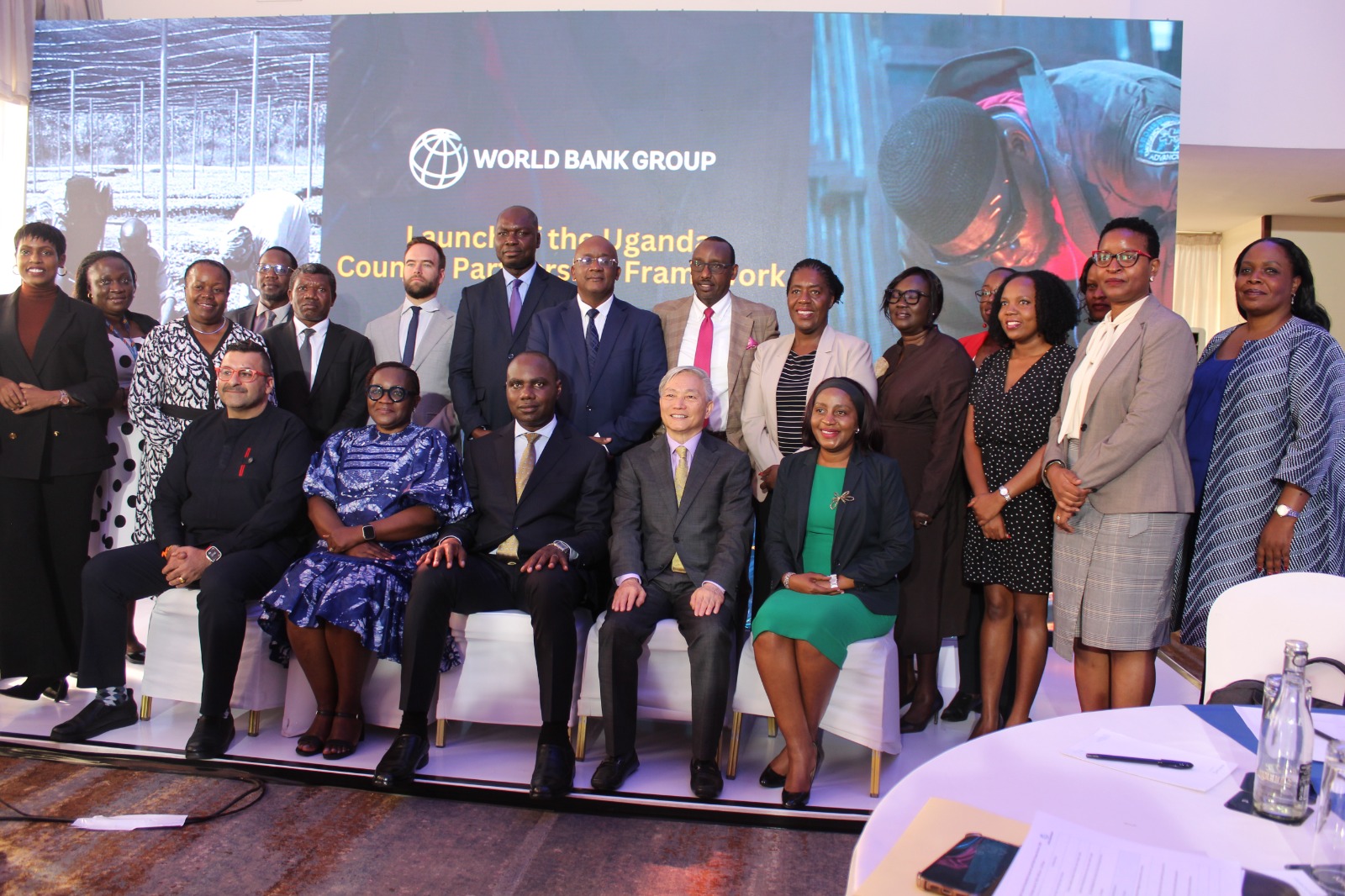
Speaking during the launch of the Country Partnership Framework and the Public Finance Review at Golden Tulip Hotel in Kampala, the minister of Finance, Henry Musasizi, said the government remains committed to implementing reforms that will create jobs, reduce poverty and improve public services.
Musasizi described the two reports as practical roadmaps that can help Uganda achieve sustainable economic growth.
“I commend the World Bank for these reports. They should not be viewed merely as analytical documents, but as practical roadmaps for accelerating Uganda’s transformation,” he said.
He said the true value of the reports would not be measured by the quality of their analysis alone, but by the country’s collective commitment to implementing their recommendations.
According to Musasizi, successful implementation would help create jobs, reduce poverty, improve service delivery, and build a more resilient, inclusive and prosperous Uganda.
The World Bank’s Division Director for Eastern and Southern Africa, Qimiao Fan, urged Uganda to strengthen its institutions by investing in skills development, improving access to finance, and expanding digital connectivity.
Fan also called on the government to build a stronger and more productive private sector capable of creating jobs and increasing household incomes.
He said public investment in infrastructure should deliver better schools, hospitals and roads while also strengthening social protection programmes, creating jobs and reducing the country’s debt burden.
Fan added that sustained investment in human capital would be critical to driving long-term economic growth and ensuring fiscal sustainability.
Pearl Gakazi of Kolaborate said Uganda should prioritise the creation of decent jobs through skills development and capacity building.
She also called for greater efforts to promote a savings culture, improve job security for workers, and better match training programmes with the skills demanded by the labour market.
Sanjay Rughani of Standard Chartered Bank urged the government to place greater emphasis on technology, productivity, market access, and competitiveness.
He also stressed the need to reduce risks in both the current and future labour markets.
“We need to become a productive hub for the region because we have many skilled people who are still not absorbed into the job market,” Rughani said.
The deputy executive Director of the National Planning Authority (NPA), Dr Rogers Matte, urged the World Bank Group to align its support with Uganda’s efforts to create jobs and reduce poverty.
He said the country has a growing number of young people in urgent need of employment and emphasised the importance of equipping them with relevant skills.
Matte also called for labour and tax reforms to support economic growth and improve opportunities for Ugandans.