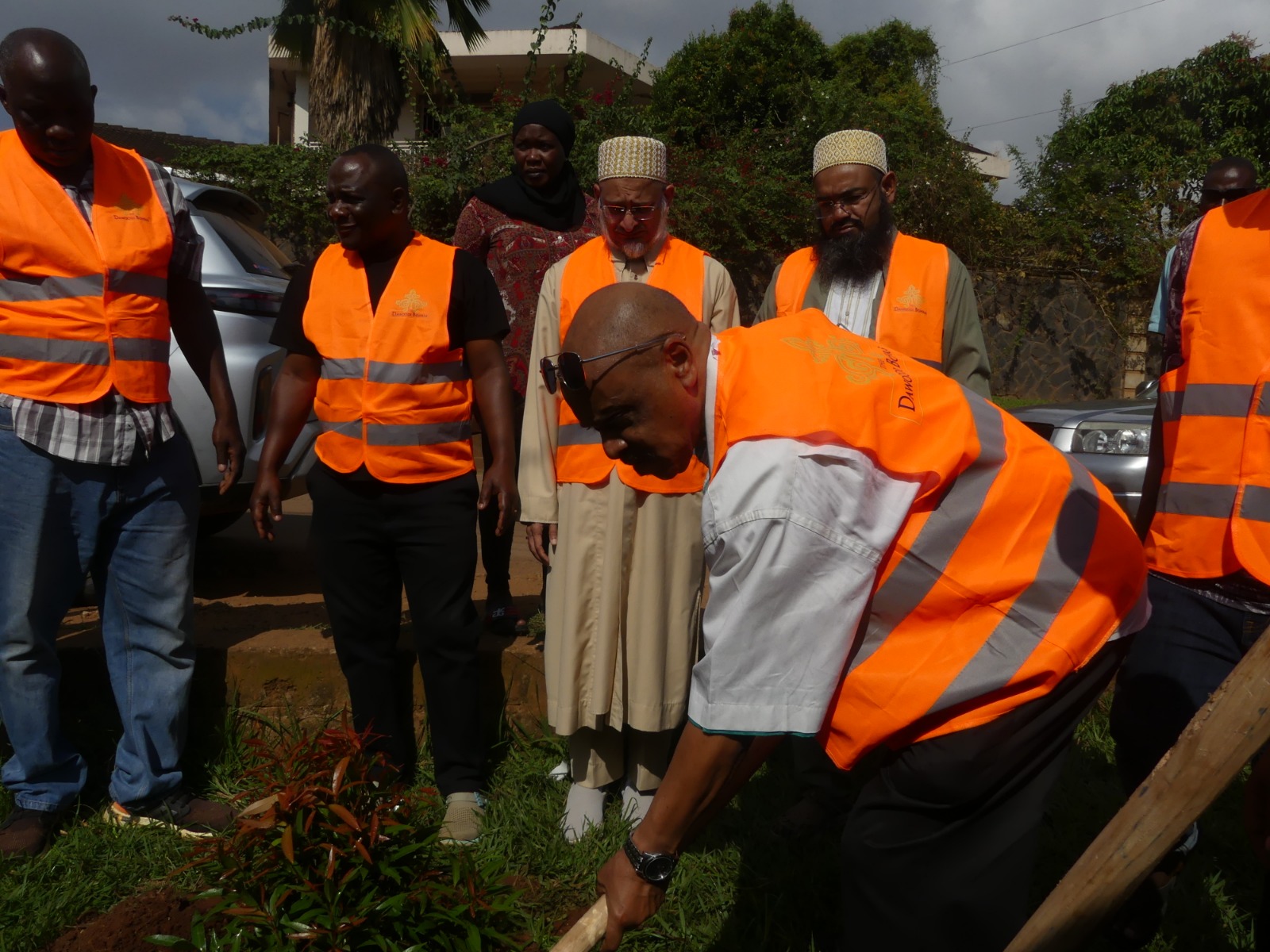
Equity Bank Uganda and My Tree Initiative have strengthened their partnership to promote environmental conservation and climate resilience through a major tree-planting exercise in Mpigi District.
The exercise was held at Kyasanku Hill College in Kasanje along the Kampala-Masaka highway.
It forms part of Equity Bank Uganda’s contribution to Equity Group’s goal of planting 35 million trees across East Africa.
Kyasanku Hill College set aside two acres of land for the project. Students, teachers, community leaders, and development partners planted indigenous and fruit trees that are expected to provide long-term environmental, educational, and economic benefits.
The initiative is part of Equity Bank Uganda’s sustainability programme under the Africa Recovery and Resilience Plan.
The programme recognises environmental conservation as an important way of building climate resilience, improving food security, protecting biodiversity and supporting inclusive economic growth.
Speaking during the event, Equity Bank Uganda’s Manager for Energy, Environment and Climate Change, Virginia Ssemakula, said protecting the environment is central to the bank’s mission of transforming lives.
“At Equity Bank, we believe that transforming lives also means protecting the environment because true prosperity can only exist on a healthy planet,” she said.
Ssemakula said sustainability is about protecting natural resources so that future generations can enjoy the same opportunities available today.
She said climate change is already affecting communities across the region through floods, droughts, and other environmental disasters.
“Our natural resources are limited, and our responsibility is not simply to use them, but to use them wisely and sustainably,” she said.
Ssemakula added that financial institutions have an important role to play by investing in projects that protect the environment while supporting sustainable economic growth.
My Tree Initiative Executive Director Enjer Ashiraf said tree planting goes beyond restoring forests.
He said it also protects livelihoods, restores hope, and encourages young people to take an active role in addressing climate change.
“Through partnerships such as this one with Equity Bank Uganda, we are creating practical solutions to environmental challenges while empowering young people to take ownership of the climate agenda,” Ashiraf said.
The organisation works with the Ministry of Water and Environment, schools, local communities, development partners and the private sector to promote reforestation and environmental awareness across Uganda.
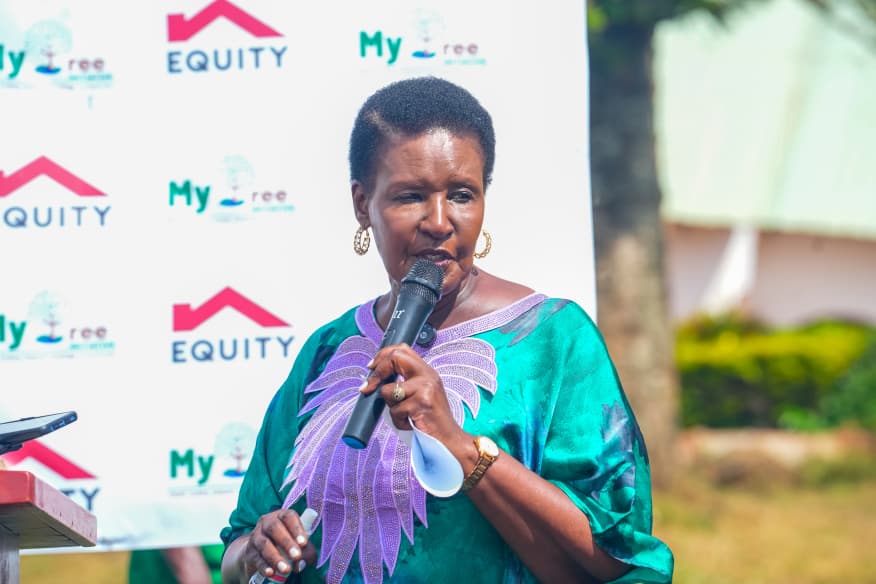
The chief guest, Mawokota North MP Amelia Kyambadde, urged Ugandans to appreciate the wider value of trees beyond timber.
“Trees are more than timber. They provide food, shelter, biodiversity, clean air, and a better future for generations to come,” she said.
Kyambadde called on communities to stop cutting trees for charcoal, saying the practice threatens both people’s livelihoods and the country’s environmental future.
“Every tree we save today is an investment in Uganda’s tomorrow,” she said.
Drawing from her personal experience, Kyambadde said trees have become a source of peace and healing in her life.
“For the past five years, trees have been my therapy. Today I plant them, tomorrow I sit beneath them to read, reflect and find peace,” she said.
She urged Ugandans to stop viewing trees only as a source of income.
“A tree should not only be seen as cash waiting to be cut. Its greatest value lies in the life it sustains,” she said.
Kyambadde said the best legacy today’s generation can leave for its children is a healthy environment.
“The greatest wealth we can leave our children is not money, but a healthy environment. Every tree planted today is a promise of a greener tomorrow,” she said.
The Mpigi exercise adds to Equity Bank Uganda’s growing environmental conservation programme across the country.
The bank has partnered with schools, cultural institutions, environmental organisations and local governments on several tree-planting projects.
Among them is the Bugisu Greening Campaign, implemented with the Umukuka wa Bugisu and the GRO Foundation. The programme is planting more than 60,000 trees after an investment of Shs60 million by the bank.
At Busoga College Mwiri, Equity Bank partnered with the Kenya High Commission and Million Trees International to invest Shs85 million in planting more than 43,000 indigenous trees and establishing a 10-acre fruit orchard.
The bank has also supported conservation projects at St Julian High School, Gayaza.
As climate change continues to threaten agriculture, ecosystems and livelihoods across East Africa, the Mpigi tree planting exercise demonstrates how partnerships between financial institutions, schools, civil society organisations and local communities can help restore the environment.
For Equity Bank Uganda and My Tree Initiative, the exercise was not just about planting trees. It was an investment in climate resilience, sustainable livelihoods and a greener future for Uganda and the wider East African region.