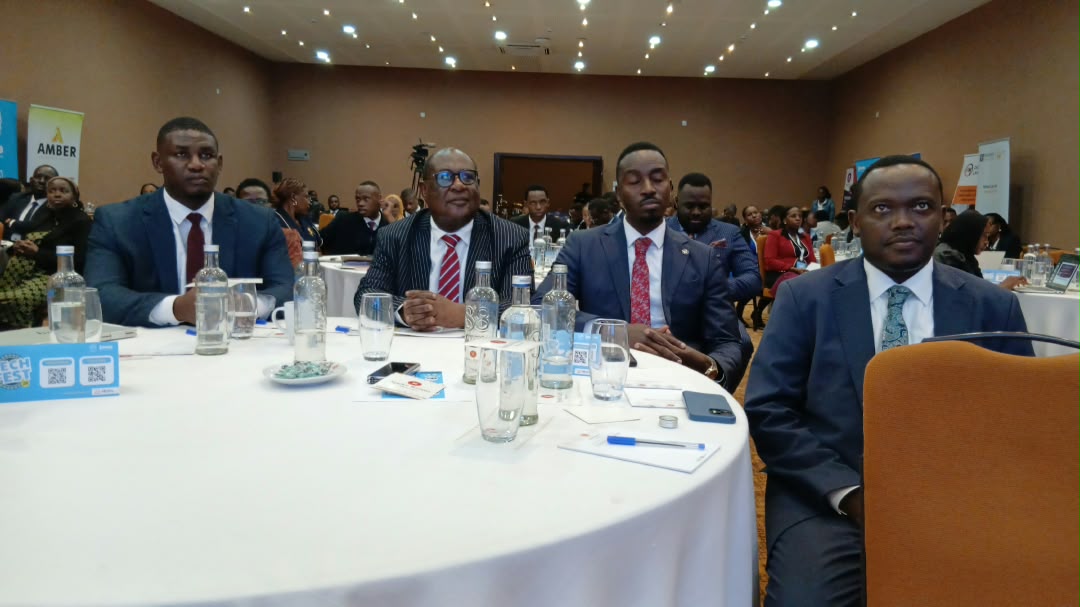

Ibrahim Lubega Kaddunabbi, the embattled chief executive officer of the Insurance Regulatory Authority (IRA), has won an early victory in his legal battle against the regulator after the High Court issued an interim administrative order blocking the implementation of a decision denying him a contract renewal.
In a ruling, Justice Joyce Kavuma restrained the IRA and its board from enforcing a February 16, 2026 decision that declined to recommend Kaddunabbi for another term as chief executive officer pending the hearing of his substantive application before court.
The dispute marks the latest chapter in a growing leadership crisis at the insurance regulator, where Kaddunabbi, who has served as CEO since 2011, is challenging the manner in which the board handled the question of renewing his contract.
Kaddunabbi formally sought renewal of his contract in 2025, citing what he described as a strong performance record during his 16-year tenure. He argued that he had a legitimate expectation to be fairly considered for a second term under the current legal framework.
The conflict escalated after the IRA board resolved on February 16, 2026, not to recommend him for reappointment. The board’s position was reportedly influenced by governance concerns and findings contained in audit and investigative reports that questioned several management decisions made during Kaddunabbi’s tenure.
He responded by filing judicial review proceedings challenging the board’s decision. He accused the board of acting unfairly and without according him a proper hearing before making a decision that effectively ended his chances of serving another term.
When the matter came before Justice Kavuma, lawyers representing the IRA first raised preliminary objections.
John Musiime from Dentons Advocates, who represented IRA, argued that Kaddunabbi had failed to disclose material facts and that circumstances on the ground had changed significantly since the filing of the case.
The respondents further contended that Kaddunabbi’s contract was due to expire on May 29, 2026, for practical purposes because the remaining days fell on a weekend.
They argued that any court order preserving the status quo would effectively amount to granting him a contract renewal, a power that belongs to the executive arm of government rather than the judiciary.
They warned that granting the orders sought could create confusion within the regulator by resulting in two competing chief executives.
They maintained that interim relief should not give a litigant greater rights than those already possessed under an existing contract.
Isaac Bakayana, Kaddunabbi’s lawyer, pushed back, arguing that their client enjoyed a statutory right to be considered for reappointment and urged the court to issue an administrative order preserving that right while allowing IRA time to file their responses.
They insisted that the board had already moved to appoint another person while Kaddunabbi’s contract was still running.
IRA countered that no such right of reappointment existed and argued that any loss suffered by Kaddunabbi could be compensated through damages if he eventually succeeded in court.
Court grants mother custody of son after Schiphol Airport standoff with husband
Justice Kavuma examined the competing arguments before turning to the central question of whether there were sufficient grounds to justify an administrative order.
She emphasised that the court possesses inherent powers under Section 98 of the Civil Procedure Act to issue orders necessary for the ends of justice.
Justice Kavuma rejected IRA’s argument that the imminent expiry of Kaddunabbi’s contract rendered the application pointless.
“This court respectfully disagrees with that submission because [Kaddunabbi’s] contract has not yet expired and the fact he argues it is expiring on 29/05/2026 cannot be a reason to deny [him] the orders he seeks from this court,” she ruled.
Justice Kavuma also dismissed the contention that granting interim relief would automatically renew Kaddunabbi’s contract.
She further observed that Kaddunabbi was not asking the court to renew his contract but rather challenging the procedure used by the board in declining to recommend him.
“[Kaddunabbi] is not seeking to force the court to order [IRA] to renew his contract but rather challenging the manner and the process by the board of [IRA] in refusing to renew his contract,” she said.
Justice Kavuma was equally unconvinced by claims that the regulator would be paralysed if the orders Kaddunabbi sought were granted.
“[IRA] as an institution is meant to survive individual personnel who govern it and therefore, the argument that the preservatory orders of this court will cause paralysis in the statutory body is without merit,” she ruled.
The court concluded that Kaddunabbi still possessed contractual rights deserving protection.
“[Kaddunnabi] in the circumstances of this case has a right derived from his contract which is yet to expire and justice demands that his right is protected in the meantime,” Justice Kavuma said.
She then issued an administrative order restraining IRA and its board from implementing the February 16 decision declining to recommend Kaddunabbi for renewal until the main application is heard and determined.
She also directed IRA to file its affidavits in reply before the matter returns to court.
For now, Kaddunabbi’s legal victory is limited to securing a temporary order from being removed from office pending the hearing of the main case.